Warehouse Jobs in Czechia for Foreign Workers (2026)
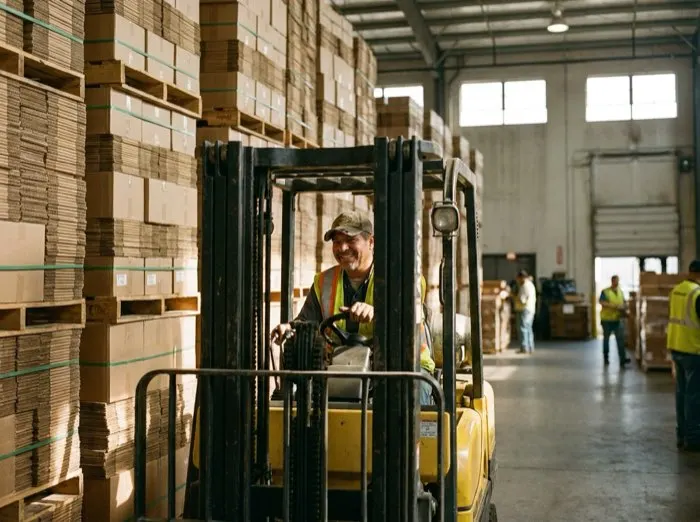
Warehouse logistics in Czechia: The landscape for 2026
Czechia sits right at the geographical heart of Europe. Because of this strategic location, the country acts as a massive central distribution hub for goods moving across Western, Central, and Eastern Europe. Major motorways like the D1 connecting Prague to Brno, and the D5 linking Prague to the German border, are lined with modern industrial parks and logistics centers.
If you are coming from outside the European Union - whether from South Asia, Central Asia, Southeast Asia, Africa, the Balkans, or Latin America - Czechia offers steady opportunities in the logistics sector. The country consistently maintains one of the lowest unemployment rates in the EU. As a result, local logistics operators and foreign fulfillment facilities actively recruit foreign workers to load trucks, pick orders, pack goods, and operate material handling machinery.
Hiring takes place throughout the year, but demand reaches its highest point between September and December. This peak season is driven by retail holiday stock and global e-commerce orders. A secondary hiring wave usually happens in early spring. Entry-level picking and packing roles are plentiful during peak months, while skilled forklift operators and stock controllers are needed continuously across every season.
Key logistics hubs and industrial zones
Most large logistics operations in Czechia are situated in sprawling industrial parks outside city centers. Knowing where these industrial clusters are located will help you understand where your potential job might be based.
- Central Bohemia (Středočeský kraj): Surrounding the capital city of Prague, this region is packed with major distribution parks. Key logistics nodes include Dobrovíz near Vaclav Havel Airport, Jirny, Zdiby, and Jažlovice along the D1 motorway. Operations here focus heavily on international e-commerce, consumer retail, and express parcel processing.
- Plzeň Region (Plzeňský kraj): Located in western Czechia along the D5 highway toward Germany, this area is a critical corridor for automotive logistics and manufacturing supply chains. Sites like CTPark Bor and Nýřany feature massive warehouses that support German industrial assembly lines and regional retail distribution.
- South Moravia (Jihomoravský kraj): Anchored by the city of Brno, South Moravia acts as a crossroad connecting Czechia to Slovakia and Austria. Logistics hubs such as CTPark Brno and Modřice house major supply chain platforms for electronics, retail goods, and medical equipment.
- Ústí nad Labem Region: Located in the north near the German border, logistics parks around Ústí nad Labem and Teplice handle high volumes of international freight and cross-border trucking operations.
Required licenses, skills, and language level
You do not need formal academic qualifications to start as a warehouse worker in Czechia, but having practical skills and specialized machinery experience directly impacts your job offers and earning potential.
- Forklift License (VZV): Motorized forklift trucks and order pickers are called VZV (vysokozdvižný vozík) in Czechia. If you hold a forklift operator license from a non-EU country, Czech health and safety regulations mean it will not be automatically valid on day one. However, your previous operating experience is highly valued. Most employers will arrange a short local training session to issue an official Czech forklift certificate (Průkaz obsluhy motorových vozíků) upon arrival.
- Language requirements: You do not need to be fluent in Czech for entry-level floor work. Many large logistics centers operate with multi-lingual supervisors or rely on handheld scanning devices with translated user interfaces. Basic English or basic Czech (A1-A2 level) is usually enough to start. Learning basic Czech workplace words for safety signs, directions, and tools will give you a big advantage for career growth.
- Physical fitness and digital tools: Warehouse work requires good physical stamina, as you will stand for long periods and may lift boxes weighing up to 15 or 20 kilograms. You must also be comfortable using handheld RF scanners and digital Warehouse Management Systems (WMS) to track inventory accurately.
Pay, working hours, and shift patterns in Czechia
Wages in Czechia are calculated and paid in Czech Koruna (CZK). Job advertisements display gross salary figures, but what matters to your monthly budget is your net income after income tax, health insurance, and social security payments are deducted.
- General warehouse worker (picker/packer): Expect a realistic net monthly income ranging from 22,000 CZK to 27,000 CZK. Standard tasks involve manual sorting, scanning products, and packing boxes.
- Forklift operator (VZV driver): Experienced and certified VZV drivers earn higher rates, typically bringing home between 26,000 CZK and 34,000 CZK net per month, depending on the machine type (such as high-reach trucks) and shift schedules.
- Shift bonuses and overtime: Under the Czech Labor Code (Zákoník práce), employers must pay mandatory extra allowances for working night shifts, weekend shifts, and public holidays. Voluntary overtime work is also paid at premium rates, providing a reliable way to boost your take-home pay.
- Subsidized accommodation (Ubytovna): Many direct employers and recruiting partners offer subsidized accommodation in local worker dormitories (ubytovna). The monthly cost is usually deducted from your earnings or provided free during your initial contract phase. While basic, this arrangement removes the immediate stress of finding private housing in a new country.
Work permits and the legal path to Czechia
To work legally in Czechia as a non-EU citizen, you must secure a formal residence and work permit before traveling to the country.
- The Employee Card (Zaměstnanecká karta): This is the primary long-term permit for non-EU citizens moving to Czechia for work. It serves as both a residence permit and a work permit. The specific position must first be posted in the Czech national vacant job registry for 30 days. If no local or EU candidate fills it, the employer can sponsor your Employee Card.
- Targeted Government Programs: Czechia uses specialized government initiatives, such as the Qualified Worker Program (Program Kvalifikovaný zaměstnanec), to speed up visa processing for selected partner countries (such as the Philippines, Moldova, Mongolia, and others). Under this system, the employer submits your documents directly to accelerate consular appointments.
- Processing timeframes: Getting an Employee Card processed through a Czech embassy abroad usually takes between 2 and 5 months from the moment your contract is finalized. Never travel to Czechia on a short-stay Schengen tourist visa with the intention of working, as converting a tourist visa to a work permit inside the country is not permitted by law.
Reality check: What workers often get wrong
Understanding the reality of moving to Czechia helps you avoid common misunderstandings and plan your transition smoothly.
- Foreign licenses need local validation: Holding a forklift card from your home country proves experience, but you must still pass a local safety test in Czechia before driving equipment in a facility.
- Dormitories are simple and shared: Employer-provided housing (ubytovna) is designed to be functional, not luxurious. You will likely share kitchen facilities and sometimes a room with fellow workers.
- Work schedules shift with demand: While core employees have stable full-time schedules, seasonal warehouse demand drops slightly in January after the holiday rush before picking up again in spring.
- Permits are tied to specific employers: Your Employee Card is registered to the company that sponsored you. Changing jobs within your first year requires following strict legal notifications with the Czech Ministry of the Interior.
- Illegal work risks deportation: Working without a formal work permit or under an invalid visa status leads to steep fines, immediate deportation, and a multi-year entry ban for the entire Schengen Area.
Build a Workuro profile that Czech employers find
Logistics operators and international recruiters regularly search the Workuro registry when they need reliable workers for fulfillment centers in Central Bohemia, Plzeň, South Moravia, and other active industrial regions across Czechia.
To build a profile that gets noticed by hiring managers, make sure to include these specific details:
- Detail your machine experience: Specify if you have driven counterbalanced forklifts, reach trucks, or electric pallet jacks, and note your total years of hands-on warehouse experience.
- List your current licenses: State clearly what forklift or vehicle certificates you hold from your home country so employers know you have existing technical skills.
- Highlight tech and scanner usage: Mention if you have experience using handheld barcode scanners, voice-picking tools, or computer warehouse management systems.
- Select your target regions: State clearly that you are ready to relocate to major Czech logistics zones like Central Bohemia, Plzeň, or Brno.
- Set your language levels accurately: Clearly indicate your level of English, Czech, or any other languages you speak.
When your Workuro profile includes these exact details, employers in Czechia can easily find your background, verify your fit for open logistics positions, and begin the sponsorship process to bring you on board.
هل أنت مستعد ليجدك أصحاب العمل؟
أنشئ ملفك الشخصي في دقيقتين. مجاني، بدون بطاقة ائتمان.
متابعة القراءة