Demolition and Groundworks Jobs in Europe for Foreigners (2026)
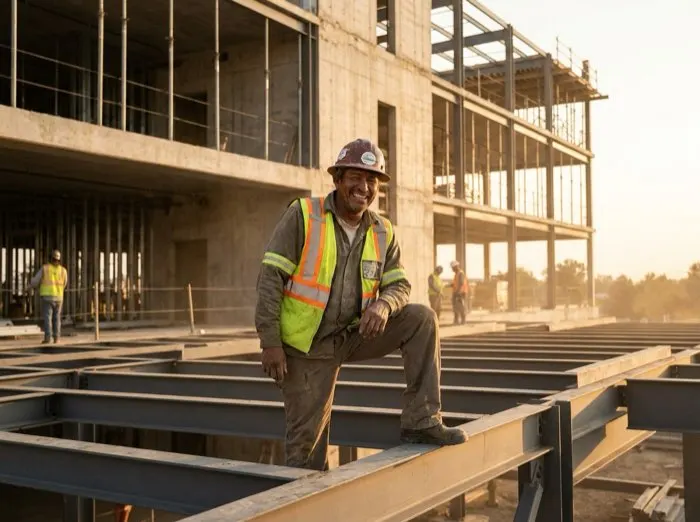
Every project starts with groundworks and many start with demolition - which is why these crews are hired first and laid off last. The trades are less certificate-heavy than scaffolding at entry level, making them a common first rung for foreign workers, but the pay ceiling rises sharply once you hold machine tickets and asbestos training.
What the work involves
- Demolition: strip-out and soft strip, structural demolition with excavators and crushers, cutting and burning, sorting and recycling - EU rules push high recovery rates, so sorting skills matter.
- Groundworks: excavation, trenching and shoring, drainage and ducting, foundations, kerbs and paving, and pipe-laying for utilities.
Where the demand is
Germany's renovation-heavy market generates constant strip-out and selective demolition work. The Netherlands and Belgium need groundworkers for water management and dense urban projects. The Nordics hire for energy and industrial earthworks - with mandatory site cards (ID06, HSE card, Valtti). Ireland's housing push needs groundwork crews before anything else, all holding Safe Pass. Poland's road and rail programme absorbs machine operators at scale. Big-city strip-out demolition in France, Germany and the UK-adjacent markets is a classic entry job for newcomers - but also where informal, underpaid work concentrates, so choose employers carefully.
Certificates that raise your pay
- Excavator and machine tickets: nationally issued (UDT in Poland, CSCS plant tickets in Ireland, documented competence in the Nordics) - the single biggest pay lever
- Asbestos awareness and asbestos removal certification: demolition of pre-1990s buildings routinely encounters asbestos; certified removal workers earn a clear premium under strict national licensing
- Confined space and trench-shoring training for deep groundworks
- Basic site cards: Safe Pass (Ireland), VCA (NL/BE), ID06/HSE/Valtti (Nordics)
Pay: hedged ranges
As a rough 2026 guide: general demolition labourers and groundworkers in Western Europe typically earn around 14 to 18 euros gross per hour, experienced machine operators roughly 17 to 24 euros, and certified asbestos removal workers often above that with shift premiums. Nordic rates run higher against higher costs; Poland and other Central European markets pay roughly PLN 5,000 to 8,500 gross monthly depending on tickets. Demolition is dusty, loud and dangerous - respiratory protection and unstable-structure awareness are not optional, and good employers show it in their equipment before they show it in speeches.
Permits and employment models
EU citizens work freely across the bloc. For non-EU workers, entry-level demolition rarely qualifies for skilled-worker permits on its own - the realistic paths are countries with labourer-accessible routes (Poland's declarations, seasonal contingents) or building a certified machine-operator profile that meets skilled thresholds. Posted-worker crews are common in demolition; insist on host-country pay and an A1 certificate. The mechanics are explained in how EU employer sponsorship works. And never pay anyone for a job offer - demolition recruitment scams prey on exactly this workforce.
Where the trade is heading: recycling and remote machines
Demolition is professionalising fast, and that favours workers who invest in skills. EU circular-economy rules push contractors toward selective deconstruction - buildings taken apart for material recovery rather than simply knocked down - which needs more skilled hands per project, not fewer. Remote-controlled demolition machines are now standard for interior and high-risk structural work; operators of these compact robots are scarce and well paid, and the training is short compared with crane tickets. On the groundworks side, GPS-guided excavators mean machine operators increasingly work to digital models - familiarity with machine-control systems is becoming a differentiator that employers ask about directly.
Building a career from an entry-level start
The realistic progression runs: strip-out labourer, then asbestos awareness and confined-space cards, then a first machine ticket, then specialised certifications - asbestos removal licensing, crusher operation, or shoring and deep-drainage competence. Each step is a pay rise, and most tickets cost little relative to their return. Choose employers by their equipment and dust control: a demolition firm that provides proper respiratory protection, water suppression and decontamination units is also, almost invariably, the firm that pays legally and on time. Groundworks crews are hired earliest in every project cycle, so cultivate relationships with civil-engineering contractors rather than only house builders - their pipelines are longer and their winters busier. Keep references and photos of completed works; in these trades, evidence of real projects outweighs formal CVs at hiring time.
This is general information, not legal advice. Check national immigration authorities or eures.europa.eu for permit specifics, and national rules before doing any asbestos-related work.
Groundworks and demolition employers hire early and in volume. Create your free profile - free, no credit card - and employers contact you directly when crews are being formed.
Ready to be found?
Create your profile in 2 minutes. Free, no credit card.
Keep reading