Seafood Processing Jobs in Ireland for Foreign Workers (2026)
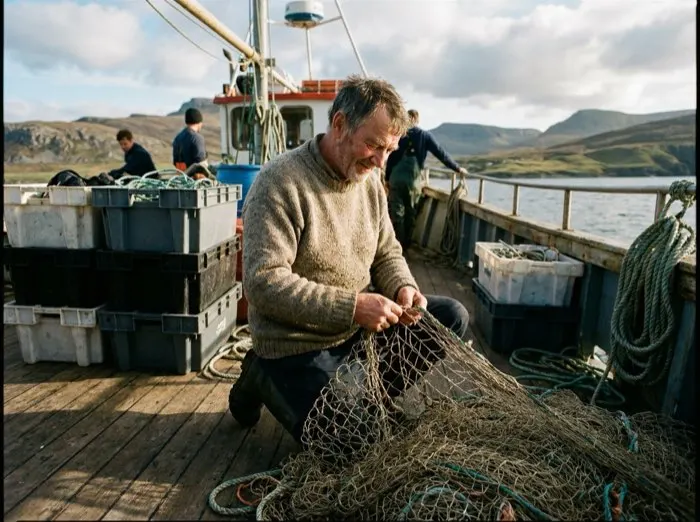
If you have experience trimming, filleting, packing, or grading fish, Ireland has a constant need for skilled factory staff. Ireland exports hundreds of millions of Euros worth of pelagic fish, whitefish, and shellfish every year to markets across the globe. Because the local workforce in small coastal towns cannot meet factory demand, Irish seafood processors frequently hire non-EU workers under official government permit programs.
This guide explains how the Irish seafood sector works for foreign jobseekers in 2026. You will learn about key processing regions, necessary permit rules, expected take-home pay, and mandatory safety certifications.
Where the seafood processing jobs are in Ireland
Fish processing in Ireland is concentrated near major fishing ports along the west, south, and east coasts. Unlike general manufacturing, which takes place in large cities like Dublin or Cork, seafood factories are mostly located in rural coastal communities.
- Killybegs, County Donegal: Located in the north-west, Killybegs is Ireland's main pelagic port. Factories here handle high volumes of mackerel, horse mackerel, herring, and blue whiting. Demand for workers here peaks sharply during the winter and spring pelagic seasons.
- Castletownbere, County Cork: Situated on the Beara Peninsula in the south-west, Castletownbere is Ireland's primary whitefish port. Factories in this area process cod, hake, monkfish, and prawns year-round.
- Rossaveel and Connemara, County Galway: This western region specializes in shellfish processing, particularly crab, lobster, scallops, and farmed salmon.
- Howth, County Dublin: Located on the east coast near Dublin city, Howth has several specialized seafood packing plants focused on smoked salmon, fresh retail packing, and whitefish distribution.
- Dunmore East and Kilmore Quay, South-East: These ports in counties Waterford and Wexford house medium-sized processors focused on whitefish, whelk, and scallop packing.
Work permit rules for non-EU workers
Workers coming from outside the European Union (such as South Asia, Central Asia, the Balkans, Africa, or Latin America) must secure a valid work permit before traveling to Ireland. You cannot legally work in a seafood plant on a tourist visa or visitor stamp.
The Irish Department of Enterprise, Trade and Employment (DETE) issues permits for seafood workers under the General Employment Permit (GEP) route. Here is how the process works:
- Employer sponsorship: An Irish processing company must offer you a formal contract first. You cannot apply for a permit by yourself without a confirmed job offer.
- Labour Market Needs Test: Before offering you a job, the employer must advertise the position across Ireland and the EU for at least 28 days to prove no qualified local worker was available.
- Minimum salary requirement: To qualify for a General Employment Permit as a processing operative, your contract must meet Irish minimum salary thresholds for permit holders, which start at 30,000 to 34,000 Euros gross per year depending on government quota criteria.
- Permit duration: Initial General Employment Permits are usually issued for two years. After two years, your permit can be renewed for another three years. After five years on a valid permit, you can apply for long-term residency.
- Processing time: DETE permit applications generally take between 6 and 12 weeks to process once submitted by your employer.
Pay rates, tax, and net monthly income
Ireland pays competitive wages compared to many seafood-exporting nations, but you must factor in Irish taxes and local living costs to understand your real take-home pay.
Entry-level seafood processing operatives in Ireland typically earn between 13.50 Euros and 16.00 Euros gross per hour. Skilled machine operators, smokehouse technicians, or experienced fish filleters can earn 16.50 Euros to 19.50 Euros gross per hour.
During peak pelagic landings (from January to April in ports like Killybegs), factories often operate extended shifts, and overtime pay rates apply once you exceed 39 hours per week.
- Gross monthly salary: Working a standard 39-hour week at 14.00 Euros per hour yields approximately 2,360 Euros gross per month.
- Deductions: Pay Related Social Insurance (PRSI), Universal Social Charge (USC), and Pay As You Earn (PAYE) income tax are automatically deducted from your paycheck by the employer through the Revenue Commissioners system.
- Net monthly pay: A single worker earning a basic monthly gross of 2,360 Euros will take home approximately 1,900 Euros to 2,050 Euros net per month after standard tax credits. With seasonal overtime, net earnings can reach 2,300 Euros to 2,700 Euros per month.
Certificates, hygiene rules, and language requirements
Irish fish factories operate under strict food safety guidelines enforced by the Sea-Fisheries Protection Authority (SFPA) and the Food Safety Authority of Ireland (FSAI). Employers expect basic health and safety knowledge before you start on the processing line.
- Food Safety and HACCP Certificate: Every factory worker must understand Hazard Analysis Critical Control Point (HACCP) principles. Completing a primary course in Food Hygiene (Level 1 or Level 2) makes your job application much stronger.
- Manual Handling Certificate: Under Irish workplace safety laws, all factory operatives must hold a valid Manual Handling Certificate. This practical training shows you how to lift heavy fish crates and equipment safely without injuring your back. Employers often arrange this during orientation, but having prior certification is a strong advantage.
- Language requirements: You do not need a formal university English certificate like IELTS to work on the factory floor, but you must have practical spoken English (A2 or B1 level). You need to understand safety announcements, supervisor instructions, and machinery warnings clearly.
Reality check: What foreign workers get wrong
- Mistake 1: Expecting low-cost housing in port towns. Ireland is experiencing a national housing shortage. Finding a rental room in small coastal villages like Killybegs or Castletownbere can be very difficult. Always ask potential employers if they offer staff accommodation or help arrange local housing before signing your contract.
- Mistake 2: Thinking pelagic work lasts all year round. Mackerel and herring processing in the north-west runs on intense seasonal surges. While whitefish plants operate year-round, pelagic factories may have slow periods during summer months. Make sure your contract guarantees minimum weekly hours throughout the year.
- Mistake 3: Arriving on a tourist visa expecting to convert it. You cannot convert a visitor visa into a work permit inside Ireland. If you enter as a tourist, you must leave the country to complete your work permit process.
- Mistake 4: Paying third-party recruitment agencies. Legit Irish employers and licensed agencies never charge jobseekers fee payments for a job offer or permit application. Avoid any person asking for cash to secure your Irish contract.
Working conditions on the processing floor
Seafood processing is physically demanding work. Factories operate under cool, wet conditions to maintain food quality. Production rooms are routinely kept at temperatures between 4 and 8 degrees Celsius.
Employers provide personal protective equipment (PPE), including waterproof oilskin aprons, safety boots with steel toe caps, thermal undergarments, hairnets, and heavy-duty rubber gloves. Shifts often involve standing for long periods alongside conveyer belts, performing repetitive tasks like gutting, boning, weighing, glazing, and vacuum packing.
If you are comfortable with physical labor in low temperatures and take pride in maintaining strict hygiene standards, Irish seafood plants offer reliable, honest work with clear pathways to multi-year employment.
Build your Workuro profile to stand out to Irish employers
Irish factory managers and HR recruiters actively search Workuro to find non-EU candidates who are ready to relocate and possess the exact skills needed on the production floor.
To make your profile register high in employer search results, include specific details instead of general statements:
- Select target locations: Specify Irish seafood regions where you are willing to move, such as County Donegal, County Cork, County Galway, or County Dublin.
- List practical certifications: Explicitly mention any training you hold in Food Hygiene, HACCP principles, or Manual Handling.
- Detail your processing skills: State clearly whether you have experience in hand-filleting whitefish, operating gutting machines, packing shellfish, or working in cold storage units.
- Specify your language level: Indicate your true spoken English ability so plant supervisors know you can follow safety instructions on day one.
By putting these exact details into your free Workuro profile, you allow verified Irish employers to review your credentials directly and contact you with real employment contract offers.
کیا آپ تلاش کے لیے تیار ہیں؟
2 منٹ میں اپنا پروفائل بنائیں۔ مفت، کوئی کریڈٹ کارڈ نہیں۔
مزید پڑھیں