Security Guard Jobs in Norway for Foreign Workers (2026)
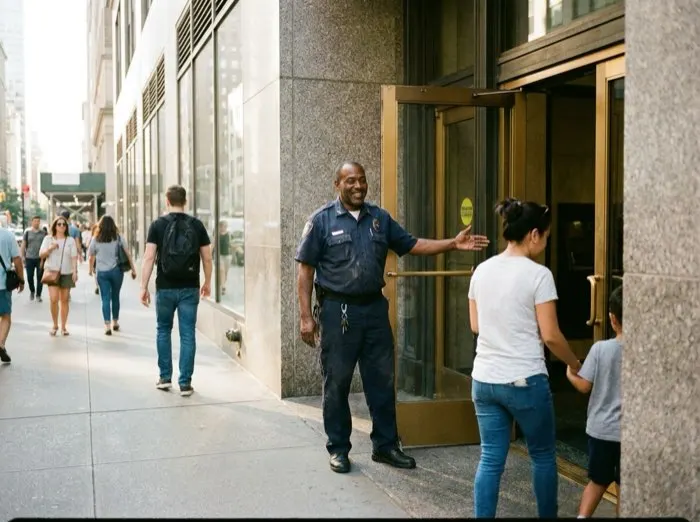
If you are from outside the European Union and want to work as a security guard in Norway, we must give you an honest answer right away: direct hiring for general security guards from non-EU countries is extremely rare. Norwegian immigration regulations set by UDI (Utlendingsdirektoratet) require non-EU applicants to qualify under the Skilled Worker visa route. This route requires a completed three-year vocational degree or higher education directly relevant to the role. In addition, Norwegian law requires security guards to hold a clean local police record and speak fluent Norwegian.
If you only speak English and have basic physical security experience from outside Europe, landing a visa directly to work as a standard entry-level guard in Norway is almost impossible. If your goal is to enter the European labor market quickly, you will find far more accessible work permit options in countries like Poland, Malta, or Romania, where entry rules for general security and facility management roles are more flexible. However, if you have advanced technical security training, specialized risk management qualifications, or plan to learn the Norwegian language, Norway offers excellent working conditions, strong union protections, and high earnings once you meet the requirements.
Understanding the Norwegian Visa and Skilled Worker Rule
To move to Norway from a non-EU country (such as India, Pakistan, Nigeria, Kenya, Colombia, or the Philippines) for work, you cannot simply arrive and look for a job. You must secure a formal job offer from a registered employer in Norway before applying for a work residence permit through UDI.
The main obstacle for security personnel is the skill level requirement. UDI divides permits into specific categories, and general guarding is usually classified as lower-skilled or semi-skilled work by immigration authorities, which does not automatically qualify for the standard Skilled Worker permit. To qualify, your application must meet one of these paths:
- Vocational Training Route: You must prove you completed a formal, multi-year vocational education program in security or emergency management that is fully recognized as equivalent to a Norwegian trade certificate (fagbrev).
- Higher Education Route: You hold a university degree in security management, criminology, or specialized engineering that directly matches a specialized security role in Norway.
- Specialized Technical Role: The job offer is not for basic static guarding, but for a specialized position such as control center engineer, industrial risk analyst, or maritime security specialist where foreign expertise is required.
If you meet these background requirements, your employer must pay you at least the standard wage rate set by the relevant collective bargaining agreement before UDI will grant the permit.
Mandatory Licensing: The Nasjonal Vekterutdanning
You cannot work as a security guard in Norway without completing the mandatory state-approved security training course, known as Nasjonal vekterutdanning (National Guard Training). This course is regulated under the Norwegian Guard Services Act (Lov om vaktvirksomhet) and overseen by the Norwegian Police (Politiet).
Foreign security badges, licenses, or military certificates from outside the EU are not automatically accepted as a substitute for this training. Here is what the licensing process involves:
- Course Structure: The full course requires around 157 hours of combined classroom instruction, practical exercises, and supervised workplace training.
- Course Content: It covers Norwegian law, emergency response, conflict resolution, first aid, fire protection, and ethics.
- Approved Providers: Training is provided by certified institutions and large security operators like Securitas or Avarn Security, as well as private training centers approved by the police.
- Background Check: You must present an unblemished police conduct certificate (uttømmende politiattest) issued by the police. Any serious criminal record will result in an immediate rejection.
- Language Level: The training, exams, and practical tests are conducted in Norwegian. You generally need at least a B1 or B2 level of Norwegian proficiency to understand the legal content and pass the written exams.
Key Regions and Industrial Areas Hiring Security Staff
Security work in Norway is concentrated in major population centers, transport hubs, and industrial sites. If you qualify for a specialized role or have obtained your Norwegian license, these are the primary areas where security contractors hire:
- Oslo and Akershus: The capital region has the highest density of security roles, including commercial property guarding, retail security, public transport patrols, and corporate building monitoring.
- Ullensaker (Gardermoen): Oslo Airport (OSL) in Gardermoen is a major employer of aviation security personnel, baggage screeners, and perimeter control officers. Airport roles require strict background clearances from the Civil Aviation Authority (Luftfartstilsynet).
- Bergen and Vestland: Norway's second-largest city requires security personnel for maritime terminals, commercial ports, and municipal facilities.
- Stavanger and Mongstad: The energy and offshore sector in Rogaland and Vestland requires specialized industrial safety guards, access controllers, and perimeter officers for oil refineries, supply bases, and industrial plants.
- Seasonal Variations: Hiring generally increases in late spring to prepare for the summer vacation shift, as well as before the winter holiday season when commercial centers expand their coverage.
Pay Rates, Union Standards, and Net Monthly Income
Norway does not have a single national legal minimum wage, but security guards are covered by a national collective agreement called Vekteroverenskomsten. This agreement is negotiated between the employer association (NHO Service og Handel) and the trade union (Norsk Arbeidsmandsforbund).
Because of this agreement, wage floors are clear, fair, and legally enforced across the industry. Pay increases with age, experience, and shift timing:
- Hourly Gross Wages: Standard entry-level hourly pay for a qualified security guard ranges between 215 NOK and 245 NOK per hour. Specialized roles or shift supervisors earn more.
- Shift Supplements: You earn mandatory additional pay per hour for working evening shifts, night shifts, weekends, and public holidays. Night and weekend allowances can add 30 NOK to 65 NOK per hour to your base rate.
- Monthly Gross Salary: Based on a full-time contract of 37.5 hours per week, a full-time guard earns between 34,000 NOK and 40,000 NOK gross per month before tax.
- Net Monthly Income: Tax rates in Norway depend on your total earnings and deductions, but typical income tax for a single worker ranges from 24% to 30%. This leaves a typical net monthly income of approximately 24,000 NOK to 28,000 NOK (roughly 2,100 EUR to 2,500 EUR).
- Cost of Living Considerations: Living costs in Norwegian cities are high, particularly for housing. Rent for a single apartment in Oslo or Bergen can take 10,000 NOK to 14,000 NOK per month, so budgeting carefully is essential.
Reality Check: What Foreign Applicants Get Wrong
Many foreign candidates spend months sending applications to Norwegian security companies without understanding how the system works. Avoid these common mistakes:
- Expecting English-only roles: Standard guarding requires continuous communication with local police, emergency services, and the public. You cannot get hired without conversational Norwegian.
- Assuming foreign licenses transfer: A security license from your home country does not allow you to work in Norway. You must complete the approved Norwegian training module.
- Ignoring the UDI skilled worker rule: Sending resumes for basic guard roles without holding a recognized vocational diploma or relevant higher education leads to immediate visa rejection.
- Applying without clean documentation: Norwegian security companies cannot submit your file to the police without a certified criminal record check from your home country.
- Underestimating start-up costs: If you relocate, you need enough savings to cover your initial housing deposit and living expenses before your first paycheck arrives.
Put Your Specific Credentials on Workuro
If you want European employers to take your profile seriously, accuracy is key. On Workuro, vague descriptions get ignored. Profile entries that list specific, verifiable qualifications appear in far more employer searches.
When you fill out your Workuro profile, make sure to clearly detail:
- Language Capabilities: List your exact level in Norwegian (such as A2, B1, or B2) along with your English or other language skills.
- Technical Security Training: Specify any formal diplomas, CCTV monitoring certifications, fire safety credentials, or specialized risk assessment courses you have completed.
- Relevant Experience: Include exact job duties, such as industrial site patrol, access control systems operating, or airport screening.
- Preferred Locations: State the specific regions in Norway you are focusing on, such as Oslo, Rogaland, or Vestland.
- Licensing Status: Indicate whether you have already completed the Norwegian Vekterkurs or if you hold equivalent European qualifications.
By keeping your profile clear and honest about your qualifications, you give employers the exact information they need to evaluate your candidacy for open positions in Norway and across Europe.
काम खोजने के लिए तैयार हैं?
2 मिनट में अपनी प्रोफाइल बनाएं। बिल्कुल मुफ्त, क्रेडिट कार्ड की ज़रूरत नहीं।
आगे भी पढ़ें