Landscaper and Gardener Jobs in Croatia for Foreign Workers (2026)

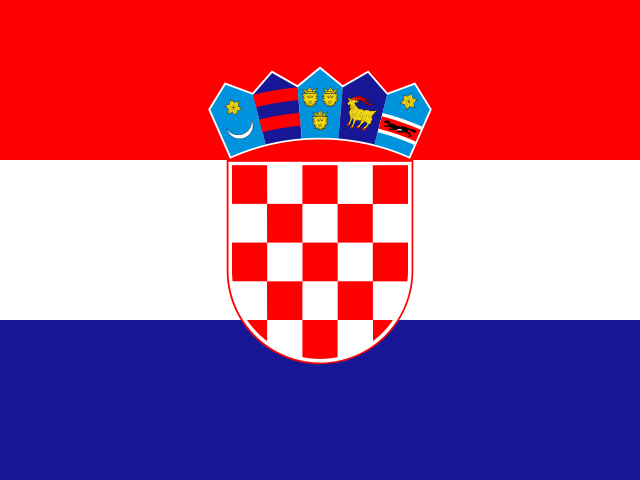 Croatia
Landscaping and gardening in Croatia: The 2026 market
Croatia has become one of the fastest-growing destinations in Southern Europe for non-EU workers. The country relies heavily on international labor to support its massive tourism sector, infrastructure expansion, and municipal maintenance. Landscaping and gardening are central to this demand, particularly along the long Adriatic coastline where hundreds of hotels, luxury resorts, campsites, and private villas prepare for millions of summer visitors.
Demand for green-space workers in Croatia follows a clear double track. Along the coastal regions, the market is highly seasonal, with hiring surges starting early in the year and work running from April through October or November. In inland regions like Zagreb, landscaping work is more steady and year-round, focusing on commercial grounds, urban parks, and plant nurseries.
If you are coming from outside the European Union, European Economic Area, or Switzerland, you will need a valid residence and work permit to work legally in Croatia. Croatian employers are very accustomed to bringing in workers from South Asia, Central Asia, Africa, Latin America, and neighboring Western Balkan states. Because local labor shortages remain high, landscaping and groundskeeping roles frequently feature on national shortage occupation lists, simplifying the hiring path for approved foreign candidates.
Key regions hiring landscapers and gardeners
Where you work in Croatia shapes your daily tasks, your schedule, and whether your contract is seasonal or year-round. Landscaping needs vary significantly between the Mediterranean coast and the continental interior.
- Istria (Pula, Poreč, Umag, Rovinj): Istria is home to Croatia's largest concentration of high-end resort complexes and expansive campsites. Landscape workers here maintain private hotel gardens, olive trees, resort lawns, and coastal walking paths. Demand is intense from March to October, and major hotel groups hire hundreds of foreign groundskeepers annually.
- Dalmatia (Split, Dubrovnik, Zadar, Šibenik): The southern coast features luxury hotels, historic parklands, and private villa estates spread across the mainland and islands like Hvar and Brač. Gardening here requires managing Mediterranean flora, drip irrigation systems, palm trees, and drought-resistant vegetation under hot summer conditions.
- Kvarner Bay (Rijeka, Opatija, Krk Island): Opatija is famous for its historic Austro-Hungarian parks and grand seaside gardens. Groundskeepers in this region handle ornamental plant care, hedge trimming, and public garden upkeep.
- Zagreb and Central Croatia: The capital city and surrounding industrial corridors offer steady, year-round landscaping opportunities. Work includes corporate park maintenance, municipal green area support, commercial lawn installation, and nursery production (*rasadnik*).
Work permits, regulations, and legal steps
To work legally in Croatia as a non-EU citizen, you must secure a Residence and Work Permit (*Dozvola za boravak i rad*). You cannot legally begin working on a standard tourist visa or short-term Schengen visa.
The application process starts with your Croatian employer. First, the employer contacts the Croatian Employment Service (*Hrvatski zavod za zapošljavanje* - HZZ) to conduct a labor market test (*Test tržišta rada*). This test checks if any qualified Croatian or EU job seekers are available for the role. If none are found, or if the role is officially categorized as a shortage occupation, HZZ approves the request.
Once HZZ approves, the application moves to the Ministry of the Interior (*Ministarstvo unutarnjih poslova* - MUP), which issues the work permit. Once approved, you apply for an entry visa (Visa D) at the Croatian embassy or visa application center in your home country to travel to Croatia.
The entire process typically takes between 60 and 90 days. For seasonal coastal jobs starting in April, employers usually begin submitting paperwork in January or February. Work permits are usually granted for up to one year for continuous contracts, or up to nine months for strictly seasonal work.
Pay rates, accommodation, and working hours
Croatia adopted the Euro (EUR) as its official currency in 2023. All wages, contracts, and daily transactions are handled in Euros.
- Typical net monthly salary: Most foreign landscapers and gardeners earn between 750 EUR and 1,150 EUR net per month after income taxes and social security contributions. Workers with specialized skills, such as irrigation installation, heavy equipment operation, or supervisor roles, can earn up to 1,300 EUR net per month.
- Seasonal perks and housing: For seasonal jobs along the coast, Croatian employers very commonly provide free shared accommodation (usually staff quarters or apartment units near the workplace) and at least one free hot meal per working day. Free housing significantly increases your actual take-home savings.
- Working hours and shift structure: Standard contracts cover 40 hours per week across 5 or 6 days. During the peak summer heat in July and August, outdoor work shifts along the coast often start early in the morning (for example, 5:00 AM to 1:00 PM) to protect workers from extreme midday temperatures. Overtime work is common during spring planting and summer maintenance, and overtime pay is mandated by Croatian labor law.
Language requirements and high-demand skills
You do not need to speak fluent Croatian to secure an entry-level landscaping job in Croatia. Many foreign crews operate with basic English, using team leaders or digital translation applications for daily communication. However, learning key Croatian terms for safety, basic tools, and plant care helps you build trust with local managers and advance faster.
Employers value practical, hands-on mechanical experience over formal academic degrees. High-demand skills include:
- Power equipment operation: Proven ability to operate commercial walk-behind mowers, ride-on mowers, brush cutters (*trimer*), hedge trimmers, and chainsaws safely.
- Irrigation systems: Hands-on experience setting up, repairing, and managing automated drip irrigation and sprinkler systems (*navodnjavanje*).
- Plant care and pruning: Knowledge of pruning fruit trees, trimming ornamental hedges, caring for Mediterranean palms, and identifying common garden pests.
- Certifications: Holding a valid driver's license (Category B or T for tractors) is a major advantage. Specific safety certificates, such as a certified operator card for power saws (*rukovatelj motornom pilom*) or safe pesticide handling (*održiva uporaba pesticida*), make your profile stand out immediately.
Reality check: Common mistakes foreign workers make
- Assuming you can arrive on a tourist visa and start: Working without a formal *Dozvola za boravak i rad* is illegal in Croatia. Heavy fines and deportations apply to both worker and employer. You must wait for your work permit approval before traveling.
- Underestimating the summer Mediterranean heat: Outdoor work in Dalmatia and Istria in July and August involves high humidity and temperatures exceeding 35 degrees Celsius. Physical stamina and heat management are essential.
- Expecting year-round work from a seasonal coastal contract: Nine-month seasonal work permits expire when the tourist season ends. Unless your employer transitions you to a permanent year-round contract in inland Croatia, you must leave the country or transfer your permit to a new approved employer before your permit expires.
- Expecting private single apartments: Employer-provided housing in coastal resorts usually means sharing a room with one or two colleagues. Always clarify housing terms with your employer before signing your employment agreement.
Build your Workuro profile to get hired in Croatia
Croatian employers and recruitment agencies search the Workuro registry directly when assembling foreign landscape crews for upcoming seasons. To ensure your profile appears in their candidate searches, make sure to list the exact technical details mentioned in this guide.
Specify the exact machinery you can operate (such as brush cutters, ride-on mowers, or tractors), indicate whether you hold a driver's license, and detail your experience with irrigation systems or hedge maintenance. Select your preferred Croatian work locations, such as Istria, Dalmatia, or Zagreb, and note whether you are available for full seasonal contracts starting in spring. Keeping these specific details complete and up to date gives Croatian employers full confidence to initiate your hiring process.
Pronto para ser encontrado?
Crie seu perfil em 2 minutos. Grátis, sem cartão de crédito.
Continue lendo