Painter and Decorator Jobs in Slovenia for Foreign Workers (2026)
 Slovenia
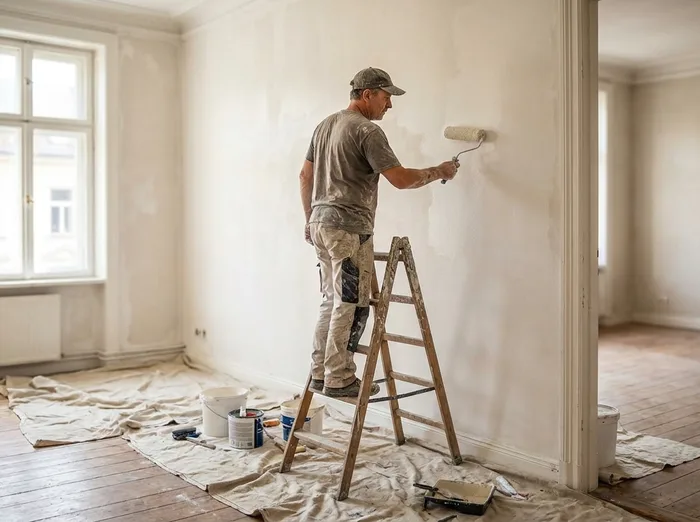
Painter and decorator demand in Slovenia for 2026
If you are looking for a job as a painter and decorator in Central Europe, Slovenia is a steady and practical option. Demand for painting trades in Slovenia is solid, but the country is small. The total volume of job openings here is noticeably lower than in larger nearby nations like Austria or Germany. If your primary goal is to find thousands of open positions quickly, targeting Austria or Germany might yield faster responses. However, Slovenia offers a manageable entry point into the European Union, lower living costs, and a strong construction sector.
The demand in Slovenia is driven by new residential building projects, commercial office renovations, and public energy efficiency upgrades. Old buildings across the country are continually being modernized with new thermal insulation systems. Because of this, employers rarely search for someone who only paints walls with a roller. They want versatile painters who can apply plaster, repair drywall, operate airless spray equipment, and install exterior insulation facades. If you possess these combined skills, Slovenian craft employers will view your application very favorably in 2026.
Where the painting jobs are: Key regions and hiring cycles
Painting work in Slovenia is concentrated in specific urban and economic hubs. Moving to where the building activity is dense will give you the best chance of steady work throughout the year.
- Ljubljana and the Osrednjeslovenska region: As the capital city, Ljubljana has the highest concentration of active building sites, office renovations, and apartment developments. Hiring here remains steady all year long.
- Maribor and Podravska: Slovenia second largest city has a cost of living that is lower than the capital. Small and medium craft contractors in Podravska frequently look for foreign painters to fill labor shortages on local residential projects.
- Obalno-kraska coastal region (Koper, Izola, Portoroz): The coastal zone experiences a distinct hiring seasonal surge. Hotels, holiday rentals, and restaurants do extensive interior and exterior refurbishments between late autumn and early spring to prepare for tourist arrivals.
- Savinjska region (Celje, Velenje): Central Slovenia has strong industrial activity and regular demand for commercial surface treatments, factory maintenance painting, and housing developments.
The trade follows a predictable seasonal rhythm across the country. The peak exterior season runs from April to October. During these warm months, contractors focus heavily on exterior facade painting, outdoor plastering, and weatherproofing. Employers begin recruiting foreign workers for this peak in February and March. The interior season runs from November to March, focusing on indoor residential repainting, commercial fit-outs, drywall finishing, and decorative spraying. While hiring slows down in winter, skilled indoor specialists remain employed year-round.
Work permits and legal requirements for non-EU workers
If you come from outside the European Union, including countries in South Asia, Africa, Latin America, Central Asia, or non-EU Balkan states, you must hold a valid permit before you begin working. You cannot work legally on a tourist visa or short-stay Schengen visa under any circumstances.
The standard route to legal employment is the Single Permit for Work and Residence (Enotno dovoljenje za prebivanje in delo). This process involves two main entities:
- Employment Service of Slovenia (Zavod RS za zaposlovanje or ZRSZ): The ZRSZ performs a labor market test to confirm that no suitable local or EU jobseeker is registered for the position. Because painting trades face local shortages, this step is usually approved smoothly for skilled applicants.
- Administrative Units (Upravna enota): Your employer in Slovenia files the initial application at their local administrative unit. Once approved, the unit issues your Single Permit, allowing you to reside and work legally for that specific employer.
For trade qualifications, Slovenia relies on the National Vocational Qualification system (Nacionalna poklicna kvalifikacija or NPK). The formal title for this trade is Slikopleskar/slikopleskarka. The Chamber of Craft and Small Business of Slovenia (Obrtno-podjetniska zbornica Slovenije or OZS) oversees trade standards. You do not always need a fully recognized European trade diploma prior to arrival, as many employers evaluate your practical experience directly. However, having formal vocational certificates from your home country speeds up the background check and helps satisfy skill assessments.
Processing time for a Single Permit generally ranges from two to five months. Start your search early to ensure your paperwork is complete before the peak spring hiring season starts.
Pay, collective agreements, and working hours
Wages in the Slovenian construction and finishing trades are regulated by national minimum wage legislation and the Collective Agreement for the Construction Activity (Kolektivna pogodba za dejavnost gradbenistva).
Understanding your pay package in Slovenia requires looking at both base pay and mandatory non-taxable allowances:
- Base net monthly salary: A qualified painter working a standard 40-hour week typically earns a base take-home salary between 900 EUR and 1,300 EUR net per month, depending on experience and trade skills.
- Mandatory daily meal allowance (Prehrana med delom): Slovenian law requires employers to pay a daily non-taxable meal allowance for every day you work on site. This usually adds between 6.00 EUR and 7.96 EUR per day to your monthly earnings.
- Commuting allowance (Prevoz na delo): Employers must also reimburse your travel expenses between your place of residence and the work site, based on public transport costs or kilometer allowances.
- Total net income: When combining base pay, meal allowances, travel compensation, and occasional overtime, a full-time painter generally takes home between 1,100 EUR and 1,500 EUR net per month.
Standard working hours are 40 hours per week, usually organized from Monday to Friday. During the busy summer season, overtime work is common. Overtime hours must be compensated at higher hourly rates as dictated by the national construction collective agreement.
Language requirements and work culture on Slovenian sites
Language expectations depend heavily on the size of the employer and whether you interact directly with property owners.
- Slovene language: Formal Slovene language certificates are rarely required at the hiring stage for jobsite workers. However, learning basic Slovene (A1 or A2 level) helps immensely with health and safety instructions, reading job plans, and communicating with supervisors.
- Serbo-Croatian / Ex-Yugoslav languages: Due to historical ties and regional workforce mobility, languages like Bosnian, Croatian, and Serbian are widely spoken across Slovenian construction sites. If you already speak one of these languages, you will adapt to site communications very quickly.
- English language: Basic English is helpful when dealing with younger site engineers or foreign management in larger contracting firms. In smaller craft businesses, however, local supervisor directions will be given in Slovene or regional dialects.
The work culture values punctuality, clean site preparation, and attention to detail. Proper surface preparation (sanding, priming, and masking) is considered just as important as the final topcoat of paint.
Reality check: Common myths about painting jobs in Slovenia
- Myth: You can enter Slovenia as a tourist and start painting immediately.
Reality: Working without a formal Single Permit is illegal. Employers face severe fines, and workers risk deportation and entry bans to the Schengen Area. - Myth: Painting jobs only require handling paintbrushes and rollers.
Reality: Slovenian contractors expect painters to handle drywall patching, airless spray systems, surface scraping, and exterior insulation finishing (fasaderstvo). Versatility is mandatory. - Myth: Your base contract pay is your only income.
Reality: Mandatory meal and transport allowances significantly increase your total monthly take-home pay above the base contract number. - Myth: You must hold a European university degree or master diploma.
Reality: Practical trade skill, reliable work history, and a willingness to undergo practical evaluation carry far more weight with local employers.
Build a strong Workuro profile for Slovenian employers
Slovenian craft business owners and construction hiring managers search the Workuro registry to find reliable foreign workers for permit sponsorship. To make your profile stand out to employers in Slovenia, make sure to include these specific details:
- List your exact trade skills: Specify if you have hands-on experience with airless spray equipment, decorative plaster finishing, wallpaper hanging, or exterior facade insulation (fasaderstvo).
- Mention relevant certificates: Include any national vocational diplomas, apprenticeship records, or training certificates you earned in your home country to show you meet trade standards.
- Name your preferred locations: Clear interest in moving to key Slovenian job hubs like Ljubljana, Maribor, Celje, or Koper shows employers you understand local geography.
- State your language abilities clearly: List your level of Slovene, English, or Serbo-Croatian so employers know how easily you will fit into their site teams.
- Keep your contact details current: Complete profiles that include clear photos of your practical work get viewed more often by employers looking to start the visa sponsorship process.
Pronto para ser encontrado?
Crie seu perfil em 2 minutos. Grátis, sem cartão de crédito.
Continue lendo