Welder Jobs in Hungary for Foreign Workers (2026)
 Hungary
Why Hungary Needs Welders Right Now
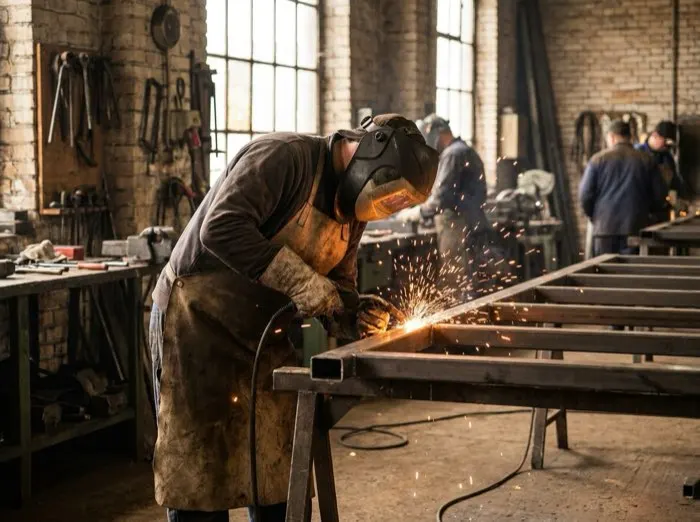
Hungary is undergoing one of the largest industrial expansions in Central Europe. The country has positioned itself as a major European hub for automotive manufacturing, electric vehicle (EV) battery production, and heavy machinery. Because of this massive industrial boom, the demand for skilled metalworkers - especially welders - has reached an all-time high.
Many Hungarian welders have moved to Western Europe for work. This has left Hungarian factories, construction companies, and shipyards with a severe shortage of skilled labor. To keep their assembly lines moving, Hungarian employers are actively looking outside the European Union (EU) to hire welders from South Asia, Africa, Latin America, the Western Balkans, and Central Asia.
Because welding is officially recognized as a shortage occupation by the Hungarian government, the process for hiring foreign workers in this trade is highly organized. If you have the right manual skills and the correct certificates, Hungarian employers are ready to support your work permit process to bring you to Europe.
Where the Jobs Are: Hungary's Industrial Hubs
Welding jobs in Hungary are not concentrated in the capital city of Budapest. Instead, the real opportunities lie in the industrial parks and manufacturing zones spread across the country. When you look for work, focus on these key regions and cities:
- Debrecen (Eastern Hungary): This city is currently the heart of Hungary's industrial development. It is home to massive new EV battery plants and automotive factories. There is a constant, high-volume demand for structural welders and pipe welders here.
- Győr (Western Hungary): Located near the Slovakian and Austrian borders, Győr is a major automotive city. The factories here focus on high-precision manufacturing, requiring top-tier MIG/MAG and TIG welders.
- Kecskemét (Central Hungary): This region is dominated by large automotive assembly plants and their network of metal parts suppliers. It offers steady, year-round factory welding work.
- Székesfehérvár and Tiszaújváros: These cities host large chemical plants, metal fabrication shops, and aluminum processing facilities. They frequently hire maintenance and structural welders.
The hiring cycle for welders in Hungary is fairly consistent throughout the year because most work is done indoors in factories. However, structural and pipeline welding roles linked to industrial construction tend to see a hiring peak during the late winter and early spring (January to April) as companies prepare for the warm-weather construction season.
The Certifications and Standards You Need
Hungarian employers cannot hire you based on a verbal promise that you know how to weld. You must prove your skills through European-standard certifications. If you do not have these, you will need to obtain them before an employer can successfully sponsor your work visa.
The most important standard in Hungary is the ISO 9606-1 certification, which covers the qualification testing of welders for fusion welding of steels. Employers will look for specific welding process codes on your certificate:
- Process 135 (MAG): Metal Active Gas welding. This is the most widely used process in Hungarian automotive and heavy machinery factories.
- Process 141 (TIG): Tungsten Inert Gas welding. This is highly valued for precision work, stainless steel, and high-pressure pipe welding in chemical plants.
- Process 111 (MMA): Manual Metal Arc welding (stick welding). This is mainly used for outdoor structural steel assembly and heavy construction.
Your certificates should ideally be issued or stamped by a recognized international testing body, such as TÜV, Bureau Veritas, or an equivalent national welding institute in your home country. Even if your papers are perfect, be prepared for a practical test (próbamunka) on your very first day at the factory in Hungary. The employer will ask you to perform a test weld to verify your skill before you can begin work.
Salary, Working Hours, and Net Pay in Hungary
Before you accept a job offer, you must understand how salaries work in Hungary. Salaries are negotiated in Hungarian Forint (HUF), the local currency. While employers might discuss gross salaries, what matters to you is the net salary - the amount that actually lands in your bank account after taxes.
Hungary has a flat personal income tax of 15%, but when you add social security and healthcare contributions, about 33.5% of your gross salary is deducted. Here is what you can realistically expect to earn as a foreign welder in Hungary:
- Standard Net Monthly Salary: For a basic MIG/MAG welder (Process 135) working standard hours, the net pay typically ranges from 350,000 HUF to 500,000 HUF (approximately 900 EUR to 1,300 EUR net) per month.
- Specialized Net Monthly Salary: Highly skilled TIG welders (Process 141) who can work on high-pressure pipes or stainless steel can earn between 550,000 HUF and 700,000 HUF (approximately 1,400 EUR to 1,800 EUR net) per month.
- Overtime and Shifts: Most factories operate on a two-shift or three-shift system. Working night shifts, weekends, or overtime can increase your monthly net earnings by 20% to 40%.
- Company Benefits: It is very common for Hungarian employers of foreign workers to provide free shared accommodation (worker hostels) and free daily transport from your accommodation to the factory. This saves you a significant portion of your monthly living costs.
The Work Permit and Visa Route for Non-EU Welders
To work legally in Hungary, you must obtain a residence permit for the purpose of employment. You cannot enter Hungary on a tourist visa and change your status once you arrive. The entire process must begin while you are still in your home country.
Hungary has a specific legal framework for guest workers. The process generally follows these steps:
- Step 1: Job Offer and Labor Demand: The Hungarian employer must first register the job vacancy with the local labor office to prove that no Hungarian or EU citizen is available to fill the role. Once cleared, they will send you a formal job contract.
- Step 2: The Application Submission: The employer, often working with a licensed recruitment agency, prepares the paperwork and submits the work permit application to the National Directorate-General for Aliens Policing (OIF) in Hungary.
- Step 3: Embassy Appointment: Once the preliminary approval is issued, you must visit the Hungarian Embassy or a designated visa application center in your home country to submit your biometric data and passport for a D-type entry visa.
- Step 4: Travel and Residence Card: The visa process typically takes between 60 and 90 days. Once approved, you receive a 30-day single-entry visa to travel to Hungary. Within your first few days in Hungary, you will receive your physical residence permit card, which is usually valid for up to two years and can be renewed.
Reality Check: What People Get Wrong About Welding in Hungary
Moving to a new country is a major life decision. To make sure you do not face unexpected surprises, keep these realities in mind:
- You do not need fluent Hungarian, but communication is key: You will not need to speak Hungarian to work on the factory floor. However, you must be able to understand basic safety instructions and technical drawings in English, German, or through a translator provided by your agency.
- The practical test is unforgiving: Some workers buy fake certificates or exaggerate their skills. In Hungary, you will be handed a welding torch on day one. If you fail the practical test, the employer can cancel your contract immediately, and you will have to return home.
- Shared living is the norm: The free accommodation provided by employers is usually a shared room in a worker hostel with two to four other workers. If you want your own private apartment, you will have to pay for it yourself, which can be expensive in growing industrial cities.
- It is not a direct ticket to Western Europe: Your Hungarian work permit is tied strictly to your Hungarian employer. You cannot use it to legally move and work in Germany, Austria, or France. Doing so is illegal and can lead to deportation.
How to Build Your Workuro Profile for Hungarian Employers
Hungarian employers and recruitment agencies use Workuro to search for qualified welders who are ready to relocate. To make sure your profile stands out and appears in their search results, you must be highly specific about your technical skills.
When you create or update your free Workuro profile, make sure to include the following details in your description and work history:
- Your exact welding processes: Do not just write "welder." List the specific codes you are certified in, such as MIG/MAG (135), TIG (141), or MMA (111).
- Your certifications: State clearly if you hold a valid ISO 9606-1 certificate and name the organization that issued it (for example, TÜV). Mention the expiration date of your certificate.
- The materials you work with: Specify whether you have experience welding carbon steel, stainless steel, or aluminum.
- Your language skills: Mention your actual level of English, German, Russian, or any other languages you speak, even if it is just basic conversational level.
- Your preferred locations: Mention if you are willing to work in industrial hubs like Debrecen, Győr, or Kecskemét.
By keeping your profile detailed, accurate, and up to date, you make it easy for Hungarian employers to find you, verify your skills, and start your visa sponsorship process.
Pronto para ser encontrado?
Crie seu perfil em 2 minutos. Grátis, sem cartão de crédito.
Continue lendo