Electrician Jobs in Germany for Foreign Workers (2026)
 Germany
Germany has one of the largest electrician shortages in Europe. The energy transition (the Energiewende) means the country is rewiring itself: heat pumps, solar roofs, EV chargers and grid upgrades all need qualified electricians, and German trade associations have warned for years that there are not enough of them. For foreign electricians, the opportunity is real, but Germany is also one of the stricter countries when it comes to recognising qualifications.
Qualification recognition: the key step
Electrical installation is a regulated craft in Germany. To be hired as a fully qualified electrician (Elektroniker), non-EU applicants generally need their foreign vocational qualification formally recognised as equivalent to the German apprenticeship standard. The process is called Anerkennung and usually runs through the local Chamber of Crafts (Handwerkskammer). You can start it from abroad, and the official portal Anerkennung in Deutschland explains which office handles your case.
Three outcomes are possible:
- Full equivalence - you can work as a qualified electrician and use the recognition for a Skilled Worker visa.
- Partial equivalence - you may enter on a recognition partnership or adaptation route, working while you close the identified gaps.
- No equivalence - you can still often work as an electrical helper, but at lower pay and with fewer visa options.
Since the Skilled Immigration Act was expanded, workers with a recognised qualification, or with solid vocational training plus experience, have more entry routes than before. Our guide to EU work permits and visas covers the basics that apply across the bloc.
Where the demand is
Industrial and construction
Industrial electricians who can read schematics, work with three-phase systems and handle control cabinets are in demand in manufacturing regions such as Bavaria, Baden-Wurttemberg and North Rhine-Westphalia. Construction electricians are needed almost everywhere, especially on housing and commercial projects in and around big cities.
Solar and energy
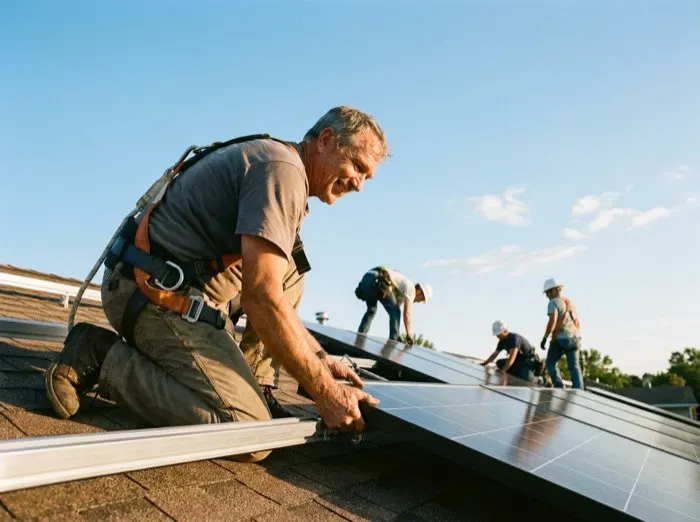
Photovoltaic installation companies have grown fast and many hire foreign workers, sometimes with lighter formal requirements for the mounting work, while the grid connection itself must be signed off by a certified electrician registered with the grid operator. Wind and grid-infrastructure contractors also recruit electricians for substation and cabling work.
Pay: what is realistic
Figures vary a lot by region and by whether a company is bound by a collective agreement. As a rough guide for 2026, a recognised electrician typically earns around 2,800 to 4,000 euros gross per month, with experienced industrial electricians and those on collective agreements earning more. Helpers without recognition usually earn noticeably less. Western Germany generally pays more than the east, but rents in cities such as Munich are also much higher.
Practical notes
- German language matters. Many employers expect roughly B1 German for safety and customer communication, and recognition authorities may ask for it too.
- Self-employment as an electrical contractor requires a Meister title or equivalent and registration with the Chamber of Crafts - that is a long-term goal, not a starting point.
- Be wary of anyone charging you a fee for a German job offer. Nobody legitimate charges workers for a job.
A realistic step-by-step plan
Because recognition is the bottleneck, sequence matters. A plan that works for many non-EU electricians looks like this:
- Step 1: Gather documents early - diploma, curriculum with hours, employer references describing the electrical tasks you actually performed, all translated by a certified translator. Weak paperwork is the most common reason recognition stalls.
- Step 2: File the equivalence check with the competent Handwerkskammer, which you can do from abroad. Expect the process to take months, not weeks.
- Step 3: Start German now, in parallel. Reaching B1 while your file is processed saves you half a year later and increases the number of employers willing to interview you.
- Step 4: Apply to employers with the recognition notice (even a partial one) in hand - it changes how seriously applications are read.
What working life looks like
German electrical work is standards-driven: VDE norms, documented measurements, tidy cable management. Employers care about safe, methodical habits as much as speed, and apprentice-style supervision in your first months is normal even for experienced arrivals - treat it as onboarding, not an insult. Working weeks are typically around 37 to 40 hours, overtime is compensated, and larger firms often help with relocation, temporary housing and the bureaucracy of registering your address (Anmeldung), which you need for almost everything else, from bank accounts to tax class.
This article is general information, not legal advice. Rules change, so check the official portal Anerkennung in Deutschland and the German missions abroad, or the EU job mobility portal at eures.europa.eu, before making decisions.
If you are an electrician thinking about Germany, put yourself where employers can find you. Create your free profile on Workuro - it is free, needs no credit card, and employers contact you directly.
Ești gata să fii găsit?
Creează-ți profilul în 2 minute. Gratuit, fără card bancar.
Continuă lectura