Plumber Jobs in Denmark for Foreign Workers (2026)

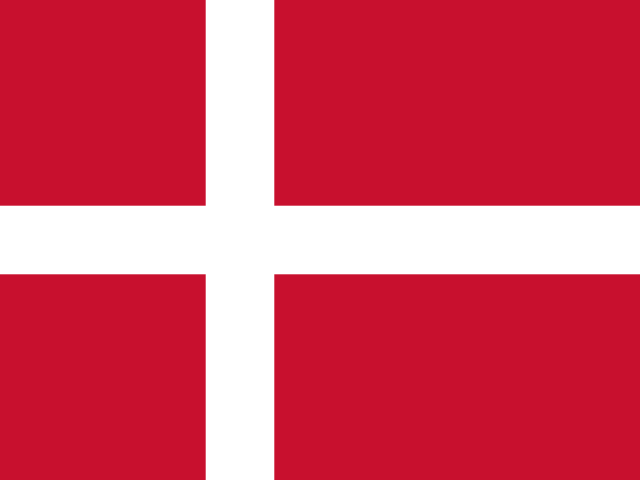 Denmark
Denmark's plumbing trade is called VVS (vand, varme og sanitet - water, heating and sanitation), and as in the rest of Scandinavia the heating side is inseparable from the plumbing side. What makes Denmark distinctive is district heating: around two-thirds of Danish homes are connected to it, so a Danish VVS'er spends less time on individual gas boilers and more on district-heating units, underfloor heating and, in areas off the network, heat pumps.
The Positive List route
For non-EU workers, the most relevant immigration channel is Denmark's Positive List for Skilled Work - a list of shortage occupations updated twice a year where residence and work permits are granted based on a job offer, without the high salary threshold of the Pay Limit Scheme (which is set well above normal trade wages). VVS and related installation roles have appeared on the skilled list in recent updates, but always verify the current list before making plans, because it changes every January and July. Applications go through SIRI, the Danish Agency for International Recruitment and Integration. For the broader European context, see EU work permits and visas explained.
Authorization matters
Denmark regulates who may perform water, drainage and gas installations: companies must be authorized (autoriseret) and work under an approved responsible person, with the Danish Safety Technology Authority (Sikkerhedsstyrelsen) overseeing the system. As a foreign employee you work under your employer's authorization, but your foreign qualification can be assessed for recognition, and employers pay more for people whose competence is documented. Bring certificates, apprenticeship papers and references, ideally with English or Danish translations.
Pay, unions and living costs
Denmark has no statutory minimum wage; pay is set by collective agreements between employers and unions like Blik- og Rørarbejderforbundet. Qualified VVS workers typically earn somewhere around DKK 32,000-42,000 gross per month (roughly €4,300-5,600), among the highest trade wages in Europe - but Danish income taxes are high and Copenhagen rents are steep. Outside the capital, in Aarhus, Odense or Aalborg, the wage-to-cost balance is noticeably better. Most serious employers follow a collective agreement; treat any offer far below agreement rates as a warning sign.
Practical points
- Danish language: service work needs it, big construction sites less so at first, but long-term you will need Danish.
- Green transition work - heat pumps, district-heating conversions away from gas - is where demand is growing fastest.
- Nobody legitimate charges workers for a Danish job offer. Employers pay recruitment costs, never you.
Danish workplace culture
Danish firms run flat hierarchies: apprentices call the boss by first name, and a VVS'er is expected to plan their own day, talk to customers directly and flag problems early rather than wait for instructions. Working hours are genuinely respected - a standard week of 37 hours, with overtime paid or banked as time off - and it is normal for the site to empty by mid-afternoon on Fridays. For workers used to long-hours cultures, this is an adjustment in the pleasant direction, but it also means productivity expectations during working hours are high.
The pay packet in detail
Danish collective agreements add pension contributions (typically around 12% employer-paid), paid holidays under the holiday act, and in much of the plumbing sector performance-based piecework (akkord) that lets fast, skilled teams out-earn the standard rates considerably. When you evaluate an offer, ask whether the job is time-paid or akkord and what the average akkord earnings at that firm look like - the difference can be substantial.
Getting established
You will need a CPR number (civil registration) for everything from banking to healthcare; your employer and municipality help arrange it. A MitID digital identity follows, and after that Denmark is one of Europe's most digitized countries to live in. Copenhagen housing is the hard part - consider suburbs along the S-train lines or, better, jobs in Jutland where wages stay high and rents drop sharply. Danish language courses are offered to foreign workers at modest cost through municipal programmes, and learning Danish is the single best investment in long-term earning power and permanent residence prospects.
This is general information, not legal advice. Official rules are at nyidanmark.dk (SIRI, the Danish Agency for International Recruitment and Integration).
Danish VVS firms can contact you directly through Workuro. Create your free profile - it is free, no credit card required, and employers reach out to you.
Ești gata să fii găsit?
Creează-ți profilul în 2 minute. Gratuit, fără card bancar.
Continuă lectura
