Roofer Jobs in Iceland for Foreign Workers (2026)

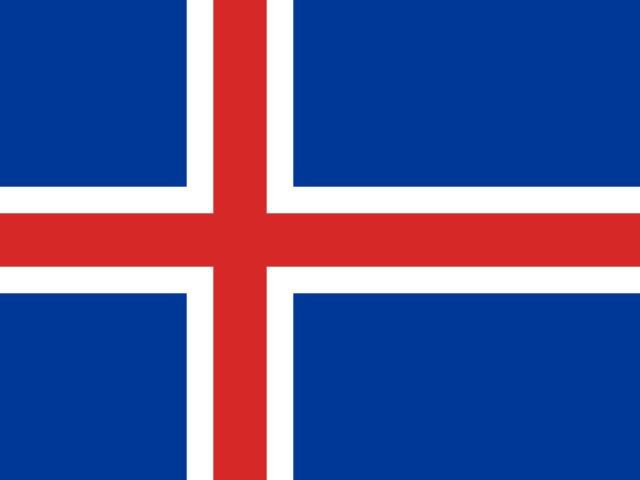 Iceland
If you are a roofer from outside Europe looking for work in Iceland, you need to understand how this specific market operates before applying. Iceland has a active construction industry, but its weather and architecture mean roofing here is completely different from most other countries. If your main experience is laying ceramic tiles, clay tiles, or natural slate, you must know right away that Iceland has almost no demand for those skills. High winds and severe frost tear tile roofs apart. Nearly every roof in Iceland is made of corrugated sheet metal or heavy torch-on bitumen membrane.
If your specialty is strictly traditional clay tile or slate roofing, your best targets in Europe are Germany, the United Kingdom, or France rather than Iceland. However, if you have solid experience with corrugated metal installation, single-ply membrane waterproofing, bitumen roll roofs, or structural timber roof framing, Icelandic contractors regularly look for capable workers from outside the European Union. Demand for general construction workers who can handle roofing is steady, but you must follow exact legal procedures to get a job and a valid work permit.
The Icelandic Roofing Market: Materials and Skill Requirements
To get hired by an Icelandic contractor, you need to align your skills with the exact building methods used across the island. Icelandic buildings are constructed to withstand extreme weather, gale-force Atlantic winds, and heavy winter rain and snow. Understanding these trade details will help you target the right employers and present your skills correctly.
- Corrugated Sheet Metal (Bárujárn): This is the most common roofing material across Reykjavík and regional towns. Roofers fix galvanized or painted corrugated steel and aluminum sheets over timber battens. Experience with metal cutting, flashing, ridge cap fitting, and weather-tight sealing is essential.
- Torch-on Bitumen and Waterproofing (Þakpappi): Flat roofs on commercial buildings, apartment blocks, and modern residential builds use multi-layer bitumen membranes or synthetic EPDM rubber sheets. Knowledge of heat-welding seams, primer application, and roof drainage installation is heavily valued.
- Timber Roof Structure (Húsasmíði): Roofing in Iceland is closely connected to general carpentry. Employers often look for workers who can assemble roof trusses, lay plywood or roof decking, and install insulation alongside top-layer coverings.
- Safety and Wind Protection: Working at heights in Iceland requires strict safety standards. Wind gusts can appear suddenly, so contractors require workers who understand safety harness systems, scaffolding assembly, and temporary weather protection.
Pay Rates and Net Monthly Earnings for Roofers in Iceland
Wages in Iceland are among the highest in Europe, but the cost of living is also elevated. All pay rates in Iceland are governed by union collective agreements, known as kjarasamningar. As a foreign roofer, your salary cannot be lower than the minimum set by the relevant labor union. The primary unions covering this work are Efling (in the capital area) and Starfsgreinasambandið (SGS, in regional towns), while licensed carpenters belong to BYGGIÐN.
Pay is calculated on a monthly base rate, with additional compensation for overtime, shift work, and heavy weather conditions. Here is what you can realistically expect in Icelandic Króna (ISK) for 2026:
- Unqualified Construction or Roofing Assistant: Gross monthly salary ranges between 480,000 ISK and 560,000 ISK. After income tax, pension deductions, and union fees, the net monthly take-home pay is approximately 360,000 ISK to 410,000 ISK.
- Experienced Non-EU Roofing Technician: Gross monthly salary ranges between 580,000 ISK and 680,000 ISK. Net monthly take-home pay averages between 420,000 ISK and 480,000 ISK.
- Certified Master Carpenter or Roofing Specialist: Gross monthly salary ranges between 700,000 ISK and 850,000 ISK (or more with high overtime hours). Net monthly take-home pay ranges between 500,000 ISK and 590,000 ISK.
Iceland operates a personal tax credit system called persónuafsláttur. Every worker receives a monthly tax discount of around 64,000 ISK, which is automatically calculated by your employer's payroll. Income tax is withheld at the source. Most employers offering contracts to foreign workers also assist with finding rental housing or employer-provided worker apartments, though the rent cost is deducted from your monthly wages or paid separately.
Work Permits and Visa Rules for Non-EU Roofers
If you hold a passport from outside the European Union or European Economic Area (for example, from India, Nigeria, the Philippines, Colombia, Serbia, or Uzbekistan), you cannot travel to Iceland to search for a job on a tourist visa. Working without a valid permit is illegal and results in deportation.
To work legally in Iceland as a roofer, you must secure a job offer first. The legal process involves two primary government authorities:
- The Directorate of Immigration (Útlendingastofnun): Processes your residency visa and handles background checks, passport verification, and health insurance clearance.
- The Directorate of Labour (Vinnumálastofnun): Reviews and approves your work permit application. They verify that no qualified Icelandic or EU/EEA citizen was available to fill the position.
The typical permit route for non-EU roofers is the temporary work permit for jobs requiring special skills or work permits based on temporary labor shortages. Your employer must first advertise the vacancy on the European employment network for at least two weeks. Once that period ends without local applicants, the employer submits your signed employment contract to Vinnumálastofnun.
The relevant trade union must also approve the contract to verify that your pay and working conditions match national collective agreements. Once approved, Útlendingastofnun issues the visa. The entire procedure usually takes between 3 and 5 months. You must wait in your home country until the physical permit and visa entry approval are issued.
Trade Qualifications, Licenses, and Language Demands
Understanding how trade qualifications work in Iceland helps you position your profile correctly when reaching out to employers.
- Formal Trade Recognition: In Iceland, carpentry and advanced roofing are regulated trades. Formal recognition of foreign professional qualifications is managed by Iðan fræðslusetur (the main educational center for technical trades in Iceland) alongside ENIC/NARIC Iceland. If you hold a formal vocational diploma from your home country, you can submit your transcripts for evaluation.
- Working Without European Trade Licenses: If your home qualifications are not formally recognized as an Icelandic journeyman certificate (sveinspróf), you can still work legally as a roofing installer, assistant, or general site specialist. You will be classified under general construction union pay scales rather than master craftsman rates, but you can still secure a valid work permit.
- Language Requirements: Icelandic is the official language, but English is the primary working language on major Icelandic construction sites. Site managers, safety directors, and team leads routinely communicate in English. You do not need to speak Icelandic to secure an initial job contract, but you must have practical working English (B1 level or higher) to read safety protocols and follow daily site directives.
Key Regions, Seasons, and Employer Hiring Cycles
Construction activity in Iceland is heavily concentrated in specific geographical areas and follows a distinct seasonal pattern due to the country's northern location.
- Reykjavík Capital Region: Comprising Reykjavík, Kópavogur, Hafnarfjörður, and Garðabær, this region represents over 70 percent of all construction and building restoration in the country. Large commercial projects, multi-story residential developments, and institutional roof replacements happen here continuously.
- Reykjanesbær and Keflavík: Located near the international airport, this growing region sees frequent industrial warehouse construction, commercial building, and hotel development requiring large flat membrane roofs.
- Akureyri and Northern Iceland: As the largest urban center outside the south, Akureyri maintains steady residential building and municipal repair contracts.
The hiring cycle in Iceland is heavily influenced by the weather. The peak outdoor roofing season runs from April through October. During summer, Iceland experiences nearly 24 hours of daylight, allowing construction companies to run extended shifts and complete exterior roofing quickly before winter storms arrive.
During the winter months (November through March), severe gale-force winds, sub-zero temperatures, and heavy snow limit full roof replacements. Winter work focuses mainly on interior structural framing, insulation installation, weatherproofing existing structures, and emergency storm damage repair. Because work permit processing takes up to 5 months, Icelandic contractors actively recruit foreign roofers during winter (January to March) so workers can arrive fully permitted for the spring start in April.
Reality Check: Common Mistakes Non-EU Roofers Make
- Assuming clay or slate roofing skills are in demand: Iceland relies almost entirely on corrugated metal sheets and torch-on bitumen membranes due to severe storm winds.
- Attempting to travel on a tourist visa to find work: Tourist job seeking is illegal. You must remain in your home country while your employer submits your contract to Vinnumálastofnun and Útlendingastofnun.
- Expecting total net pay to match gross salary figures: Income tax, pension funds, and union fees are automatically deducted from monthly pay, though you benefit from the monthly personal tax credit (persónuafsláttur).
- Believing you must speak fluent Icelandic before applying: Employers require practical English for job-site safety; learning Icelandic can come later.
- Expecting continuous full-scale outdoor roofing in mid-winter: Winter weather regularly pauses outdoor roof work due to high winds and icy conditions.
Build Your Workuro Profile to Get Found by Icelandic Employers
Icelandic contractors searching for foreign workers look for specific, proven skills. Creating a complete Workuro profile gives you direct visibility to employers and recruiters actively searching for talent for upcoming seasonal and permanent projects.
Make sure to include these precise details in your Workuro profile:
- Specific Roofing Materials: Clearly list your experience with corrugated sheet metal (bárujárn), bitumen torch-on membranes (þakpappi), EPDM synthetic rubber, or structural timber roof trusses.
- Language Capabilities: State your actual English language level clearly (for example, Conversational, Intermediate, or Fluent).
- Safety Certifications and Work History: List any working-at-heights certificates, fall protection training, or heavy equipment operator tickets you hold.
- Target Regions: Mention your willingness to work in key Icelandic hiring hubs like the Reykjavík Capital Region, Reykjanesbær, or Akureyri.
- Availability Date: Indicate when you are ready to start, keeping in mind the 3 to 5 month processing window for Icelandic work permits.
A detailed, accurate profile helps Icelandic construction recruiters match your experience with open permits and reach out to you directly when hiring for the spring and summer construction cycles.
Ești gata să fii găsit?
Creează-ți profilul în 2 minute. Gratuit, fără card bancar.
Continuă lectura