Caregiver Jobs in Sweden for Foreign Workers (2026)
 Sweden
Sweden's municipalities forecast large shortfalls of care staff as the postwar generation reaches its late eighties, and foreign-born workers already make up a big share of the elderly-care workforce. At the same time, Sweden has tightened its labour-migration rules, so the route in looks different than it did a few years ago. Here is the current picture.
The jobs and the protected title
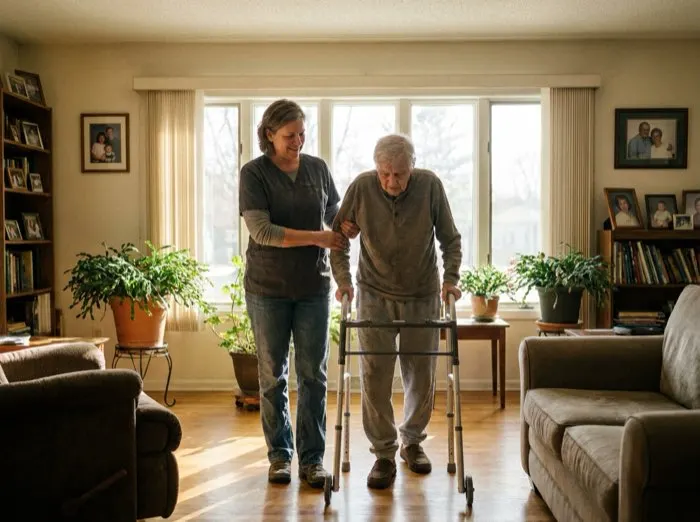
The backbone of Swedish elderly care is the underskoterska (assistant nurse), working in nursing homes (sarskilt boende) and in municipal home care (hemtjanst), which delivers help to older people living at home - Sweden strongly favours ageing at home, so home care is a huge employer. Since 2023 underskoterska is a protected professional title requiring a certificate from the National Board of Health and Welfare (Socialstyrelsen), based on Swedish care education or recognised equivalent. Below that level, vardbitrade (care aide) roles exist with lower formal requirements and lower pay. Live-in care is essentially absent as a formal category; municipal and private providers run shift-based services.
Work permit route
EU/EEA citizens work freely. Non-EU citizens need a work permit from the Swedish Migration Agency (Migrationsverket), which requires a job offer with conditions matching collective agreements and - under rules introduced in late 2023 - a salary of at least 80 percent of the Swedish median wage. That threshold matters: entry-level care-aide wages can fall below it, while qualified assistant-nurse and nurse salaries are more likely to clear it. The government has discussed exemptions and adjustments for shortage occupations, so check the current status before planning around it. Sponsorship basics are covered in how EU employer sponsorship works.
Language
Swedish is non-negotiable in care. Municipal employers commonly ask for roughly B1-level Swedish for home care, where you work alone in clients' homes and document digitally, and Socialstyrelsen requires proof of Swedish (or another Scandinavian language) for the underskoterska certificate. Many municipalities run combined language-and-care training for residents, which is one reason people who arrive through other routes - family, study, protection - often build care careers after arrival.
Pay in 2026
As rough orientation: care aides typically earn somewhere around SEK 24,000 to 28,000 gross per month, underskoterskor around SEK 28,000 to 34,000 depending on experience and shift patterns, with OB-tillagg (inconvenient-hours supplements) adding more for evenings, nights and weekends. Collective agreements set the floor almost everywhere. Cost of living is moderate outside Stockholm; rental queues in big cities are a genuine obstacle, so smaller towns are often easier all round.
Honest assessment
For a non-EU applicant without Swedish, the direct-recruitment path is narrow because of the salary threshold and language. Realistic strategies: qualify as a nurse (a regulated shortage profession), reach B1+ Swedish before applying, or target private care companies that recruit internationally. Never pay anyone for a Swedish job offer - legitimate employers carry recruitment costs, and permits are decided only by Migrationsverket.
How people actually get in
Look at who works in Swedish elderly care today and a pattern emerges: most foreign-born staff did not arrive on care work permits. They came via family ties, study or protection, learned Swedish through SFI (free municipal Swedish for immigrants), then entered care through municipal training programmes that combine paid work with underskoterska studies. Several municipalities and private groups like Attendo and Vardaga run structured intro tracks for newcomers. If you have any lawful route to Sweden, this ladder is the realistic one - care employers hire eagerly once you are in the country with B1 Swedish.
Working culture and conditions
Swedish care work is documented, digital and team-based: you log visits in phone apps, follow genomforandeplaner (individual care plans), and attend regular team meetings. Home care means moving between clients by bike or car - a driving licence widens your options considerably, especially in rural municipalities that struggle most for staff and are often most willing to support housing. Scheduling uses rolling rotas with evenings and weekends; OB supplements for those hours are a significant part of real earnings, so compare full packages rather than base pay when weighing offers.
This is general information, not legal advice. Verify permit rules at migrationsverket.se and title requirements at socialstyrelsen.se, or see our EU work permits and visas overview.
Make yourself findable: create your free profile on Workuro. Free, no credit card, and employers contact you directly.
Готові, щоб вас знайшли?
Створіть профіль за 2 хвилини. Безкоштовно, без картки.
Читати далі