Caregiver Jobs in the Netherlands for Foreign Workers (2026)
 the Netherlands
The Netherlands has serious staffing gaps in care, especially in home care (thuiszorg) and dementia care, but it is also one of the harder EU countries for non-EU caregivers to enter legally. This guide explains where the demand is, how the permit system actually works, and why honesty about your chances matters more here than almost anywhere else.
Elderly care versus home care
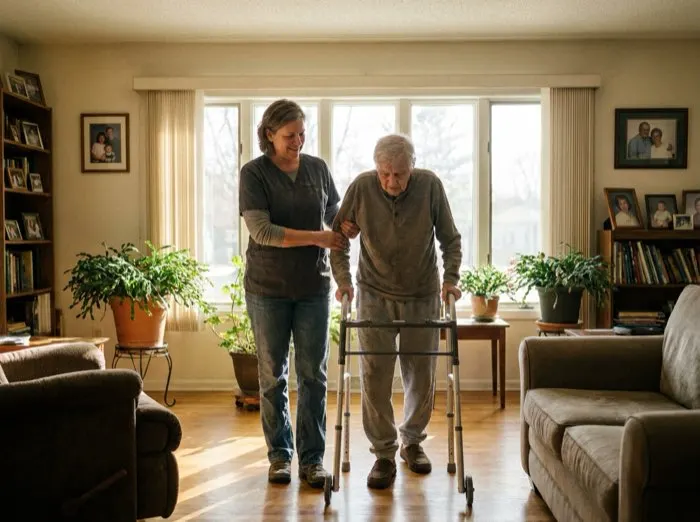
Dutch policy deliberately keeps older people living at home as long as possible, so home-care organisations that send carers to private homes are the biggest growth area, alongside nursing homes (verpleeghuizen) focused on heavy and dementia care. Roles range from huishoudelijke hulp (domestic help) through verzorgende IG (a qualified caregiver level) to registered nurses. Live-in care is a small niche in the Netherlands compared with Southern Europe; almost all work is shift-based in facilities or on home-care routes.
The permit reality
For non-EU citizens the standard route is a single permit (GVVA) or highly skilled migrant permit, and both depend on the employer. Key points:
- Employers hiring from outside the EU generally must be recognised sponsors with the immigration service (IND), and for regular work permits they must show no suitable candidate was available in the EU labour market.
- The highly skilled migrant route has salary thresholds that ordinary caregiver wages usually do not reach; it fits some registered nurses in specialised roles, rarely care assistants.
- EU/EEA citizens can work freely, which is why much of the foreign care workforce comes from within the EU.
In short: a non-EU care assistant without a nursing degree has limited direct options. Realistic paths include qualifying as a nurse first, or gaining EU long-term residence elsewhere. Read our explainer on how EU employer sponsorship works before trusting any agency promises.
Registration and language
Nurses must register in the BIG register, which requires a recognition procedure for foreign diplomas and proof of Dutch language skills; B1 to B2 Dutch is the practical expectation for any client-facing care role. Home care in particular is language-heavy: you work alone in someone's house, read care plans and report in Dutch. Employers occasionally hire English-speaking staff in international private care, but that is the exception.
Pay
Care wages follow the collective agreement for the VVT sector (nursing, care and home care). As rough 2026 orientation: domestic-help roles sit near the statutory minimum wage, qualified caregivers (verzorgende IG) typically earn around €2,600 to €3,300 gross per month, and nurses more. Irregular-hours allowances add meaningfully to take-home pay. The Netherlands has high housing costs, especially in the Randstad, so weigh pay against rent realistically.
Red flags
Because the legal route is narrow, this market attracts intermediaries selling false hope. Be suspicious of anyone claiming they can get a non-EU care assistant a Dutch work visa quickly, and never pay a recruiter for a job offer. Legitimate Dutch employers pay their own recruitment costs.
Practical next steps
If you are an EU citizen or a nurse considering the BIG route, start with Dutch language and the diploma recognition process. General permit background is in our guide to EU work permits and visas explained.
Realistic alternatives inside the rules
If the direct permit route is closed to you, several lawful detours exist. Nursing study in the Netherlands leads to a Dutch diploma, BIG registration and an orientation year to find work. Caregivers who hold long-term resident status in another EU country can, under EU rules, apply to work in the Netherlands under simplified conditions. And EU-citizen family members of Dutch or EU residents work freely. Each of these paths takes years rather than months - but they are real, while a paid shortcut is not.
What Dutch employers actually look for
Home-care organisations screen for independence: you visit ten or more clients a day alone, on a bicycle or small car route, and log everything in the employer's app in Dutch. References that show reliability and lone working carry weight. Nursing homes weigh dementia experience heavily, since heavy dementia care is what remains in residential settings. Diplomas help, but a working level of Dutch plus a verifiable care history is what converts interviews into contracts. Cost-wise, budget realistically: a room in Amsterdam or Utrecht is scarce and expensive, while towns in the east and north offer far cheaper housing and equally short-staffed employers.
This is general information, not legal advice. Check current rules with the Dutch Immigration and Naturalisation Service (IND) at ind.nl before acting.
Ready to be visible to European care employers? Create your free profile on Workuro - free, no credit card, and employers contact you directly.
Готові, щоб вас знайшли?
Створіть профіль за 2 хвилини. Безкоштовно, без картки.
Читати далі