Nurse Jobs in Belgium for Foreign Workers (2026)
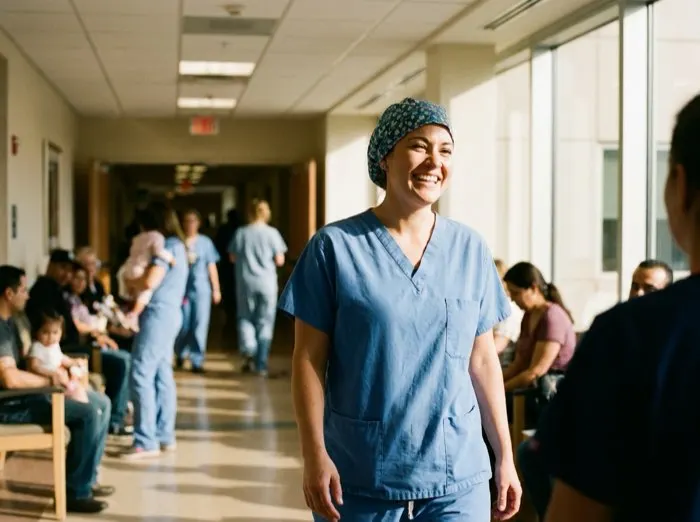
If you are a qualified nurse from outside the European Union, Belgium wants your skills. The Belgian healthcare system faces a structural shortage of registered nurses that has grown every year. Hospitals, nursing homes, and care facilities across the country actively look for trained professionals from South Asia, Africa, Latin America, the Balkans, and Central Asia to fill empty shifts.
However, getting a nursing job in Belgium is not a matter of simply sending a resume and flying over. Healthcare is tightly regulated here. You must go through formal qualification recognition, prove your language skills, and secure a combined work and residence permit. This guide breaks down exactly how the process works in 2026, where the demand is highest, what you will earn, and how to prepare your application.
Where the Demand Is: Belgian Regions and Shortage Lists
Belgium is divided into three distinct regions: Flanders (the Dutch-speaking north), Wallonia (the French-speaking south), and the Brussels-Capital Region (bilingual French and Dutch). Healthcare policy and diploma recognition are managed at the regional and language-community levels, which means your path depends entirely on where you want to live and work.
In all three regions, nursing is officially listed as a shortage occupation (known as a knelpuntberoep in Flanders and a métier en pénurie in Wallonia). Because it is a shortage trade, Belgian employers do not have to prove that they could not find a local candidate before hiring a foreign nurse. This fast-tracks part of the work permit procedure once you have a job offer.
Major hiring hotspots across Belgium include:
- Flanders (Dutch-speaking): Cities like Antwerp, Ghent, Leuven, and Bruges have large university hospitals and massive elderly care networks. Major hospital networks like UZ Leuven, UZ Gent, and ZNA in Antwerp are constantly looking for staff.
- Wallonia (French-speaking): Cities like Liège, Namur, Charleroi, and Mons. Major healthcare centers include CHU de Liège and Grand Hôpital de Charleroi.
- Brussels-Capital Region: A bilingual region with high demand in public hospital networks like Iris Seven and private university hospitals like Cliniques universitaires Saint-Luc and UZ Brussel.
- Care Facilities (Nationwide): Elderly care facilities (called woonzorgcentra in Flanders and maisons de repos in Wallonia) face the most critical staff shortages and are often the most open to recruiting foreign-trained nurses.
Step 1: Diploma Recognition and Your Licence (VISA)
You cannot touch a patient in Belgium without two key legal approvals: official diploma equivalence and a professional licence (called a VISA).
The equivalence process checks whether your foreign nursing degree matches Belgian educational standards (a Bachelor in Nursing or a specialized diploma). You apply to the specific authority based on the region where you plan to work:
- For Flanders: You apply to NARIC-Vlaanderen or the Flemish Department of Education (AGODI) to get your diploma recognized as equivalent to a Flemish Bachelor in Nursing (Bachelor in de verpleegkunde).
- For Wallonia and French-speaking Brussels: You apply to the Equivalence Service of the Federation Wallonie-Bruxelles (Service des Équivalences).
- The Federal VISA: Once your diploma is recognized as equivalent, the Federal Public Service Health (FPS Health / FOD Volksgezondheid / SPF Santé publique) issues your official VISA to practice as a nurse in Belgium.
If your nursing degree from outside the EU lacks specific clinical hours or topics covered in Belgium, the authority may ask you to complete an adaptation course (aanpassingsstage) or pass an aptitude exam at a Belgian nursing school before granting full equivalence.
Language Requirements: Non-Negotiable B2 Level
Language is the primary hurdle for foreign nurses in Belgium. Patient safety laws require you to communicate fluently with patients, doctors, and family members. You must demonstrate language proficiency at a B2 level according to the Common European Framework of Reference for Languages (CEFR).
The required language depends strictly on the region:
- Flanders: You must speak Dutch. You will need a recognized certificate like the CNaVT (Certificaat Nederlands als Vreemde Taal) or an official certificate from a Belgian university language center.
- Wallonia: You must speak French. You will need a DELF B2 or DALF C1 certificate.
- Brussels: You can work with either French or Dutch, though speaking both gives you a massive advantage in hiring and compensation.
English is widely spoken in Belgian daily life, but it is not sufficient for clinical nursing work. Employers will not sponsor your work permit unless you already hold a B2 language certificate or can prove you are enrolled in an intensive program reaching B2 before your start date.
Work Permits and the Single Permit System
To move to Belgium from a non-EU country, you need a Single Permit (Gecombineerde vergunning in Dutch / Permis unique in French). This single document combines your right to work and your right to reside in Belgium.
Here is how the employment process moves step by step:
- Step 1: Job Offer: You secure a job offer from a Belgian hospital or care group.
- Step 2: Permit Application: The employer submits the Single Permit application to the regional employment agency (VDAB in Flanders, Forem in Wallonia, or Actiris in Brussels).
- Step 3: Fast-Track Approval: Because nursing is a shortage profession, the labor market test is waived. Processing typically takes between 2 to 4 months.
- Step 4: Entry Visa: Once approved, you receive a decision letter (Annex 46) and apply for a Type D entry visa at the Belgian embassy or consulate in your home country.
- Step 5: Arrival: You travel to Belgium, register at your local town hall (gemeentehuis or maison communale), and receive your A-card residence permit.
Salary and Working Conditions in Belgium
Belgian healthcare wages are set by national collective bargaining agreements (known as the IFIC baremas). Your starting salary depends on your qualification level (Bachelor vs. Diploma nurse) and your years of recognized clinical experience.
Here is what you can expect financially in 2026:
- Gross Monthly Pay: Starting gross salaries for a full-time registered nurse range between €3,000 and €3,800 per month.
- Net Monthly Pay: Taxes and social security contributions in Belgium are high. A full-time starting nurse generally takes home between €2,200 and €2,700 net per month.
- Shift Bonuses: Working irregular hours significantly increases your pay. Expect extra pay for working night shifts (typically +25% to +50%), weekend shifts (+20% to +100% on Sundays), and public holidays. With regular shift work, net monthly pay can reach €2,800 to €3,200.
- Extra Benefits: Belgian employers routinely provide an end-of-year bonus (13th month), an annual holiday allowance, subsidized public transport or commute allowances, and health insurance extras.
- Working Hours: A standard full-time workweek is 38 hours. Shift rotations usually cover morning, late, and night duties. Hiring happens year-round; there is no specific recruiting season.
Reality Check: What Non-EU Nurses Get Wrong
Many foreign healthcare workers run into unexpected obstacles when applying to Belgium. Keep these honest facts in mind:
- English is not enough: You cannot work as a staff nurse in Belgium using only English. Learning Dutch or French to B2 level before or during your application is mandatory.
- Equivalence takes time: Getting your non-EU diploma evaluated by NARIC or the French Community takes 3 to 6 months. Gather your syllabus, transcript, and degree certificates early.
- Not all experience counts equally: Belgian authorities check your practical clinical training hours closely. You must show evidence of practical hospital internships from your university studies.
- No direct hiring on tourist visas: You cannot arrive in Belgium on a tourist visa, find a employer, and start working immediately. You must return to your home country to collect your Type D visa after your Single Permit is approved.
Set Up Your Workuro Profile for Belgian Employers
Belgian healthcare recruiters search Workuro directly to find international nursing candidates who are ready to make the transition. To make sure your profile shows up in employer searches for Belgian jobs, make your details clear and specific:
- Specify your exact qualification: List your nursing degree title, school name, and whether you hold a Bachelor of Science in Nursing or a Diploma in Nursing.
- List your clinical hours: Mention your total practical internship hours and clinical specialties (e.g., ICU, emergency, geriatrics, surgical, pediatric).
- Show your language certifications: State your exact level in Dutch or French (e.g., Dutch B1 in progress, Dutch B2 certified, French B2 certified).
- Select your target Belgian regions: State clearly if you are targetting Flanders (Dutch), Wallonia (French), or the Brussels-Capital Region.
- Upload clear documents: Include your degree transcripts, course syllabi, and professional registration certificates from your home country.
Keep your Workuro profile updated as you pass language modules or collect paperwork. Complete profiles with verified language skills are the first ones Belgian hospital recruiters contact.
هل أنت مستعد ليجدك أصحاب العمل؟
أنشئ ملفك الشخصي في دقيقتين. مجاني، بدون بطاقة ائتمان.
متابعة القراءة