Welder Jobs in Bulgaria for Foreign Workers (2026)
 Bulgaria
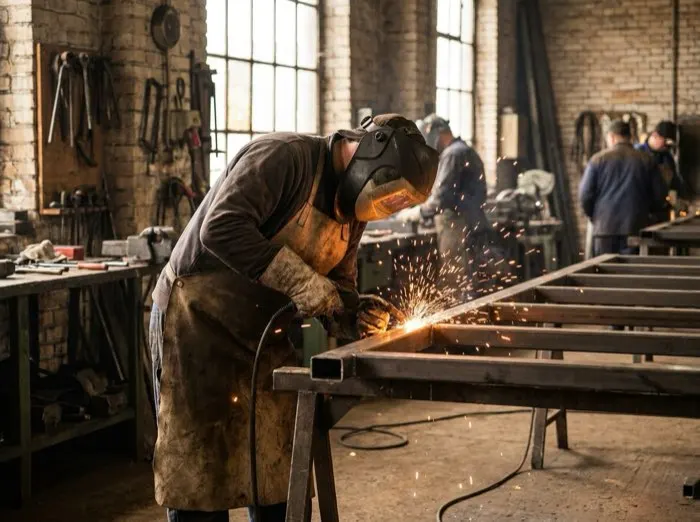
Are you a skilled welder looking for a way into Europe? Bulgaria is quickly becoming one of the most active hiring hubs for industrial workers from outside the European Union. Because many local Bulgarian welders have moved to western countries like Germany or Austria for higher pay, Bulgarian factories, shipyards, and construction firms are facing a major labor shortage. To keep their shops running, employers are actively looking to South Asia, Central Asia, Africa, and non-EU Balkan countries to fill these empty roles.
If you are from Nepal, India, Bangladesh, Vietnam, Turkey, or Moldova, Bulgaria offers a realistic and legal pathway to work in Europe. While the wages are lower than in Western Europe, the cost of living is also much lower, the visa process is more straightforward, and employers often cover your housing. This guide will give you the exact, honest facts about working as a welder in Bulgaria in 2026.
Where the Welder Jobs Are in Bulgaria
Bulgaria has several highly industrialized regions where metal fabrication, shipbuilding, and heavy machinery manufacturing are concentrated. If you are looking for welding work, you will most likely find yourself placed in one of these key areas:
- Varna and Burgas: These are the two major cities on the Black Sea coast. They are the heart of Bulgaria's maritime industry. Shipyards like MTG Dolphin in Varna and various ship repair facilities in Burgas are constantly hiring MIG/MAG and TIG welders for heavy steel plate work and pipe welding.
- Plovdiv (Trakia Economic Zone): Located in southern Bulgaria, this is one of the largest industrial zones in Eastern Europe. It is packed with automotive parts manufacturers, steel structure fabricators, and machinery plants that require automated and manual welders.
- Ruse: Situated on the Danube River on the northern border with Romania, Ruse has a long history of river shipbuilding, agricultural machinery production, and heavy metalworking.
- Stara Zagora: This region is the center of Bulgaria's energy sector. The nearby Maritsa Iztok power plants and associated repair shops frequently hire high-pressure pipe welders and structural steel welders for maintenance projects.
Required Certificates and Welding Standards
Bulgarian employers cannot legally hire you as a qualified welder unless you can prove your skills. Bulgaria follows European standard regulations strictly. To get hired, you must hold, or be ready to pass a test for, the following certifications:
- EN ISO 9606-1: This is the standard European qualification test for fusion welding of steels. If you already hold a valid certificate under this standard from an internationally recognized testing body (like TUV, SGS, or Bureau Veritas), you are a highly attractive candidate.
- The Bulgarian Chamber of Welding: Known locally as the Bulgarian Union of Welding, this organization oversees local standards. Many employers will put you through a practical test upon arrival to certify you locally under their own quality assurance systems.
- Welding Processes (ISO 4063): The most in-demand processes are MIG/MAG (Process 135/136) for structural steel and shipyard work, TIG (Process 141) for stainless steel and high-pressure pipes, and MMA (Process 111) for outdoor construction and maintenance.
Wages, Taxes, and What You Actually Take Home
Let's talk about money honestly. You will not earn German or Dutch wages in Bulgaria, but your net savings can still be significant because of how employers structure their offers for foreign workers. Bulgaria uses the Bulgarian Lev (BGN), which is pegged directly to the Euro (1 EUR is approximately 1.95 BGN).
Here is what you can expect to earn as a monthly net wage (after tax) in 2026:
- Entry-level / MMA Welders: 1,500 BGN to 1,800 BGN net per month (approximately 760 to 920 EUR).
- Experienced MIG/MAG Welders: 1,800 BGN to 2,500 BGN net per month (approximately 920 to 1,280 EUR).
- High-skilled TIG and Pipe Welders: 2,500 BGN to 3,500+ BGN net per month (approximately 1,280 to 1,800+ EUR).
Bulgaria has a flat income tax rate of 10%, which is one of the lowest in Europe. Most importantly, because you are a foreign worker, many reputable Bulgarian employers will provide you with free shared accommodation, free transport from your lodging to the factory, and sometimes a daily meal allowance. This means your basic living costs are almost zero, allowing you to send most of your net salary back home.
The Work Permit and Visa Process
As a non-EU citizen, you cannot just buy a ticket and travel to Bulgaria to work. You need a valid work permit and a Type D national visa. The process is employer-driven, meaning you must find a job first before you can apply for the visa.
The standard pathway is the Single Permit (ERPP). Here is how the process works:
- Step 1: Job Offer and Contract: An employer in Bulgaria decides to hire you and signs a work contract with you.
- Step 2: National Employment Agency Approval: The employer submits your certificates, passport copy, and medical checks to the Bulgarian Employment Agency to prove that no Bulgarian or EU citizen is available for the role. Because welding is on the national shortage list, this step is usually approved quickly.
- Step 3: Visa D Application: Once the employment agency approves your work permit, the employer sends you the official approval documents. You must take these to the nearest Bulgarian embassy or consulate in your home country to apply for your Type D Visa.
- Step 4: Arrival and Residence Card: After getting your Visa D, you travel to Bulgaria. Within your first weeks, you will visit the local migration office to receive your physical residence and work card.
The entire process usually takes between 2 to 4 months. Be patient and do not resign from your current job until you have the physical visa sticker in your passport.
Language, Culture, and Communication on the Shop Floor
Bulgarian is the official language, and it uses the Cyrillic alphabet. It can be a difficult language to learn for speakers of English, Hindi, or Arabic. However, do not let this scare you. In industrial settings, employers are used to managing multicultural teams.
On the shop floor, team leaders and supervisors usually speak basic English or Russian. Many factories hire translators or designated group leaders from your home country to help coordinate daily tasks and safety briefings. That said, learning a few basic Bulgarian words will make your life much easier and show your team that you respect them. Focus on learning safety terms, tool names, and basic greetings. Words like "заваряване" (welding), "маска" (mask), and "опасно" (dangerous) are great starting points.
Reality Check: What Workers Get Wrong
To succeed, you must have realistic expectations. Here are the most common mistakes foreign workers make when looking for welding jobs in Bulgaria:
- Thinking you can easily move to Germany: A Bulgarian work permit only allows you to work legally in Bulgaria. It does not give you the right to move and work in Western Europe. If you leave your Bulgarian employer to work illegally in another country, you risk deportation and a ban from the entire Schengen zone.
- Expecting to be paid in Euros: While the Lev is pegged to the Euro, your contract, bank account, and daily expenses will all be in Bulgarian Lev (BGN).
- Underestimating the practical welding test: Do not lie about your skills on your resume. Almost every Bulgarian employer will make you perform a test weld (such as a pipe or plate test in various positions) on your very first day. If you fail the test, they can legally terminate your contract and send you home.
- Expecting instant visa processing: Visas take time. Anyone promising you a Bulgarian work visa in two weeks is not telling the truth. Plan for a 3-month wait.
Build Your Workuro Profile to Get Found
Bulgarian employers are actively searching for skilled welders right now, and they use Workuro to find international talent. To make sure your profile stands out and appears in their search results, you must be highly specific.
When you create your free Workuro profile, make sure you include:
- Your specific welding processes: Do not just write "welder." Specify if you do MIG/MAG (135/136), TIG (141), or MMA (111).
- Your certificates: Clearly state if you hold an EN ISO 9606-1 certificate, its expiration date, and who issued it (such as TUV or SGS).
- Your preferred regions: Mention that you are willing to relocate to industrial hubs like Varna, Burgas, Plovdiv, or Ruse.
- Your language skills: Be honest about your English level and mention if you are willing to learn basic Bulgarian.
A complete, detailed profile shows Bulgarian employers that you are a serious, professional worker. Take the time to fill out every section, upload your certificates, and let the right opportunities find you.
Pronto para ser encontrado?
Crie seu perfil em 2 minutos. Grátis, sem cartão de crédito.
Continue lendo