Working in Slovakia from the Philippines: Visa, Permit, Costs (2026)

 Slovakia
If you are a Filipino welder, driver, factory worker, caregiver, or mechanic looking for stable work in Europe, Slovakia is a country to consider. Located in Central Europe, Slovakia has a strong manufacturing industry and a growing need for skilled trade workers. Moving to Slovakia from the Philippines requires clear steps, official approvals, and the right legal visa route.
This guide explains how to get a work permit for Slovakia from the Philippines, what documents you must prepare in Manila, what costs you will face, and how to protect yourself from fake recruiters. Working abroad changes your life, but you must take the legal path to protect your family and your future.
The Legal Permit Route: How Filipinos Move to Slovakia
To work legally in Slovakia as a Philippine national, you cannot simply arrive on a visit visa and start working. You need a formal work and residence authorization before you start your job. The most common route for skilled and manual trades is the Temporary Residence for the Purpose of Employment (known in Slovak as Prechodny pobyt na ucel zamestnania) or a specific National D Visa linked to labor shortage programs.
The entire process starts with the employer in Slovakia, not with the worker in the Philippines. Here is how the sequence works:
- Step 1: Labor market declaration. Your prospective employer in Slovakia must report the job vacancy to the Slovak Labour Office (Urad prace, socialnych veci a rodiny or UPSVaR). The employer must demonstrate that no suitable candidate from Slovakia or the European Union was available to fill the position.
- Step 2: Employer confirmation. Once the required waiting period passes, the Labour Office issues a written confirmation to the employer that the position can be filled by a non-EU citizen.
- Step 3: Worker application. After receiving the job offer and Labour Office confirmation, you apply for your temporary residence or national visa for work purposes.
- Step 4: Philippine government processing. As a Filipino worker going abroad, your employment contract must also be cleared through the Department of Migrant Workers (DMW, formerly POEA) in the Philippines to secure an Overseas Employment Certificate (OEC).
Where to Submit Your Visa Application in the Philippines
Filipino citizens residing in the Philippines must submit their application documents to the Embassy of the Slovak Republic in Manila or through an authorized visa application partner designated by the Slovak government serving the Philippines. You must book an official appointment before going to the embassy.
During your appointment, the officials will collect your application form, verify your original documents, and collect your biometric data (fingerprints and digital photo). You must present yourself in person for this appointment. Do not rely on third party fixers who claim they can submit your biometrics for you - this is impossible and illegal.
Required Documents and the Apostille Process
Slovak immigration authorities require strict documentation to prove who you are, what skills you have, and that you have a clean record. Because both the Philippines and Slovakia are members of the Apostille Convention, your Philippine public documents must be legalised by the Department of Foreign Affairs (DFA) with an Apostille certificate.
Here is the standard list of documents you must prepare:
- Valid passport. Your Philippine passport must be valid for at least 3 to 6 months beyond your planned stay, with at least two blank pages.
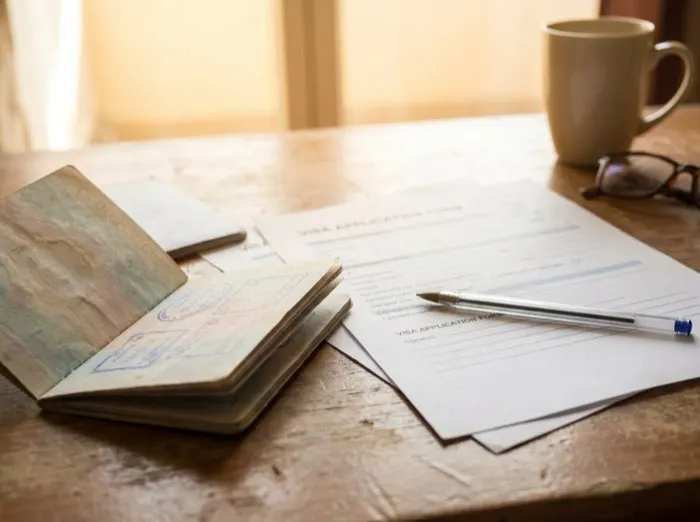
- Official application form. Completed neatly in English or Slovak and signed by you.
- Employment contract. A signed, binding employment contract or written job offer from your Slovak employer stating your job position, work location, and working hours.
- NBI clearance (Police record). A fresh NBI Clearance issued in the Philippines. This document must carry a DFA Apostille. If you lived in another country for more than 90 days in the last 3 years, you may also need a clearance from that country.
- Proof of qualifications. Your TESDA certificates, diplomas, or employment certificates proving your trade skills, also authenticated with a DFA Apostille where applicable.
- Proof of accommodation. A confirmed lease agreement or official declaration from your Slovak employer providing registered housing details for your stay.
- Official translations. Documents issued in English or Tagalog (like your NBI Clearance) must be translated into the Slovak language by an official court-certified translator recognized by Slovak authorities.
- Health certificate. A medical examination certificate confirming you do not suffer from contagious diseases, usually completed after arrival or as instructed by the consulate.
Costs and Processing Times
Planning your budget is essential. You should know both the official government fees set by Slovakia and the real costs you will pay in the Philippines to prepare your documents.
Official government fees and timelines:
- Residence permit fee: Slovakia sets the administrative application fee for a work residence permit at approximately 170 EUR to 250 EUR depending on the exact visa path.
- Processing time: Once your complete application is submitted at the embassy, official processing usually takes approximately 30 to 90 days.
Document and travel costs on the Philippines side (rough estimates):
- NBI clearance and DFA Apostille: Approximately 200 PHP to 500 PHP per document (about 3 EUR to 9 EUR).
- Medical examination: Medical clinics approved for OFW screening charge approximately 3,000 PHP to 6,000 PHP (about 50 EUR to 100 EUR).
- Slovak document translations: Sworn translations into Slovak cost approximately 1,500 PHP to 3,500 PHP per page (about 25 EUR to 60 EUR).
- Airfare: A one-way flight from Manila to Vienna or Bratislava ranges approximately from 30,000 PHP to 55,000 PHP (about 500 EUR to 900 EUR). In many legitimate direct-hire arrangements, reputable employers reimburse or provide the flight ticket.
Placement Fees and Scam Warnings
Under Philippine DMW regulations and European labor principles, employers carry the cost of international recruitment. In most European Union countries, it is illegal to charge a worker a placement fee simply to secure a job.
You should check the exact placement fee rules enforced by the DMW for your specific job category. However, you must stay extremely cautious about illegal recruiters targeting Filipino trade workers. Be aware of these critical warnings:
- Never pay for a job offer. If an agency or individual asks for tens of thousands of pesos as a placement fee or reservation fee, stop immediately.
- Watch out for fake processing fees. Scammers often ask for money via online wallets (like GCash or Maya) claiming it is for fast visa stamping or direct embassy approval. Embassy fees are paid directly to official bank accounts or at official counters.
- Verify DMW registration. Any agency recruiting in the Philippines must have a valid DMW license. You can check their license status online via the official DMW portal.
Trades Slovakia Hires Foreign Workers For Right Now
Slovakia relies heavily on foreign workers to fill key gaps in its industrial economy. Three trades with genuine recruitment activity include:
- Assembly line operators and factory technicians: Slovakia is a major center for automotive manufacturing and electronics assembly, creating ongoing demand for factory workers.
- Heavy logistics and CE truck drivers: Logistics companies in Slovakia frequently recruit international commercial drivers with valid licenses to support European transport routes.
- Construction trade specialists: Welders, pipefitters, carpenters, and general construction workers are routinely hired for commercial building and infrastructure projects.
Myths vs facts
- Myth: You can enter Slovakia on a Schengen tourist visa and convert it to a work permit while staying there.
Fact: Skilled manual workers must obtain their work authorization approval or National Visa through proper consular routes before starting work. Working on a tourist visa is illegal and leads to deportation. - Myth: You must pay a placement agency in Manila two months of salary to secure a contract in Slovakia.
Fact: European employers cover recruitment expenses, and charging workers illegal placement fees breaks Philippine DMW guidelines. - Myth: You do not need to register with the DMW if you have a valid Slovak visa.
Fact: Every Filipino departing the Philippines for foreign employment must complete DMW processing to get an Overseas Employment Certificate (OEC) to leave the airport legally. - Myth: English is spoken everywhere in Slovak workplaces, so you do not need to learn any Slovak.
Fact: While basic work instructions may be given in English, learning fundamental Slovak words helps you understand safety warnings, trade instructions, and daily life.
Before you sign
Before you sign an employment contract or hand over any documents, review this checklist carefully:
- [ ] Does the contract clearly name your employer, job title, exact workplace address, and basic monthly wage?
- [ ] Is the employer registered and verified in Slovakia, with a clear company registration number (ICO)?
- [ ] Does the contract state who pays for your flight, medical insurance, and accommodation setup?
- [ ] Is the recruitment agency licensed by the Philippine Department of Migrant Workers (DMW)?
- [ ] Have you kept original copies of all your certificates, NBI clearance, and DFA Apostille forms?
- [ ] Are you being asked to pay any money into a personal bank account or GCash number? (If yes, do not sign).
Create Your Profile on Workuro
If you have trade skills in welding, driving, construction, manufacturing, or hospitality, make sure your profile is ready for European employers searching for talent. Put your specific trade certificates, passport details, driver license categories, and work history directly into your Workuro profile so legitimate employers in Slovakia and across Europe can find you directly.
Workuro is free for workers - employers pay to search the register, and nobody may charge you for a job.
Prêt à vous faire remarquer ?
Créez votre profil en 2 minutes. Gratuit, sans carte bancaire.
Continuer la lecture