Construction Worker Jobs in Czechia for Foreign Workers (2026)
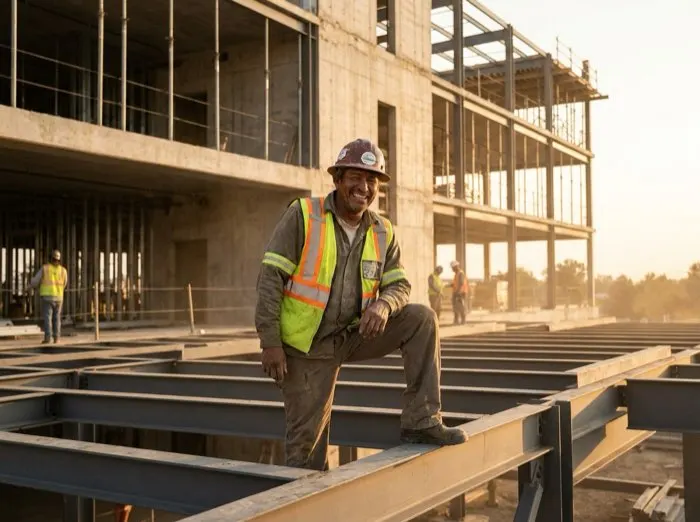
If you are a builder, bricklayer, electrician, or general site laborer living outside the European Union, Czechia is one of the most active hiring markets in Central Europe right now. The country is building continuously. Major infrastructure upgrades, commercial warehouses, and residential towers are going up in almost every large region. Because the local population cannot fill every site role, European construction companies actively look abroad for reliable crews.
As a candidate from South Asia, Africa, Central Asia, the Balkans, or Latin America, you must follow the correct legal steps to move and work. This guide explains how construction hiring works in Czechia for 2026, including where the work is located, what you can expect to earn in local currency, how permits work, and what certificates you need before setting foot on a Czech scaffolding rig.
The Construction Market in Czechia for 2026
Construction demand in Czechia remains consistently strong across multiple sectors. Unlike some smaller nations where hiring is limited, Czechia has a structural shortage of trade workers. You will find active sites throughout the country, but the highest concentration of work is clustered in key economic hubs.
- Prague and Central Bohemia: The capital region leads in large residential developments, office towers, and urban renovation. Central Bohemia, surrounding Prague, is heavily focused on huge logistics centers and industrial park expansions near major transit routes.
- Brno and South Moravia: Brno is Czechia's second largest city. It has a massive demand for structural workers, finishing specialists, and utility installers due to expanded technology parks and modern apartment complexes.
- Plzeñ and the Western Highway Corridor: Located along the main motorways heading toward Germany, Plzeñ hosts continuous construction of industrial plants, distribution hubs, and commercial spaces.
- Ostrava and Moravian-Silesia: Known historically for heavy industry, this region is undergoing major redevelopment. Brownfield restoration, road building, and commercial site projects create steady demand for earthmoving operators, concrete workers, and steel fixers.
The construction cycle in Czechia is somewhat seasonal for heavy exterior work like excavation, foundation laying, and road building. The main outdoor push runs from late March or April through November. However, indoor finishing trades such as drywall installation, electrical wiring, plumbing, and interior tiling continue strong straight through the cold winter months.
Work Permits and Visa Routes for Non-EU Builders
You cannot work on a construction site in Czechia using a standard tourist visa or a short-stay Schengen visa. To work legally, you must hold a valid work permit and residence authorization issued by the Czech authorities. Employers must register open vacancies with the Ministry of Labour and Social Affairs (MPSV) before recruiting foreign staff.
- The Employee Card (Zaměstnanecká karta): This is the primary long-term permit for non-EU workers. It combines your legal stay and your work authorization into a single card. Your prospective employer must file the job offer on the official labor portal. Once cleared, you apply for the visa at the Czech embassy in your home country.
- Government Fast-Track Programs: Czechia operates target programs, such as the Skilled Worker Program (Program Kvalifikovaný zaměstnanec). These allow qualified employers to process visa applications faster for candidates from designated non-EU countries. Ask your employer if they are registered in this program, as it can reduce waiting times.
- Processing Timeline: Expect the visa application process to take between 60 and 120 days from the moment your employer submits the paperwork in Czechia to your embassy interview. Plan your timeline around site hiring cycles.
- Employer Sponsorship: Your employer pays the official state processing fees for job registration and handles the administrative work on the Czech side. Workers do not pay for labor portal listings or work permit registrations.
Trade Qualifications, BOZP Safety, and Site Licenses
Czech job sites operate under strict European Union health, safety, and technical standards. While general laborers can learn on the job, skilled tradesmen must prove their qualifications or complete mandatory local safety orientation upon arrival.
- BOZP Safety Training: BOZP stands for Bezpečnost a ochrana zdraví pĻi práci (Safety and Health Protection at Work). Every worker on every site must complete a BOZP briefing before touching equipment or starting work. Your employer conducts this training upon your arrival, covering personal protective equipment, site hazards, and emergency rules.
- Electrical Work Regulations: If you are an electrician, your foreign diploma must be reviewed, and you must pass an assessment under Government Regulation NV 191/2022 Sb. (which replaced the older VyhláĻka 50 regulation). Without this certification, you cannot connect main power lines or sign off on installations.
- Heavy Machinery Licenses: Crane operators (JeĻábník) and machinery operators must hold valid certificates. While your native operating license shows your experience, Czech site directors usually require an updated local assessment or equivalent EU machine operator ticket.
- Scaffolding Certifications: Professional scaffolders (LeĻenáĻ) must understand standard modular system assemblies like Layher or Peri and demonstrate proper fall-protection tie-off procedures according to national safety codes.
Expected Pay, Working Hours, and Housing
Pay in the Czech construction sector is usually calculated as an hourly rate or a monthly net salary in Czech Koruna (CZK). Income tax, health insurance, and social security contributions are deducted automatically by your employer from your gross pay.
- General Site Laborers: Typical net pay ranges from 25,000 CZK to 32,000 CZK per month (approximately 1,000 to 1,300 EUR net), depending on the region and the total hours worked.
- Skilled Tradesmen: Masons, formwork carpenters, steel fixers, dry wallers, and pipefitters earn between 33,000 CZK and 45,000 CZK net per month. High-skill roles like certified welders or tower crane operators can earn more.
- Work Hours and Overtime: Standard full-time work schedules are 40 hours per week. During peak summer construction months, sites often offer optional overtime work on Saturdays, which increases overall monthly net earnings.
- Worker Accommodation: Many large contractors provide or organize company housing, known locally as an ubytovna (worker hostel or residence). In many cases, the employer covers the cost completely or deducts a small, subsidized fee directly from your wage. Always confirm housing arrangements before signing your contract.
Language Requirements and Daily Site Life
You do not need to speak fluent Czech to secure an entry-level or standard trade position on a construction site. Site managers and multinational construction companies are used to working with international crews.
However, basic communication is essential for site safety. Foremen often communicate in simple English, Ukrainian, or basic Czech commands. Learning basic trade terms in Czech before you arrive makes your work much easier. Understanding site warnings, tool names, and safety directions in Czech will gain you respect from your crew and open up opportunities for higher-paying foremen or supervisor roles over time.
Reality Check: What Foreign Workers Get Wrong
To avoid costly mistakes when applying for work in Czechia, keep these critical facts in mind:
- Tourist visas are not work visas: You cannot arrive in Prague on a 90-day Schengen tourist visa and start working on a site legally. If caught, you risk fines, deportation, and an entry ban across the entire Schengen area.
- Paperwork takes time: Work permit processing is not instant. Be suspicious of anyone telling you they can get you a full Czech work permit in two weeks. Official ministry checks take a few months.
- Winter changes the work type: If you arrive in December as a bricklayer or concrete worker, outdoor sites may be paused due to freezing weather. Interior trades remain busy, so plan your arrival season carefully.
- Certificates matter: Claiming to be a certified crane operator or high-voltage electrician without physical documentation will not work. Employers test practical skills during your first week on site.
Build a Strong Workuro Profile to Reach Czech Employers
Czech construction companies actively search international databases to find candidates ready for work permit sponsorship. To make sure employers in Prague, Brno, or Plzeñ find you easily, your Workuro profile must be accurate and detailed.
Make sure you list your specific trade skills, such as formwork installation, rebar tying, MIG/TIG welding, drywall finishing, or heavy equipment operation. State clearly which certificates, machinery tickets, or trade diplomas you hold from your home country. Add your real language capabilities, including your level of English, Czech, or other languages. Finally, indicate the Czech regions you are willing to move to and the month you are available to start work. A complete profile gives employers the exact details they need to begin your visa process.
নিয়োগকর্তাদের নজরে আসতে প্রস্তুত?
২ মিনিটে আপনার প্রোফাইল তৈরি করুন। ফ্রি, কোনো ক্রেডিট কার্ড লাগবে না।
আরও পড়ুন