Hotel and Hospitality Jobs in Czechia for Foreign Workers (2026)
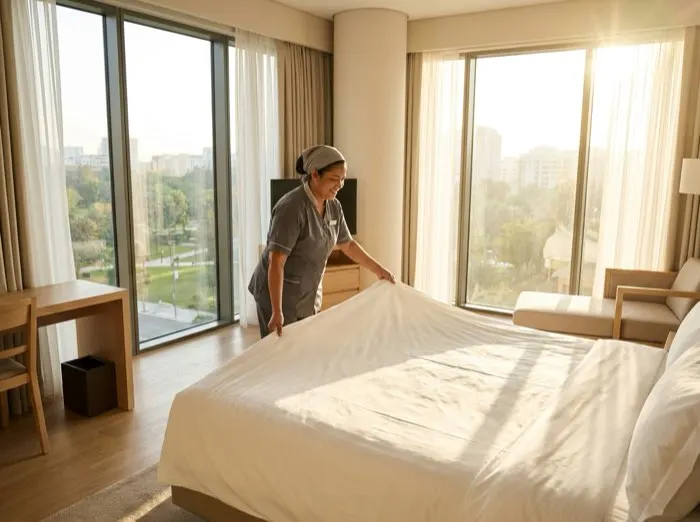
Hospitality Demand in Czechia: Where the Jobs Are
Czechia has one of the lowest unemployment rates in the European Union. Because local workers often move into corporate or tech sectors, the hotel, resort, and restaurant industries rely heavily on international staff. If you are coming from outside the EU, including South Asia, Africa, Central Asia, Latin America, or the Western Balkans, there are real opportunities for you here. The key is knowing exactly where employers are hiring and what role fits your background.
Demand is concentrated in specific geographic hubs rather than spread evenly across the country. Understanding these regions helps you narrow down your target location:
- Prague (Praha): The capital operates year-round. International hotel chains, boutique city-center properties, and high-volume restaurants constantly need room attendants, line cooks, dishwashers, and front desk agents. English is widely spoken in Prague, making it the easiest entry point for non-Czech speakers.
- Karlovy Vary and Mariánské Lázně: Located in western Bohemia, this famous spa triangle features luxury wellness hotels and heritage resorts. Employers here seek spa attendants, waitstaff, housekeeping staff, and maintenance workers. Languages like English, German, or Russian are valued alongside basic Czech.
- Krkonoše Mountains (Špindlerův Mlýn, Pec pod Sněžkou): These northern mountain towns experience huge seasonal rushes. Hotels and chalets need seasonal cooks, kitchen helpers, servers, and room cleaners for winter skiing and summer hiking periods.
- Český Krumlov and South Moravia: Český Krumlov attracts heavy summer tour traffic. South Moravia, around Brno, Mikulov, and Znojmo, features wine tourism and boutique hotels that hire extra service staff from spring to autumn.
Essential Requirements: The Medical Pass and Language Skills
Working in Czech hospitality requires meeting specific health and legal requirements before you touch a food tray or clear a room. Unlike some European countries that require complex academic equivalency tests for entry-level work, Czechia focuses on physical health checks and practical suitability.
The single most important document for anyone handling food, drinks, or clean linen is the medical food health card, known locally as the Potravinářský průkaz. This health passport is mandatory under Czech public health law. Here is what you need to know about it:
- Who issues it: A registered Czech general practitioner (GP) or certified medical clinic performs a quick health evaluation, checks your vaccination status, and issues the card.
- When to get it: You usually obtain this card immediately after arriving in Czechia, right before starting your shift duties. Some employers arrange the doctor visit for you during your onboarding week.
- Formal recognition (Nostrifikace): Basic hospitality jobs like housekeeping, dishwashing, or waiting tables do not require formal qualification recognition. However, if you apply as a head chef, hotel manager, or specialized dietitian, you may need to prove your educational background through the official diploma recognition process called nostrifikace.
Language expectations vary greatly depending on whether your work faces guests or stays behind the scenes. For back-of-house roles like housekeeping, kitchen prep, or stewarding, functional English is usually enough to start. For front-of-house roles like reception or food service, employers expect solid English (B1 or B2 level) and a commitment to learn basic conversational Czech (A1 or A2 level) to handle daily guest interactions.
The Czech Employee Card: Visa and Permit Route
To work legally in Czechia as a non-EU citizen, you must secure an Employee Card (Zaměstnanecká karta). This serves as both a residence permit and a work permit. The process is strictly tied to a specific job offer and employer.
The legal process follows a set structure regulated by the Czech Ministry of the Interior (MVČR):
- Labor Market Test: The Czech employer must list the open vacancy on the Central Register of Vacancies Eligible for Employee Cards. If no suitable Czech or EU candidate fills the post within 10 to 30 days, the position opens to international applicants from non-EU countries.
- Work Contract: You receive a formal employment contract or binding pre-contract specifying your position, work hours (usually 40 hours per week), and wage.
- Embassy Application: You submit your visa file at the Czech embassy or consulate in your home country or country of legal residence. Your application must include your signed contract, proof of accommodation in Czechia, a clean criminal record certificate, and a medical report if requested.
- Processing Time: Processing normally takes between 60 and 90 days. You cannot travel to Czechia to begin working until the visa approval is officially placed in your passport.
Pay Rates, Net Income, and Staff Accommodation
Wages in Czechia are paid in Czech Koruna (CZK). Understanding the difference between gross pay and net pay is critical so you can plan your monthly budget realistically. Czech income tax, social security, and health insurance are deducted automatically by your employer from your gross salary.
Here are typical net monthly pay ranges for hospitality positions in Czechia (reflecting expected earnings after taxes):
- Housekeeping and Laundry Staff: 21,000 CZK to 25,000 CZK net per month.
- Kitchen Helpers and Dishwashers: 22,000 CZK to 26,000 CZK net per month.
- Waitstaff and Bartenders: 24,000 CZK to 30,000 CZK net per month, often supplemented by daily tips (spropitné), which can add 3,000 CZK to 7,000 CZK extra depending on the location and season.
- Line Cooks and Commis Chefs: 26,000 CZK to 34,000 CZK net per month.
- Front Desk Agents: 25,000 CZK to 32,000 CZK net per month depending on language skills and night shift allowances.
A huge factor in your real monthly savings is accommodation. Many regional hotels, mountain resorts in Krkonoše, and spa hotels in Karlovy Vary provide free or heavily subsidized staff housing (ubytování). If your employer provides accommodation, your living expenses drop dramatically, allowing you to save a far higher percentage of your net earnings compared to living in central Prague, where private rent is much higher.
Seasonal Cycles: When Employers Hire
Timing your job search around the national tourist calendar increases your chances of getting hired quickly. Czech hospitality operates on three distinct hiring cycles:
- The Winter Peak (December to April): Ski resorts in Špindlerův Mlýn, Pec pod Sněžkou, and Harrachov hire heavily between October and November. They look for full-season staff who can stay through the end of spring.
- The Summer Peak (May to September): Touristic cities like Český Krumlov, lake areas like Lipno, and the South Moravian wine towns start recruiting in February and March. They need extra hands for high guest volumes during the warm months.
- Year-Round Hiring: Prague city hotels, international chains, and major spa centers in western Bohemia hire continuously throughout the year to cover standard staff turnover.
Reality Check: Common Mistakes Non-EU Applicants Make
To keep your application process smooth and stress-free, avoid these frequent misunderstandings about working in Czech hospitality:
- Thinking you can work on a tourist visa: You cannot enter Czechia on a regular Schengen tourist visa and start working. Working without an official Employee Card or valid short-term work visa is illegal and leads to deportation and entry bans.
- Ignoring the medical health card: Assuming you can skip the Potravinářský průkaz doctor appointment will delay your start date. Employers cannot legally allow you near a restaurant kitchen or food service area without it.
- Underestimating language needs outside Prague: Assuming English is enough everywhere is a mistake. While Prague runs on English, smaller towns in South Moravia or mountain resorts require you to learn basic Czech phrases quickly to communicate with local co-workers and regional guests.
- Overlooking accommodation details: Forgetting to clarify housing before signing a contract can leave you stuck with expensive short-term rentals. Always ask if staff housing (ubytování) is included or arranged by the business.
Set Up Your Workuro Profile for Czech Hospitality Roles
Employers in Czechia search the Workuro registry to find reliable candidates from outside the European Union. When building your candidate profile, specificity helps recruiters locate you faster during active hiring cycles.
Make sure your profile highlights these exact details:
- Target Regions: Name the specific Czech locations you want to work in, such as Prague, Karlovy Vary, Špindlerův Mlýn, or South Moravia.
- Specific Trade Skills: List your exact experience level in roles like housekeeping, food preparation, guest service, line cooking, or hotel maintenance.
- Certificates and Readiness: Note your readiness to obtain the Czech Potravinářský průkaz health card upon arrival, along with any existing hospitality diplomas or food safety training.
- Language Proficiency: Be honest about your language skills. State your English level clearly and mention any basic Czech or other European languages you are currently learning.
By keeping your Workuro profile complete and updated with these Czech-specific facts, you make it easy for verified European employers to evaluate your background and reach out directly with job offers.
নিয়োগকর্তাদের নজরে আসতে প্রস্তুত?
২ মিনিটে আপনার প্রোফাইল তৈরি করুন। ফ্রি, কোনো ক্রেডিট কার্ড লাগবে না।
আরও পড়ুন