Truck Driver Jobs in Iceland for Foreign Workers (2026)
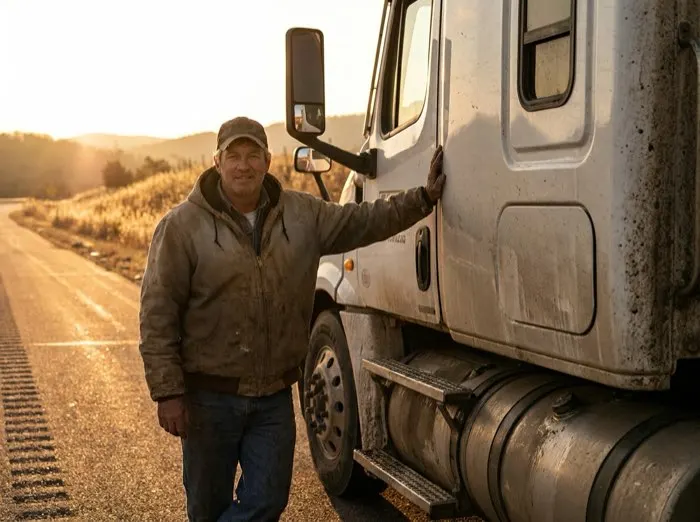
The real demand for truck drivers in Iceland in 2026
If you are looking for thousands of open driving jobs, Iceland is not the right place. Iceland is a small island nation with a population of under 390,000 people. Total commercial road freight is limited compared to continental Europe. The entire country has only one major highway, Route 1, which loops around the island. Most goods arrive by sea and are distributed over short or medium distances. Because of this, the total number of truck driver jobs is small.
If your goal is to find a job quickly among high volumes of vacancies, you should look at larger European markets like Poland, Germany, or Norway. Poland and Germany recruit tens of thousands of international drivers every year. Norway has a similar climate to Iceland but operates a much larger logistics network with more employers willing to sponsor visas.
However, if you specifically want to live and work in Iceland, jobs do exist. Local transport companies face persistent shortages of qualified heavy vehicle drivers who can handle extreme sub-zero weather. Employers hire workers from outside the European Union (EU) and European Economic Area (EEA), but the market is selective. You need solid professional experience, patience with paper permit processes, and the willingness to learn local driving standards.
Licences and certificates you need in Iceland
To drive a heavy goods vehicle in Iceland, you must hold the correct licence and professional credentials recognized by Icelandic authorities. The governing body for road traffic and licensing is Samgöngustofa (the Icelandic Transport Authority).
- Class C and Class CE licence: A Class C licence allows you to drive rigid trucks over 3,500 kg. A Class CE licence lets you haul heavy trailers and articulated trucks. If you obtained your licence outside the EU or EEA, it cannot be directly swapped for an Icelandic licence for commercial work.
- Licence exchange process: You can drive on a foreign licence for up to one year after registering your address in Iceland. To drive commercially, you must exchange your foreign licence for an Icelandic standard licence. Non-EU drivers must complete a health check, pass a written theory exam, and clear a practical driving test conducted by Samgöngustofa.
- Yrkisökuréttindi (Code 95 equivalent): Commercial drivers in Iceland must hold professional driver qualification, known locally as Yrkisökuréttindi. This is the Icelandic counterpart to the European Union CPC (Code 95). Acquiring this certificate requires 35 hours of mandatory continuous training covering road safety, cargo securing, and fuel efficient driving.
- Language requirements: Icelandic is the national language, but basic to conversational English is usually sufficient for transport operations. You must be able to read road signs, safety instructions, and cargo manifests in English or Icelandic.
Where truck driving jobs are located in Iceland
Most commercial transport operations are concentrated in specific economic zones and industrial ports around the country. Knowing where employers operate helps you target your search.
- Reykjavík Capital Area: This region includes Reykjavík, Kópavogur, and Hafnarfjörður. It is the hub for food distribution, local store deliveries, construction haulage, and import logistics handling goods from the main shipping ports.
- Grundartangi Industrial Area: Located in West Iceland, Grundartangi hosts heavy industrial operations, including aluminum smelting and silicon plants. Companies here require heavy articulated trucks for moving raw materials and industrial exports.
- Keflavík and Suðurnes Region: Positioned near Keflavík International Airport, this area handles air cargo logistics, fuel transport, and supply lines running directly to the capital region.
- Akureyri and the North: Akureyri is the primary regional hub in northern Iceland. Transport jobs here involve moving processed fish, dairy products, and agricultural goods to southern ports and distribution centers.
- East Fjords Coastal Ports: Towns like Fáskrúðsfjörður and Seyðisfjörður handle large volumes of processed seafood. Drivers operate refrigerated trucks moving fish products to air freight hubs or shipping vessels.
Work permits and visa rules for non-EU drivers
As a candidate from outside the EU or EEA, you cannot move to Iceland to look for work on a tourist visa. You must secure a binding job offer from an Icelandic employer before applying for a permit. The employer starts the application on your behalf.
Work permits for foreign workers are processed by Vinnumálastofnun (the Directorate of Labour), while residence permits are handled by Útlendingastofnun (the Directorate of Immigration). The work permit is granted under rules for temporary work requiring specialized skills or where local labour shortages exist.
Before hiring a non-EU driver, the employer must advertise the position within Iceland and the EEA for a set period. If no local or EEA worker applies, Vinnumálastofnun approves the work permit request. The entire visa process usually takes between 3 and 5 months. You cannot begin working in Iceland until both your work and residence permits are fully granted.
The hiring cycle in Iceland has clear seasonal peaks. Construction logistics and road freight expand significantly between April and October. Employers start recruiting foreign drivers in early spring (March to May) to prepare for the summer surge. Winter transport continues year-round, but weather conditions require specialized experience.
Pay, taxes, and working conditions
Wages in Iceland are defined by nationwide collective bargaining agreements negotiated between labour unions and employer associations. Truck drivers are covered by local general workers unions such as Efling (in the capital area and southern region) or Stéttarfélag Vesturlands (in West Iceland).
Pay rates are set in Icelandic Króna (ISK). A full-time driver works a standard 40-hour week, but transport work frequently includes shift bonuses, night differentials, and overtime pay.
- Gross monthly pay: A standard base salary for a heavy truck driver ranges from 520,000 ISK to 680,000 ISK gross per month. With regular overtime and shift supplements, gross pay can reach 750,000 ISK per month.
- Net monthly pay (after tax): Income tax in Iceland uses a tiered system, alongside mandatory pension contributions and union dues. Typical net monthly take-home pay for a truck driver ranges between 400,000 ISK and 520,000 ISK.
- Living expenses context: Iceland has high living costs for housing, groceries, and utilities. Employers often assist newly arrived foreign drivers with finding rented rooms, but rent expenses will take a significant portion of your net pay.
- Winter driving conditions: Driving in Iceland during winter requires skill. Routes often involve gale force winds, heavy snow, severe icing, and total darkness for most of the day. Drivers must be comfortable operating heavy equipment with snow chains and winter tires.
Reality check: What non-EU drivers get wrong about Iceland
- Assuming foreign licences convert automatically: Non-EU commercial driving licences do not convert automatically to an Icelandic licence for commercial use. You must pass local theoretical and practical tests supervised by Samgöngustofa.
- Expecting an instant work visa: You cannot arrive as a tourist and convert your status to a work permit inside Iceland. Every non-EU worker must wait for Vinnumálastofnun to approve their permit before traveling.
- Underestimating cost of living: High net pay figures in ISK can look large, but living costs are among the highest in Europe. Budget carefully for housing and food when evaluating job offers.
- Ignoring weather severity: Winter driving in Iceland is far more intense than standard European winter driving. Storms can close the Ring Road for days, requiring extreme patience and safety awareness.
- Overlooking larger job markets: Because Iceland is a small market, placing all your hopes on an Icelandic job limits your options. Keep your search open to larger countries like Norway or Poland alongside Iceland.
How to build your Workuro profile to get noticed by Icelandic employers
Icelandic employers use Workuro to search for international candidates who already meet their key requirements. To make sure your profile appears when transport managers in Iceland filter candidates, include all specific details in your profile.
List your exact driver licence categories, including Class C or Class CE, and state clearly how many years you have driven heavy vehicles. Name any professional qualifications you hold, such as Code 95 or equivalent safety certificates. Specify your English language proficiency level, as transport dispatchers need clear communication.
If you have experience driving in severe winter conditions, heavy snow, or mountainous terrain, write this clearly in your summary. Highlight the specific locations in Iceland where you want to work, such as Reykjavík, Grundartangi, or Keflavík. Keeping these specifics up to date on your Workuro profile gives employers the exact data they need to select you for interviews.
নিয়োগকর্তাদের নজরে আসতে প্রস্তুত?
২ মিনিটে আপনার প্রোফাইল তৈরি করুন। ফ্রি, কোনো ক্রেডিট কার্ড লাগবে না।
আরও পড়ুন