Caregiver and Elderly Care Worker Jobs in Czechia (2026)
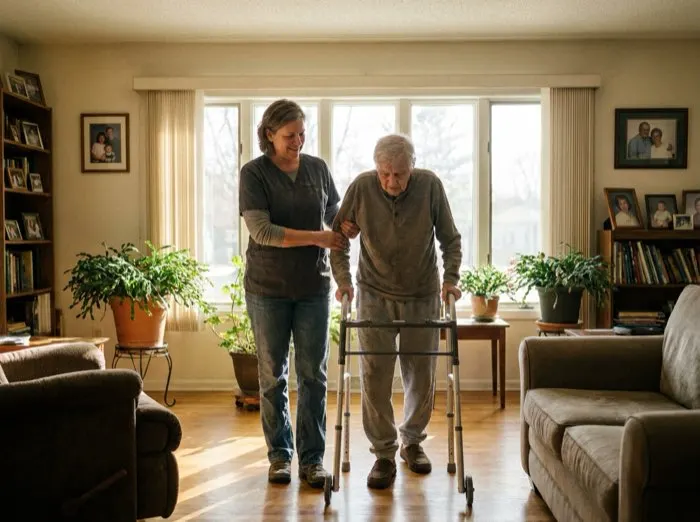
Is Czechia hiring foreign elderly care workers in 2026?
Czechia faces a growing national shortage of caregivers and social care staff. An aging population means public senior homes and private care centers across the country have far more open positions than local candidates to fill them. However, if you are looking for care work from outside the European Union, you must understand one fundamental rule before you begin your search: caregiving in Czechia requires basic Czech language skills. You will interact directly with senior residents who usually do not speak English or other foreign languages.
If you cannot speak basic Czech and are unwilling to learn it, Czechia is not the right choice for you right now. In that case, you should look toward countries like Germany or Austria, where initial entry routes with specialized language integration or English-supported training programs are more established. But if you are willing to study basic Czech conversation before and after you arrive, Czech care employers are actively open to recruiting non-EU candidates from South Asia, Central Asia, Africa, the Balkans, and Latin America.
Where the jobs are: Regions and care facilities
Care worker vacancies exist across all fourteen Czech regions, but the highest density of employers willing to sponsor foreign workers on visa routes is located in larger metropolitan areas and industrial zones where local labor shortages are most severe.
- Prague (Praha): The capital city has the largest concentration of private retirement residences, long-term care facilities, and municipal elderly homes. Pay is slightly higher to reflect urban living costs, and shift bonuses are frequent.
- South Moravian Region (Brno): Brno and surrounding towns have a high density of public social care institutions (domovy pro seniory) and specialized centers for patients requiring round-the-clock supervision.
- Moravian-Silesian Region (Ostrava): Ostrava and nearby towns offer extensive employment options in state-run care homes. The living expenses here are significantly lower than in Prague, allowing your monthly net income to stretch further.
- Plzeň and Central Bohemia: Regions surrounding major manufacturing hubs struggle to recruit local care staff because workers opt for factory jobs. As a result, local senior centers routinely look for foreign workers to staff their shifts.
In Czechia, care settings are divided into three main categories: standard homes for the elderly (domovy pro seniory), special regime homes for patients with Alzheimer's disease or dementia (domovy se zvláštním režimem), and field care services (terénní pečovatelská služba) that assist clients in their private homes. Most foreign workers entering on initial work permits start in residential facilities, where supervision and scheduling are fixed.
Certifications, training, and language standards
Social services in Czechia are regulated under Act No. 108/2006 Coll. (Zákon o sociálních službách). To work as a direct care worker (pracovník v sociálních službách), you do not need a university degree, but you must meet specific regulatory requirements set by the Ministry of Labour and Social Affairs (MPSV).
- The Accredited Care Course: Czech law requires all direct care personnel to complete an official 150-hour accredited qualification course (akreditovaný kurz pro pracovníky v sociálních službách). The course covers client hygiene, basic medical care fundamentals, ethics, emergency response, and social work principles. You do not always need this certificate before applying; Czech law allows you to complete the training within 18 months of starting employment. Many employers will arrange and pay for this course for you after you arrive.
- Recognition of Foreign Nursing Qualifications: If you are a qualified nurse in your home country, your foreign diploma must undergo an official recognition process called nostrifikace through a regional authority (krajský úřad) or the Ministry of Health. Until your qualification is fully recognized, you can work as a care worker or care assistant rather than a registered nurse.
- Language Requirements: Care facilities require a practical spoken Czech level of A2 to B1. You need to understand client requests, report changes in health to nurses, and write short daily care logs. Employers hiring foreign staff often conduct an online interview to test your willingness to speak Czech and may provide learning materials prior to your departure.
Work permits and visa routes for non-EU caregivers
As a worker from outside the EU, you must obtain a single document called an Employee Card (Zaměstnanecká karta) before you can move to Czechia and start working. The Employee Card serves as both your long-term residence permit and your legal work permit.
- Labor Market Test: Before hiring from outside the EU, the Czech facility must post the job opening in the national vacancy database run by the Ministry of Labour and Social Affairs (MPSV). The listing must remain open for 10 to 30 days to check if any Czech or EU jobseeker applies.
- Employer Sponsorship: Once the labor market test period ends without an EU applicant, the job position is assigned a reference number. The employer gives you a contract or a binding offer containing this number, which you use to submit your visa application.
- Targeted Government Programs: Many accredited care institutions recruit through government migration programs like the Qualified Worker Program (Kvalifikovaný pracovník). If your employer enrolls you in this scheme, your visa appointment at the Czech embassy in your home country is scheduled automatically, avoiding long booking delays.
- Processing Timeline: Official processing for an Employee Card takes between 60 and 90 days from your embassy interview. Including the initial labor market posting and contract signing, you should expect a total process lasting 3 to 6 months.
Pay rates, shift structures, and net monthly earnings
Caregiver earnings in Czechia depend on whether you work for a state-run municipal facility or a private center, as well as the number of extra night or weekend shifts you complete.
- Base Gross Salary: The standard base gross salary for a care worker ranges from 27,000 CZK to 35,000 CZK per month for standard full-time hours (40 hours per week).
- Net Monthly Income: After standard income tax, health insurance, and social security contributions, your base net monthly salary sits between 21,500 CZK and 27,000 CZK.
- Shift Bonuses and Extra Pay: Care facilities operate on continuous schedules with 12-hour shifts, night duties, and weekend rotations. Czech labor law guarantees extra pay for night work, weekend work, and public holidays. These allowances typically add between 3,000 CZK and 6,000 CZK net to your monthly paycheck, bringing total take-home pay to between 24,500 CZK and 33,000 CZK net per month.
- Non-Monetary Benefits: Many facilities offer heavily subsidized meals during your shift, 5 weeks of paid annual leave, and access to low-cost staff housing (ubytovna) for your first few months in the country.
Reality check: Misconceptions about caregiving in Czechia
- Misconception: You can work using English only. Senior residents in Czech public homes speak Czech. You must be able to hold basic daily conversations in Czech to perform care duties safely.
- Misconception: You need a medical degree to start care work. You do not need a university degree or medical license to be a direct care worker. Secondary education and the 150-hour social care course are sufficient.
- Misconception: You can arrive on a tourist visa and start working. You cannot convert a short-stay Schengen visa into a work permit from inside Czechia. You must apply for an Employee Card through the Czech embassy in your home country.
- Misconception: Private family home live-in jobs are common. Unlike some countries where caregivers live in private family apartments, care jobs in Czechia are overwhelmingly facility-based inside organized institutional homes with set shift schedules.
Update your Workuro profile to get found by Czech employers
Czech health and social care institutions regularly search for international workers who have prepared their documents and possess realistic expectations. Make sure your Workuro profile includes the key details Czech recruiters need to see:
- Language Skills: Clearly state your current level of Czech (even if you are currently a complete beginner) and any other languages you speak, along with your commitment to learning.
- Care Qualifications: Detail any nursing diplomas, home care certificates, or practical experience in elderly care, personal hygiene assistance, or medical aid.
- Target Regions: Mention specific regions you want to move to, such as Prague, South Moravia (Brno), Moravian-Silesian (Ostrava), or Plzeň.
- Visa Status: Indicate your nationality and confirm that you require Employee Card sponsorship.
Carefully completed profiles rank highest when Czech employers run targeted candidate searches on Workuro. Keep your details complete so recruiters can contact you directly with real job openings.
काम खोजने के लिए तैयार हैं?
2 मिनट में अपनी प्रोफाइल बनाएं। बिल्कुल मुफ्त, क्रेडिट कार्ड की ज़रूरत नहीं।
आगे भी पढ़ें