Caregiver and Elderly Care Worker Jobs in Greece (2026)
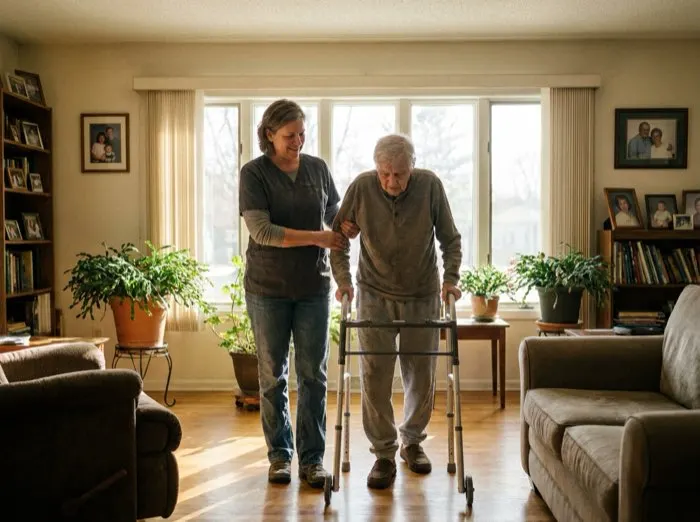
Understanding elderly care work in Greece for foreign workers
Greece has one of the oldest populations in Europe. Because of this, families and private care facilities across the country rely heavily on foreign workers to support elderly relatives. If you come from a non-EU country in South Asia, Africa, Latin America, the Balkans, or Central Asia, there are genuine job opportunities in Greek elderly care. However, you must understand how the legal system works before you begin your journey.
In Greece, caregiving split into two main categories: private live-in home care for individual families, and institutional care inside private nursing homes or rehabilitation centres. Demand is constant throughout the year, but the hiring process for non-EU citizens requires formal employer sponsorship through the Greek government quota system. If you expect an immediate start within days of applying without visa processing, you may find the timeline challenging. Countries like Germany or Northern European nations offer larger public healthcare recruitment channels, but Greece remains a steady, welcoming target if you want direct long-term work, lower living costs in live-in setups, and a clear legal path.
Where the caregiving jobs are in Greece
Caregiver jobs exist across the entire country, but recruitment is concentrated in major metropolitan areas and wealthy suburban regions where families seek private care, as well as cities with large private eldercare institutions.
- Attica (Athens Metropolitan Area): Athens is the largest hiring market. High-demand residential suburbs like Kifisia, Marousi, Glyfada, Vouliagmeni, and Kolonaki have a dense concentration of families seeking live-in caregivers. The city center also hosts numerous private care facilities, known locally as Girokomeia (Γηροκομεία).
- Central Macedonia (Thessaloniki): Greece's second-largest city has a high demand for both domestic caregivers and staff in specialized eldercare clinics across districts like Kalamaria and Panorama.
- Crete (Heraklion and Chania): Crete has a large senior population and a growing number of private residential care homes, along with families hiring home assistants year-round.
- Peloponnese (Patras and Kalamata): Regional urban centers in the Peloponnese have steady openings in private homes and municipal assistance programs that partner with private staff.
- The Aegean Islands (Rhodes and Corfu): While island jobs can be seasonal in tourism, elderly care remains year-round, with families often seeking full-time domestic help for aging parents while younger family members run businesses.
Licensing, qualification recognition, and language requirements
What you need to work legally as a caregiver in Greece depends entirely on whether you are working inside a private home or in a licensed medical facility.
- Private Live-in Home Care: You do not need a formal state license to work directly for a family as a domestic caregiver. However, holding practical certifications in basic nursing, first aid, or elderly care from your home country makes your profile far more attractive to employers.
- Institutional Care (Nursing Homes and Clinics): To work as a certified auxiliary nurse or formal care assistant (Vohthos Nosilefti) in a private care facility, your qualifications must be recognized. The official agency for vocational certification in Greece is EOPPEP (National Agency for the Certification of Qualifications and Vocational Guidance). If you hold a university nursing degree, recognition goes through DOATAP.
- Language Requirements: Language is the single most important practical hurdle. Most elderly Greeks do not speak fluent English. While an A1 basic level of Greek might get you started in initial interviews, employers expect functional A2 or B1 spoken Greek so you can communicate with your care recipient, understand medicine instructions, and handle daily routines. Learning basic Greek phrases before you arrive gives you an immediate advantage over other applicants.
Work permits and the Greek Metaklisi visa route
To work legally in Greece as a non-EU citizen, you cannot arrive on a tourist visa and start working. You must enter through the official employer sponsorship system known as Metaklisi (μετάκληση), regulated under the Greek Migration Code (Law 5038/2023).
- The Metaklisi Quota: Every two years, the Greek government publishes a cabinet act defining the maximum number of foreign workers allowed into each region for specific job sectors, including domestic work and personal care.
- Employer Filing: Your prospective Greek employer (either a private family or a registered care company) must submit an application to the local Decentralized Administration (Apokentromeni Dioikisi) in their region. They must prove that the position could not be filled locally.
- The Entry Visa (Type D): Once the Decentralized Administration approves the application, the authorization is sent to the Greek Embassy or Consulate in your home country. You then attend an interview to receive your National Work Visa (Type D).
- Residence Permit: Upon arriving in Greece, you submit your biometric data to obtain your Residence Permit for Work (Type E or Domestic Worker Permit). This permit is tied to your legal employment contract.
- Processing Time: The entire Metaklisi process typically takes between 4 and 9 months depending on the workload of the local Decentralized Administration and the embassy in your home country.
Pay rates, working hours, and contract standards
Pay in Greece is regulated by national minimum wage legislation and collective framework rules. Your net earnings depend on whether your housing and meals are provided.
- Live-in Home Caregiver Pay: Net monthly salary typically ranges from €700 to €900. Because live-in positions include full room, private board, and food, your actual daily expenses are almost zero, allowing you to save most of your income.
- Care Facility / Institutional Pay: Net monthly salary ranges from €750 to €1,050 for a standard 40-hour work week, depending on your certification level, night shifts, and years of experience. Housing is generally not provided for institutional roles.
- The 14-Month Pay System: Under Greek labor law, full-time legal employees receive 14 payments per year. This includes a full extra month of pay at Christmas, half a month at Easter, and half a month for summer leave allowance.
- Social Security (EFKA): Your employer is legally required to register you with EFKA, the Greek national social security system. EFKA contributions cover your public health insurance and accumulate points toward pension rights.
Reality check: What people get wrong about care work in Greece
- Getting a tourist visa first does not lead to a legal work permit: You cannot convert a short-stay Schengen tourist visa into a regular work permit while inside Greece. You must receive visa clearance through the embassy in your home country.
- English is not enough for elderly care: While doctors and young family members speak English, your elderly patient in Athens or Thessaloniki will likely speak only Greek. Basic conversational Greek is mandatory for daily work.
- Live-in work is not 24-hour non-stop work: Legal contracts specify standard daily working hours and weekly rest days (usually one full day or one and a half days per week). Clear boundaries must be agreed upon in your contract before starting.
- The visa takes time: Greek bureaucracy moves carefully. No legitimate employer can bring you to Greece legally within two weeks. Plan for a multi-month visa timeline.
Build your Workuro profile to reach Greek care employers
Greek families and private care businesses search the Workuro registry to find reliable foreign workers ready for legal hiring. To stand out to employers in Greece, your profile must reflect the exact requirements named in this article.
When filling out your Workuro profile, make sure you include:
- Your Language Skills: Clearly state your Greek language level, even if you are currently at a basic beginner stage (A1/A2), alongside your English or other languages. Showing active effort to learn Greek attracts immediate attention.
- Care Qualifications and First Aid: List any home country diplomas, nursing certificates, red cross training, or eldercare courses you have completed. Mention if you have applied for EOPPEP or DOATAP recognition.
- Specific Regions: Name the Greek regions you are prepared to move to, such as Attica (Athens), Central Macedonia (Thessaloniki), Crete, or Patras.
- Practical Experience: Detail your previous care experience, including mobility support, medication management, dementia care, cooking, or specialized patient handling.
- Passport and Availability Status: Indicate that your passport is valid and state clearly when you are available to begin the Metaklisi visa process.
A complete profile with accurate specifics helps Greek employers find you quickly when allocating their work permit quotas.
काम खोजने के लिए तैयार हैं?
2 मिनट में अपनी प्रोफाइल बनाएं। बिल्कुल मुफ्त, क्रेडिट कार्ड की ज़रूरत नहीं।
आगे भी पढ़ें