Warehouse and Logistics Worker Jobs in Italy (2026 Guide)
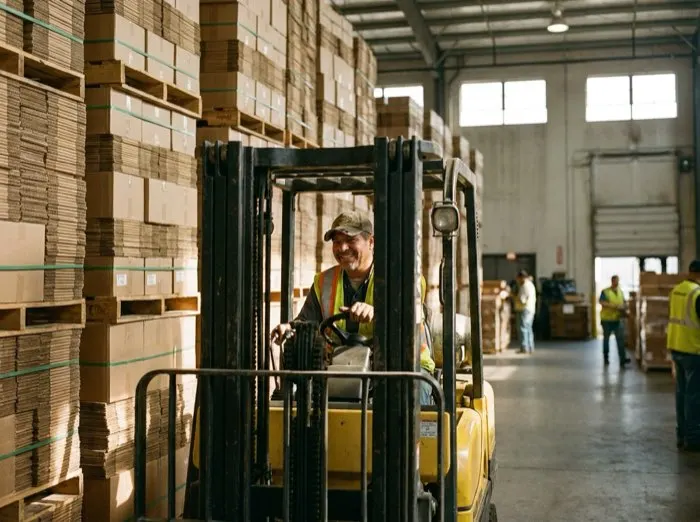
1. The logistics market in Italy for non-EU workers
Italy is one of Southern Europe's largest logistics hubs. Its geographic position makes it a natural bridge between Mediterranean sea routes and mainland European consumer markets. Goods arrive at major ports like Genoa, La Spezia, and Trieste, then move rapidly inland to massive distribution parks. Because of this high volume, Italian logistics companies face a constant need for warehouse staff, order pickers, forklift operators, and freight handlers.
If you are a worker coming from outside the European Union, such as from South Asia, Africa, Latin America, Central Asia, or the Western Balkans, warehouse work is one of the most direct paths to legal employment in Italy. The country relies heavily on international labor to keep its supply chains moving. However, getting hired requires navigating a specific legal quota system, securing local certifications, and understanding regional job centers.
You do not need an advanced university degree to work in an Italian warehouse. Employers care far more about your physical reliability, safety record, practical experience with material handling equipment, and willingness to learn functional Italian. Understanding how the market operates day to day will help you focus your search on the right places and avoid costly mistakes.
2. Key regions and industrial hubs hiring now
Warehouse demand in Italy is concentrated heavily in the northern half of the country. The area known as the Pianura Padana (the Po Valley) contains the highest density of distribution centers in Southern Europe. If you want to work in logistics, target your job search on these specific northern regions and freight hubs:
- Lombardy (Milan, Novara, Pavia): The area surrounding Milan is Italy's economic core. Large logistics parks in places like Pieve Emanuele, Castel San Giovanni (just across the border in Piacenza), and Novara house huge e-commerce fulfillment centers and retail distribution yards. Hiring here happens year-round.
- Emilia-Romagna (Bologna, Piacenza, Parma): Bologna is the central railway and motorway junction of Italy. The Interporto di Bologna is one of the largest logistics platforms in Europe. Piacenza is another major hub where dozens of international freight companies manage regional warehouses.
- Veneto (Verona, Padua): Verona is home to Quadrante Europa, a massive intermodal freight village that connects rail transport from Northern Europe to Italian road networks. Warehouses here specialise in cold-storage food transport, industrial parts, and general freight.
- Piedmont (Alessandria, Turin): Located strategically between Genoa's seaport and the French border, this region handles automotive components, industrial machinery, and cross-border transport.
The hiring cycle in Italian logistics has two clear peaks. The largest surge occurs between September and December, when retail and e-commerce companies build up staff for autumn sales, Black Friday, and the Christmas holiday season. A second, smaller hiring surge happens in late spring (May to July) to cover summer vacation rotations and agricultural harvest logistics.
3. The legal path: Decreto Flussi and work permits
To work legally in an Italian warehouse as a non-EU citizen, you must secure a work permit through Italy's annual quota framework, known as the Decreto Flussi. This is a government decree that sets the exact number of foreign workers allowed to enter the country each year for seasonal and non-seasonal work.
Here is how the hiring and visa process works step by step:
- Employer application: An Italian employer or logistics cooperative (*cooperativa*) submits a request to hire you during the official application window (*click day*). They must show that no local candidate was available for the position.
- Nulla Osta issuance: If approved within the government quota, the local immigration office (*Sportello Unico per l'Immigrazione*) issues a work clearance certificate called a *Nulla Osta*.
- Visa application: Once the *Nulla Osta* is granted, you apply for an entry visa (*visto per lavoro subordinato*) at the Italian embassy or consulate in your home country.
- Arrival and residence permit: Within eight days of arriving in Italy, you must sign your employment contract (*contratto di soggiorno*) and apply for your residence permit (*permesso di soggiorno*) at the local post office.
The entire timeline from the initial application to your arrival in Italy usually takes between four and nine months, depending on embassy backlogs and processing speeds in the specific Italian province. Trade shortcuts do not exist, so beware of anyone claiming they can get you an Italian work visa in a few weeks.
4. Pay rates, collective contracts, and monthly earnings
Wages in Italy are governed by national collective bargaining agreements, known as a *Contratto Collettivo Nazionale di Lavoro* (CCNL). The logistics and freight transport sector is covered by the CCNL Logistica, Trasporto Merci e Spedizione. This contract sets legal minimum pay rates, overtime rules, maximum working hours, and annual leave for every warehouse worker in the country.
As an entry-level warehouse hand (*operaio logistico*), you will typically start at Level 6 or Level 5 of the collective contract. Here is what you can expect regarding real earnings:
- Base net monthly salary: A full-time entry-level warehouse worker earns between €1,200 and €1,500 net per month for a standard 39-hour workweek.
- Experienced operators: Certified forklift drivers and reach-truck operators (Level 4J or Level 4) earn higher base wages, typically between €1,450 and €1,750 net per month.
- Annual extra bonuses: Under the national contract, Italian workers receive 13th and 14th-month pay packets (*tredicesima* paid in December, and *quattordicesima* paid in June). This means your annual income is divided into 14 payouts per year.
- Shift allowances: Night shifts, Sunday work, and holiday overtime carry compulsory bonuses ranging from 15 percent to 30 percent above your base hourly rate.
- Severance pay (TFR): Italian law requires employers to set aside roughly one month's salary per year into a severance fund (*Trattamento di Fine Rapporto*), which is paid out when you leave the company.
5. Essential licences and language expectations
You do not need fluent Italian to start in an entry-level job, but you must know enough to follow basic safety instructions and understand work orders. On a busy warehouse floor, safety signs, digital scanner screens, and pick-lists are in Italian.
Employers usually expect an A2 level of spoken Italian for general picking and packing roles. If you want to move into team leader roles or operate machinery, a B1 level is usually required. Workers who rely solely on English struggle to find employment outside of a few multi-national fulfillment hubs, as day-to-day warehouse management is conducted entirely in Italian.
If you want to earn higher wages and stand out to recruiters, obtaining professional qualifications is crucial:
- Patentino Muletto (Forklift Licence): This is the official certificate required to operate counterbalance forklifts, reach trucks, and order pickers in Italy. It is regulated under the *Accordo Stato-Regioni* and requires a 12 to 16-hour training course covering safety theory and practical driving skills. Having a valid, recognised forklift certificate significantly increases your hiring chances.
- CQC and Commercial Driving Licences: If you hold a Category C or CE heavy vehicle licence from your home country, you can work toward obtaining the *Carta di Qualificazione del Conducente* (CQC) in Italy. Commercial drivers are in extremely high demand across Emilia-Romagna and Lombardy, often commanding higher starting pay.
6. Reality check: Common mistakes foreign workers make
Many jobseekers fall victim to false information about working in Italy. Keep these realities in mind when planning your move:
- Tourist visas cannot be converted to work permits: You cannot enter Italy on a 90-day Schengen tourist visa, find a warehouse job, and legally stay to work. You must receive your *Nulla Osta* and work visa while you are still legally residing outside Italy.
- Logistics cooperatives require vigilance: Many Italian warehouses outsource their workforce to sub-contracted cooperatives (*cooperative*). While many are legitimate, ensure your employer respects the official *CCNL Logistica* contract terms and pays your mandatory social security contributions (*INPS*).
- Rent and living costs vary drastically: A salary of €1,300 net goes much further in smaller towns like Piacenza, Alessandria, or Rovigo than it does inside Milan or Bologna, where apartment rents are extremely high. Target logistics parks located near smaller cities to keep your living expenses manageable.
- Paperwork takes time: Getting your tax code (*Codice Fiscale*), opening an Italian bank account, and receiving your physical residence card (*Permesso di Soggiorno*) takes several months. Patience and clear record-keeping are mandatory.
7. Build your Workuro profile to get noticed by Italian employers
Italian recruiters and logistics HR managers search Workuro to find qualified non-EU candidates ready to fill vacancies through legal channels. Because employers pay for the platform while workers use it for free, a complete and accurate profile is your best tool to land a contract.
To make sure your profile appears in searches conducted by Italian logistics companies, include these specific details:
- Certifications: Clearly list if you hold a *Patentino Muletto*, reach truck certification, or valid commercial driving licence (Category C/CE). Specify which machinery you have hands-on experience operating.
- Language capabilities: Be honest about your Italian language level (A1, A2, B1). If you are currently taking Italian classes, state that clearly in your summary.
- Targeted locations: Name the specific Italian regions you are willing to move to, such as Lombardy, Emilia-Romagna, Veneto, or Piedmont.
- Logistics skills: Select specific operational skills like voice-picking, RF scanner usage, pallet jack operation, inventory management, or cold-storage packing.
By keeping your Workuro profile accurate and focused on the real demands of the Italian industrial market, you make it easy for employers to find you, verify your skills, and initiate the formal legal hiring process.
काम खोजने के लिए तैयार हैं?
2 मिनट में अपनी प्रोफाइल बनाएं। बिल्कुल मुफ्त, क्रेडिट कार्ड की ज़रूरत नहीं।
आगे भी पढ़ें