Warehouse & Logistics Jobs in Portugal for Foreign Workers (2026)
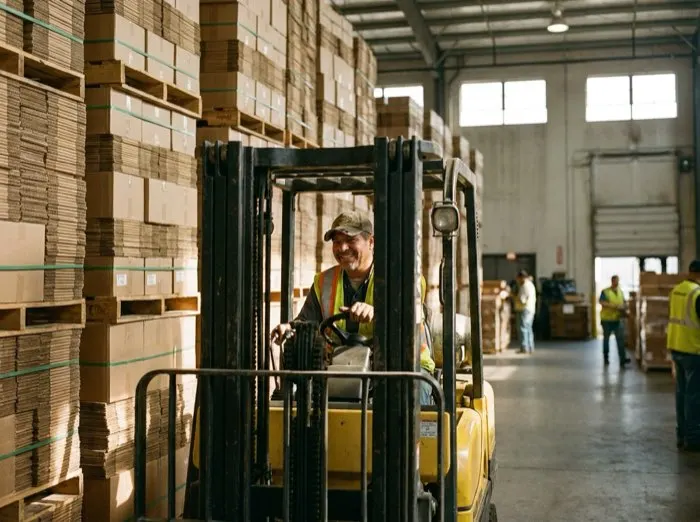
Warehouse and Logistics Opportunities in Portugal
If you are looking for warehouse work in Portugal as a non-EU candidate, you need a clear view of the market before you start. Portugal has a steady and growing logistics sector, but it operates differently from high-wage hubs in Northern Europe. If your primary goal is saving maximum cash quickly, countries like Germany or the Netherlands offer higher hourly rates. However, Portugal offers strong demand in specific regional clusters, lower living costs outside main capitals, and a predictable legal environment if you follow the correct visa steps.
Logistics demand in Portugal is concentrated around major transport corridors, coastal ports, and retail distribution centres. E-commerce expansion and supply chain restructuring have created consistent openings for order pickers, packers, forklift drivers, and inventory controllers. Employers regularly hire workers from outside the European Union, including candidates from South Asia, Africa, Latin America, Central Asia, and the Balkans. However, hiring rules changed significantly recently. You can no longer travel on a tourist visa and register later. You must secure a work visa or job seeker visa before you can start working legally.
Main Logistics Hubs and Industrial Zones in Portugal
Warehouse jobs are not evenly spread across the country. Most large facilities sit in dedicated industrial parks along major highways and near deep-water ports. Targeting your search to these specific municipalities will increase your chances of finding an employer willing to sponsor or hire foreign candidates.
- Azambuja and Carregado (Lisbon Metropolitan North): Known as the logistics heart of Portugal. This region along the A1 highway houses massive distribution centers for major supermarket chains like Pingo Doce and Continente, alongside international third-party logistics (3PL) providers such as DHL and Luis Simões.
- Maia and Vila Nova de Gaia (Greater Porto Area): The industrial backbone of northern Portugal. Facilities here handle consumer goods, textile exports, and regional parcel distribution. Hubs around Maia and Trofa constantly hire warehouse operators and dispatch clerks.
- Loures and Supply Market (MARL): Located just north of Lisbon, the Mercado de Abastecimento Regional de Lisboa (MARL) is a massive hub for food distribution, cold storage, and fresh produce handling. Cold store operators and night-shift order pickers are frequently in demand here.
- Setúbal and Sines: Sines is Portugal's largest deep-water seaport and a critical entry point for international freight. The surrounding logistics zone (ZILS) focuses on heavy freight handling, container management, and industrial warehousing. Setúbal focuses on automotive supply chains and manufacturing storage.
Hiring follows a distinct seasonal cycle. The highest demand occurs between September and December due to the end-of-year retail rush, Black Friday, and Christmas e-commerce volume. A secondary hiring surge happens in late spring (May to July) to prepare for summer tourism supply demands and regional agricultural distribution.
Pay, Hours, and Collective Bargaining (CCT)
Pay structures in Portuguese logistics are heavily regulated by national minimum wage laws and sector-specific collective bargaining agreements, known locally as Contratos Coletivos de Trabalho (CCT). Understanding how your salary is calculated helps you evaluate job offers accurately.
- Base Monthly Salary: Most entry-level warehouse roles (picker, packer, general handler) start near the national minimum wage or slightly above it, ranging from €870 to €950 gross per month.
- Net Monthly Earnings: After mandatory deductions for Social Security (11%) and income tax (IRS withholding), typical take-home net pay for basic operators ranges from €750 to €850 per month for standard 40-hour workweeks.
- Meal Allowance (Subsídio de Alimentação): In Portugal, employers usually pay a daily meal allowance. This is often provided tax-free on a dedicated card (cartão de refeição). It ranges from €5 to €9 per working day, adding an extra €110 to €180 net to your monthly income.
- Shift and Night Allowances: Working night shifts or rotating schedules adds extra compensation under collective agreements. Night work (typically 22:00 to 06:00) adds a mandatory 25% premium to base hourly pay. Experienced forklift operators can earn €850 to €1,000 net per month with shift bonuses.
- 13th and 14th Month Payments: Portuguese labor law mandates Christmas allowance (Subsídio de Natal) and holiday allowance (Subsídio de Férias), equal to two extra months of base pay per year. Some employers pay these in monthly installments, while others pay them in summer and December.
Required Licences, Skills, and Language Levels
While general warehouse roles do not require university degrees, having specific practical certifications makes your application stand out to Portuguese logistics employers.
- Forklift Operator Certificate (Certificado de Empilhador): Operating a forklift (empilhador) or reach truck (retrátil) requires formal certification. In Portugal, this certificate must comply with guidelines set by the Working Conditions Authority (ACT) and be issued by a training entity certified by DGERT (Direção-Geral do Emprego e das Relações de Trabalho). Certificates from non-EU countries are generally not recognized directly, so you will often need to undergo local validation or a short training module upon arrival.
- Language Requirements: For basic order picking, fluent Portuguese is not always mandatory, but basic conversational Portuguese (level A2) is highly expected for workplace safety and team communication. English is useful in multinational 3PL operations, but day-to-day warehouse instructions, health and safety signs, and management communication happen in Portuguese.
- Warehouse Management Systems (WMS): Experience using handheld barcode scanners (pistolas de radiofrequência), voice-picking systems, and basic software like SAP or Oracle gives you a major advantage over untrained applicants.
- Physical Fitness and Cold Storage: Cold store facilities (câmara de congelação) require workers able to work in sub-zero environments (-18°C to -25°C). These positions pay higher thermal allowances (subsídio de frio) and are harder for employers to fill.
Visas, Work Permits, and Legal Hiring Process
Securing work in Portugal as a non-EU citizen requires navigating the formal immigration rules enforced by AIMA (Agência para a Integração, Migrações e Asilo). Portugal has ended the former legal path known as the Expression of Interest (Manifestação de Interesse). You cannot enter on a tourist visa and convert it into a work permit from inside the country.
- Subordinated Work Visa (Visto D1): To get this visa, a Portuguese employer must offer you an official employment contract or a formal promise of contract (promessa de contrato de trabalho). The employer submits the offer, and you apply for the D1 visa at the Portuguese embassy or consulate in your home country before traveling.
- Job Seeker Visa (Visto para Procura de Trabalho): This visa allows non-EU workers to enter Portugal for 120 days (extendable by 60 days) specifically to look for work. If you secure a contract during this window, you can apply directly for a temporary residence permit without leaving the country.
- Tax and Social Security Registration: Once in Portugal with a valid visa, you must obtain a NIF (Número de Identificação Fiscal) from the tax authority (Autoridade Tributária) and a NISS (Número de Identificação da Segurança Social) to begin legal work.
Reality Check: Common Myths About Working in Portugal
Before moving, clear up common misunderstandings about the Portuguese warehouse job market:
- Myth: You can enter as a tourist and legalize later. Fact: This pathway is closed. You must obtain a job seeker visa or an embassy-issued work visa before arriving.
- Myth: Forklift licences from home countries are automatically accepted. Fact: Employers require DGERT and ACT compliant certification for insurance and safety compliance. Expect to complete local refresher training.
- Myth: You can easily survive in Portuguese warehouses speaking only English. Fact: While basic roles exist, team supervisors and safety instructions operate in Portuguese. Learning basic workplace Portuguese is critical for promotion and safety.
- Myth: The listed gross salary is what you take home. Fact: Deductions for Social Security (11%) and taxes apply. However, daily meal allowances boost your take-home cash significantly.
- Myth: Jobs are available everywhere in Portugal. Fact: Rural areas have very few logistics hubs. You must focus your target search on industrial corridors like Azambuja, Carregado, Maia, or Setúbal.
Update Your Workuro Profile to Get Found by Employers
Portuguese employers and recruitment agencies search the Workuro registry when filling open positions in logistics hubs across the country. To increase your chances of being shortlisted, make sure your profile contains precise detail rather than general statements.
Be specific about your credentials. If you hold a valid forklift operator licence, list the equipment types you can operate, such as counterbalanced forklifts (empilhador frontal), reach trucks (empilhador retrátil), or electric pallet jacks (porta-paletes elétrico). State your Portuguese language level clearly, even if it is currently basic (A2), alongside your English or native language skills.
Finally, specify the exact Portuguese regions where you are ready to work, such as Azambuja, Carregado, Greater Porto, or Setúbal. Detailed profiles appear far more frequently in employer searches, helping recruiters match your profile directly with active open roles in Portuguese logistics centers.
काम खोजने के लिए तैयार हैं?
2 मिनट में अपनी प्रोफाइल बनाएं। बिल्कुल मुफ्त, क्रेडिट कार्ड की ज़रूरत नहीं।
आगे भी पढ़ें