Scaffolding Jobs in Europe: Certificates and Pay (2026)
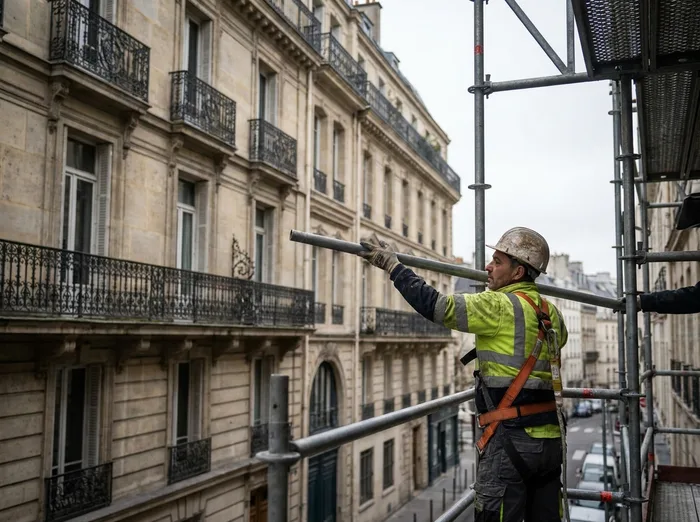
Scaffolding is a certificate-driven trade: in most of Europe you cannot legally erect or alter a scaffold without documented training, and the certificate you hold largely decides what you earn. That makes scaffolding unusually portable for foreign workers - your ticket travels better than in many trades - but only if you hold the right one for the right country.
Two markets: construction and industrial
Construction scaffolding (housing, facades) is steady work. Industrial scaffolding - refineries, power plants, shipyards in the Antwerp-Rotterdam corridor, German chemical parks and Nordic energy sites - pays more, runs year-round through maintenance shutdowns, and is where certified scaffolders are most chronically short.
Certificates by country
- Germany: scaffolding (Gerüstbauer) is a full recognised trade with apprenticeship; foreign scaffolders work under qualified supervision, and formal recognition of your training helps both pay and permits.
- Netherlands and Belgium: VCA safety certificate is the entry ticket; on top of it, the Dutch scaffolding sector uses a recognised qualification structure (steigerbouwer A/B and foreman levels) that industrial clients check.
- Norway: documented scaffold training is a legal requirement, with longer courses for scaffolds above roughly nine metres; everyone needs the HSE card.
- Sweden and Finland: ID06 and Valtti cards respectively, plus scaffold-specific training certificates (in Sweden via recognised training providers).
- Ireland: Safe Pass plus a CSCS scaffolding ticket (basic and advanced levels) - the UK-linked CISRS scheme is also widely understood by Irish employers.
Pay: what certified scaffolders earn
As a hedged 2026 guide: construction scaffolders in Germany, the Netherlands and Belgium typically earn around 16 to 22 euros gross per hour. Industrial scaffolders with shutdown experience often see roughly 20 to 27 euros, plus substantial allowances for travel, lodging and offshore or shift work. Norway tends to pay the most in Europe - often the equivalent of 22 to 28 euros per hour under generalised rates - against high living costs. Advanced tickets, foreman roles and rope-access add-ons (IRATA) push earnings higher still.
Permits and employment models
EU citizens work anywhere in the bloc; much of Europe's industrial scaffolding workforce is Polish, Romanian and Baltic workers posted between countries. Posted scaffolders must receive host-country pay with an A1 certificate - shutdown work in Belgium at Polish wages is illegal, however common the offer. Non-EU scaffolders have the best permit odds where their trade training is formally recognised, such as Germany's skilled-worker route; see our EU work permits and visas guide. Never pay a fee for the job offer itself - certified scaffolders are in demand, and legitimate employers know it.
Practical advice
Keep every certificate scanned and translated into English. List your systems experience by name - Layher, Cuplok, tube-and-fitting - because employers filter on it. And be honest about heights, weights and medicals: industrial sites test.
The shutdown calendar and rotation life
Industrial scaffolding runs on the turnaround calendar: refineries and chemical plants schedule maintenance shutdowns mostly in spring and autumn, creating intense hiring waves for four-to-eight-week campaigns with heavy overtime - many scaffolders earn a disproportionate share of their annual income in these windows. Between shutdowns, crews rotate through standing maintenance contracts or construction scaffolding. Rotation work is standard on remote and offshore-linked projects: typical patterns are two or three weeks on with paid travel home, and lodging in employer-arranged accommodation. Plan family life and taxes around this rhythm; cross-border scaffolders should understand where they are tax-resident before the first big overtime cheque arrives.
Career ladder and physical realities
The trade has a clear ladder: helper, certified scaffolder, advanced or lead scaffolder, foreman, then inspection and supervision roles - each step is certificate-gated and each adds noticeably to the hourly rate. Rope access (IRATA or SPRAT) opens the best-paid niches, including wind-turbine and offshore work. Be honest about the physical side: scaffolding means carrying steel all shift, gripping in cold and wind, and passing medical checks that industrial clients enforce strictly, including drug and alcohol testing at gate entry on most petrochemical sites. Shoulders and knees are the trade's wear points; experienced scaffolders treat technique and lifting discipline as career insurance. Keep a personal logbook of systems, heights and sites worked - foremen hiring for shutdowns scan for exactly that evidence.
This is general information, not legal advice. Verify training requirements with the national labour inspectorate of your target country and permit rules via eures.europa.eu or the national immigration authority.
Industrial contractors plan shutdown crews months ahead and search registries for certified scaffolders. Create your free profile - free, no credit card - and employers contact you directly.
Chcesz dać się znaleźć pracodawcom?
Stwórz profil w 2 minuty. Za darmo, bez karty.
Czytaj dalej
