Hotel and Hospitality Worker Jobs in Greece for Foreign Workers (2026)
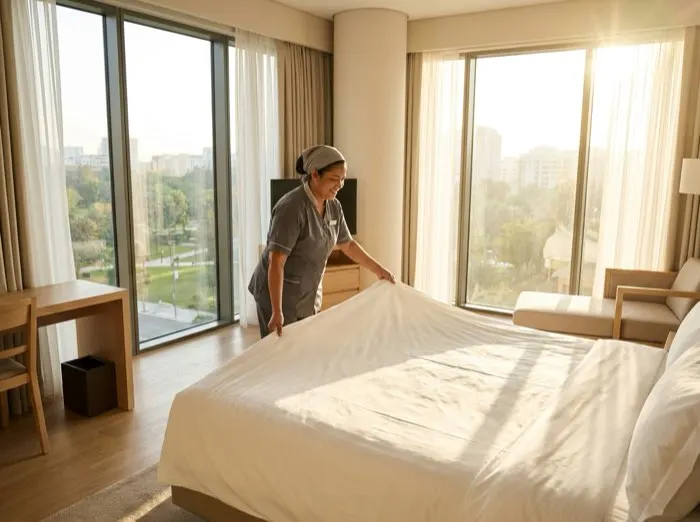
Seasonal and Year-Round Hospitality Demand in Greece
Greece relies on its tourism sector to power its economy. Every year, millions of international travelers arrive at Greek resorts, boutique hotels, and coastal restaurants. This creates thousands of job opportunities in hospitality for workers from outside the European Union. Demand is strongest for housekeepers, line cooks, kitchen helpers, dishwashers, servers, bartenders, and reception staff.
Hospitality demand in Greece splits into two main categories: island seasonal work and urban year-round positions. Seasonal hiring accounts for the vast majority of opportunities for foreign candidates. Employers seek reliable staff who can work through the busy summer operational window.
Target regions in Greece with high demand include:
- Crete (Heraklion, Chania, Rethymno, Lassithi): The largest Greek island features massive all-inclusive luxury resorts and family complexes that hire hundreds of overseas workers every year.
- Dodecanese Islands (Rhodes and Kos): Home to large hotel chains and beachfront properties that depend heavily on seasonal non-EU staff to fill back-of-house and service roles.
- Ionian Islands (Corfu and Zakynthos): Popular with European holidaymakers, offering strong seasonal demand from late spring through early autumn.
- Cyclades Islands (Santorini and Mykonos): Known for high-end boutique luxury hotels. These locations pay competitive wages but expect high service standards and good English skills.
- Halkidiki Peninsula: A primary resort region on the northern mainland with large beach hotels catering to Balkan and Central European tourists.
- Athens and Thessaloniki: Major urban areas with year-round boutique and business hotels. These cities hire workers on standard twelve-month contracts rather than seasonal permits.
Visa Routes and the Metaklisi Process for Non-EU Workers
If you hold citizenship outside the European Union, you must secure legal work authorization before entering Greece. You cannot travel to Greece on a Schengen tourist visa and legally convert it to a work permit while inside the country. Doing so violates immigration law and makes you ineligible for official employment.
The standard process for hiring non-EU nationals is called Metaklisi (an official employer invitation system). Under Greek law, the Ministry of Labour sets yearly quota limits for foreign workers across regions and trades.
The two main visa routes for hospitality workers are:
- Seasonal Work Visa (Type D.4.1): This is the primary visa route for island and resort hospitality. It permits you to stay and work in Greece for up to nine months within a twelve-month period. Once the contract ends, you must leave Greece before applying for the next season.
- National Work Visa for Regular Employment (Type D.1.1): This permit applies to full-time, year-round positions, mostly in city hotels in Athens or Thessaloniki. It grants an initial one-year stay and can be renewed annually.
- How the Metaklisi Process Works: The Greek hotel employer submits an application to their regional Decentralized Administration (Apokentroponi Dioikisi) proving they could not fill the post locally. Once the government approves the quota slot, your file transfers to the Greek consulate or embassy in your home country. You then attend an interview, submit your police clearance and medical report, and receive your visa stamp.
- Processing Timelines: The Metaklisi procedure generally takes between two and four months from initial application to visa issuance. Starting the recruitment process early in the winter is essential.
Mandatory Certificates, Hygiene Rules, and Language Needs
Working in Greek hotels and restaurants requires compliance with health and hygiene regulations enforced by Greek authorities. You must possess specific health clearances before touching food or handling guest bedding.
Key certifications and requirements include:
- Health Certificate (Pistopoiitiko Ygeias): Mandatory for every hotel employee working in food service, kitchen, housekeeping, or spa operations. To obtain this certificate, you undergo a medical evaluation in Greece, including a chest X-ray and basic lab tests, issued through public health centers or certified private doctors. Employers often assist new arrivals in scheduling these checks during their first week.
- EFET Food Hygiene Training: The Hellenic Food Authority (EFET) mandates basic food safety standards for kitchen hands, line cooks, buffets, and bar staff. Large resort hotels usually organize group EFET training sessions for their staff at the start of the season.
- Language Expectations: For kitchen helpers, dishwashers, laundry operators, and room cleaners, fluent Greek is rarely required. A basic working knowledge of English is usually enough. For front-of-house roles such as receptionists, waiters, and guest relations staff, conversational English is essential. Knowledge of German, French, or Italian is an added advantage on islands like Rhodes and Crete.
Pay Rates, Collective Bargaining Agreements, and Staff Perks
Pay rates for Greek hospitality staff are governed by national collective bargaining agreements (Syllogiki Symvasi Ergasias) signed between hotel owner federations and hospitality unions. These agreements set baseline pay scales based on job classification and years of experience.
Pay standards and benefits in Greece include:
- Net Monthly Pay Ranges: After tax and mandatory national health insurance (EFKA) deductions, entry-level housekeepers, dishwashers, and kitchen assistants typically earn between 850 EUR and 1,000 EUR net per month. Skilled line cooks, experienced waiters, bartenders, and receptionists usually earn between 1,000 EUR and 1,400 EUR net per month.
- Accommodation and Meals: Standard seasonal contracts on Greek islands include free shared staff housing (usually two to three workers per room in staff apartments) and two free meals per day in the hotel staff cafeteria. This perk reduces living costs and allows foreign workers to save a large portion of their earnings.
- Working Hours and Days Off: Peak season (June through August) is fast-paced. Workers typically work six days per week on eight-hour shifts. Overtime pay is legally required for extra hours, though exact schedules depend on the property's size and management structure.
- Tips and Service Charges: Service staff at high-end resorts in Mykonos, Santorini, or luxury properties in Crete can earn extra income from tips, but base salary remains your reliable source of income.
Reality Check: Common Misconceptions About Greek Hospitality Work
Understanding the reality of seasonal hotel work prevents surprises and helps you plan a successful season:
- Misconception: You can arrive as a tourist and figure out a work visa later.
Reality: Employers face high fines for hiring unregistered staff. Work visas must be completely processed through a Greek consulate before you enter the country. - Misconception: Staff housing is equivalent to hotel guest rooms.
Reality: Staff quarters are basic and practical. You will likely share a modest apartment room with a colleague, using shared kitchen facilities. - Misconception: A summer job leads directly to continuous winter employment on the islands.
Reality: Island tourism shuts down almost completely from November to April. Seasonal contracts finish in October, and seasonal visas expire after nine months. - Misconception: You must speak fluent Greek to get hired.
Reality: Tens of thousands of foreign hospitality workers in Greece speak no Greek at all. English is the primary language used in international resort operations.
Peak Recruitment Timelines for the Greek Tourism Season
Timing is everything when applying for hospitality roles in Greece due to visa processing times:
- November to January: Greek hotel owners assess staffing needs, calculate quota allocations, and submit Metaklisi requests to regional authorities. Employers list open vacancies and accept applications online.
- February to March: Recruiters conduct video interviews with foreign candidates. Job offers and formal employment contracts are sent out, and consulate visa appointments are scheduled.
- April to May: Approved workers receive their visas, travel to Greece, complete mandatory medical checks for their Health Certificate (Pistopoiitiko Ygeias), and participate in pre-season resort orientation.
- June to September: The core operational season runs at full capacity across all islands and coastal resorts.
- October: The seasonal period winds down. Hotels perform final payroll, complete tax documentation, and close for winter while workers return home.
Build Your Workuro Profile to Match What Greek Employers Need
Greek hotel operators and agency recruiters use Workuro to find reliable foreign workers for upcoming seasons. To make sure your profile stands out in employer searches, make sure to add your specific practical details:
- List your specific roles: State clearly whether you work as a housekeeper, line cook, dishwasher, buffet assistant, bartender, or reception agent.
- Detail your language capabilities: Explicitly note your English proficiency level alongside any basic Greek, French, German, or other language skills.
- Specify your target regions: Mention if you are open to seasonal island contracts in Crete, Rhodes, Kos, Corfu, or the Cyclades, or year-round city work in Athens.
- Highlight relevant certifications: Indicate whether you hold food safety certificates, hospitality diplomas, or are prepared to undergo the mandatory health exam upon arrival.
Keep your Workuro profile complete and updated so Greek hospitality employers can find you, match you to available Metaklisi quotas, and start your visa invitation process.
Pronto para ser encontrado?
Crie seu perfil em 2 minutos. Grátis, sem cartão de crédito.
Continue lendo