Truck Driver Jobs in Denmark for Foreign Workers (2026)
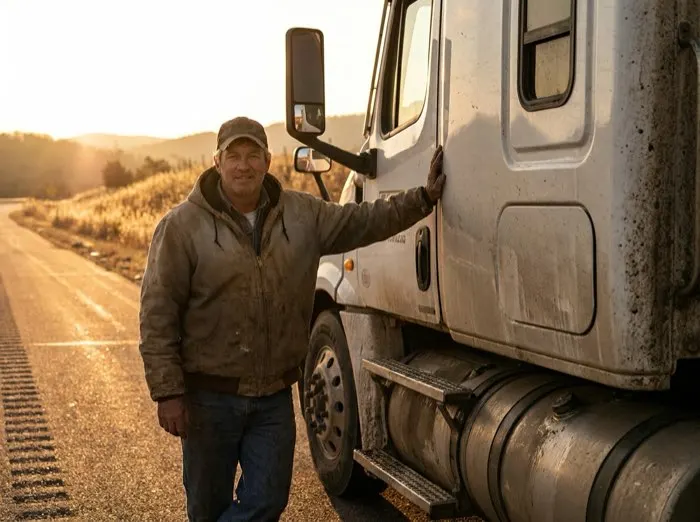
If you are a professional truck driver from outside the European Union, Denmark offers high wages, modern vehicles, and excellent road safety. However, you need to know the reality right away. Denmark makes it much harder for non-EU drivers to get a direct work visa than many other European nations. If your main goal is to enter the EU as quickly as possible, countries like Poland, Lithuania, or Croatia issue far more driver work permits every year.
That said, hiring non-EU drivers directly into Denmark is possible if a Danish company cannot find local talent and agrees to meet strict national wage standards. Denmark does not allow low-wage foreign labor. Every foreign driver must receive the exact same pay as a local driver under official collective agreements. This guide explains how the Danish freight market works, where the job hubs are located, what credentials you need, and how the visa process works in 2026.
Where the truck driving jobs are in Denmark
Denmark is a small country divided into islands and the Jutland peninsula. Because of its location, it acts as a bridge between mainland Europe and Scandinavia. Most heavy goods transport is concentrated around key freight corridors, ports, and distribution centers.
- The Triangle Region (Trekantområdet): This area in Jutland includes the cities of Fredericia, Kolding, Vejle, and Taulov. Taulov is Denmark's primary inland logistics hub. It features large dry ports, container terminals, and cold-storage facilities. Companies here constantly need drivers for regional and cross-border transport into Germany.
- Greater Copenhagen (Hovedstaden): The industrial zones around Taastrup, Hvidovre, and Greve house major retail distribution centers for supermarket chains like Netto, Coop, and Rema 1000. Driving here involves local delivery, night distribution, and store replenishment.
- Aarhus Harbour: As Denmark's largest container port, Aarhus relies heavily on container hauliers to move freight into central Denmark and northern Europe.
- Esbjerg: Located on the west coast of Jutland, Esbjerg is the center for Denmark's offshore wind and maritime transport industries. Hauliers here move heavy equipment, turbine parts, and specialized cargo.
The hiring cycle in Denmark rises in late summer and reaches its peak between October and December due to retail imports for the holiday season. Agricultural haulage, such as grain and livestock transport in Jutland, creates additional seasonal driving roles from July through October.
Licences, Code 95, and Danish paperwork
To drive a heavy goods vehicle in Denmark, you must hold the proper category licence and EU driver qualification. The main regulatory body for driving licences and road safety in Denmark is the Danish Road Traffic Authority (Færdselsstyrelsen).
- Category C and CE Licences: You must hold a valid Category C (rigid truck) or Category CE (articulated truck with trailer) licence. If your licence was issued outside the EU, you cannot simply start driving. You must exchange your foreign licence for a Danish one or pass a practical and theoretical driving test in Denmark after establishing residence.
- Driver CPC (Code 95 / EU-kvalifikationsbevis): To drive commercially in the EU, you need the Certificate of Professional Competence (CPC), widely known as Code 95. If you completed your Code 95 in another EU member state, Denmark recognizes it. If you obtained your commercial driving qualification outside the EU, you must complete the 35-hour periodic training or full initial qualification at an approved Danish training school (AMU center).
- Driver Tachograph Card (Tachografkort): All heavy vehicles in Denmark use digital or smart tachographs. You must hold a personal driver card issued by Færdselsstyrelsen or an equivalent EU driver card to log your driving hours.
- Language requirements: You do not need fluent Danish to drive long-haul routes or transport containers from ports. English is the common language used by dispatchers and logistics managers across Scandinavia. However, for local store deliveries, basic customer-facing Danish or basic English is expected.
Work permits and legal routes for non-EU drivers
Foreign workers from outside the EU/EEA (such as South Asia, Africa, Latin America, Central Asia, or the Western Balkans) must hold a valid work and residence permit before starting work in Denmark. The Danish Agency for International Recruitment and Integration (SIRI) manages all work permit applications.
For truck drivers, the visa options are specific. Driving is generally not on the Danish Positive List for Higher Education, but drivers may qualify through the Supplementary Pay Limit Scheme or through standard collective agreement employment pathways.
- Pay Limit Schemes: Denmark has strict minimum annual income requirements for foreign workers brought in under pay limit schemes. The employer must prove that your salary meets the required threshold and that your job conditions mirror standard Danish working terms.
- Collective Agreement Route: Most Danish transport companies belong to employer associations like DI (Dansk Industri) or DTL (Dansk Transport og Logistik). Their workers are covered by agreements negotiated by the 3F Transport Union (Fagligt Fælles Forbund). SIRI will check your employment contract to confirm that your pay and conditions exactly match the 3F collective agreement for transport workers.
- Processing time: Once you and your employer submit the online application and supporting documents to SIRI, processing typically takes between 1 and 3 months. You cannot work in Denmark while your application is under review.
Pay rates, taxes, and working hours in Denmark
Danish wage rates are high, but taxation is also significant. Denmark does not set a single statutory minimum wage by law. Instead, wages are set by collective agreements negotiated between trade unions and employers.
- Gross Hourly Pay: Under current 3F union agreements, a qualified Category CE truck driver earns between 165 DKK and 195 DKK gross per hour. Additional pay is added for night shifts, weekend work, overtime, and hazardous cargo (ADR).
- Diæter (Tax-free allowances): Drivers on long-distance routes who sleep in the truck receive daily tax-free allowances for food and accommodation expenses according to Danish tax rules (Skattestyrelsen).
- Net Monthly Pay: After Danish income tax (A-skat) and social contributions (AM-bidrag), a full-time truck driver working a standard 37-hour week plus typical overtime can expect a net take-home pay between 18,000 DKK and 24,000 DKK per month (roughly 2,400 EUR to 3,200 EUR).
- Working hours: Drivers must strictly follow EU driving and rest time rules (Regulation EC 561/2006). Digital tachograph enforcement in Denmark is strict, and police perform frequent roadside inspections.
Reality check: Common mistakes non-EU drivers make
Many drivers waste time and money because they misunderstand how European trucking hiring works. Here are the main reality checks for Denmark:
- Mistake 1: Expecting a tourist visa to turn into a work permit. You cannot enter Denmark on a Schengen tourist visa, find a driving job, and start working. You must apply for and receive your SIRI work permit from your home country or country of legal residence.
- Mistake 2: Thinking a foreign non-EU licence is immediately valid. A commercial driving licence from outside Europe does not automatically allow you to operate heavy trucks commercially inside the EU without completing local conversion steps or Code 95 testing.
- Mistake 3: Ignoring the cost of living. While Danish net pay is higher than in Southern or Eastern Europe, housing and daily living costs in Danish cities are also high. Always factor in local housing costs when evaluating a job offer.
- Mistake 4: Believing you can work without a formal contract. Unregistered or cash-in-hand driving jobs do not exist in the legitimate Danish transport sector. Everything is tracked through digital systems, bank transfers, and tax registries.
Put your details into your Workuro profile
Danish employers and international recruitment agencies use Workuro to search for qualified foreign drivers who are ready to move. When you set up your free Workuro profile, generic information will not get you noticed. You need to list exact details so transport managers can find you in search results.
Make sure your profile specifically includes:
- Your exact driving licence categories (Category C, Category CE) and the country where your licence was issued.
- Your current EU Driver CPC (Code 95) status, including the expiration date and issuing country if you already hold one.
- Your experience with specialized driving, such as tank transport, refrigerated cargo (frigo), ADR hazardous materials, or container chassis work.
- Your language levels in English and any European languages.
- The specific logistics areas in Denmark you are willing to work in, such as the Triangle Region (Taulov/Fredericia) or Greater Copenhagen (Taastrup).
By keeping these details accurate and complete, you make it easy for European employers to evaluate your qualifications and contact you directly for open driving positions.
Pronto para ser encontrado?
Crie seu perfil em 2 minutos. Grátis, sem cartão de crédito.
Continue lendo