Warehouse Jobs in France for Foreign Workers (2026)
 France
Logistics Work in France: What You Need to Know First
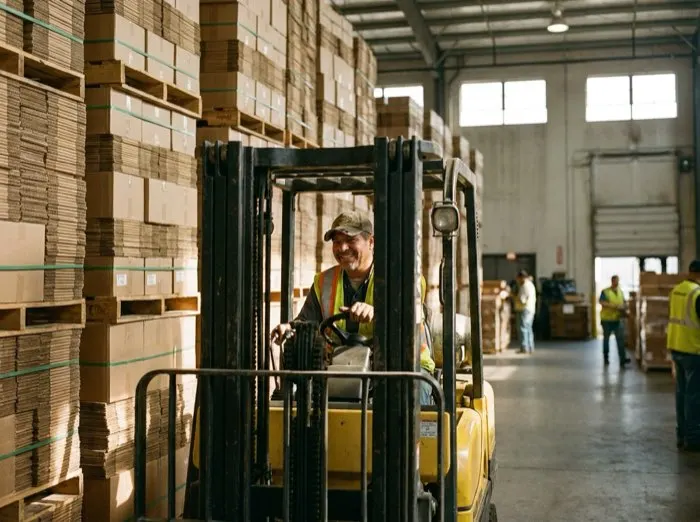
France is one of Europe's largest logistics crossroads. Goods flow constantly through its ports, airports, and massive distribution parks. If you are coming from outside the European Union, landing a job in a French warehouse is entirely possible, but you must understand how the local market operates. French employers hire thousands of warehouse workers every year, but foreign recruitment follows strict rules regarding visas and safety certifications.
You need to know where the real demand is located. Basic manual labor, such as simple box packing or manual loading, rarely leads to direct visa sponsorship from outside the EU. French employers can easily fill basic manual roles locally. However, if you hold machinery licenses, have experience managing inventory software, or are willing to work night shifts in major distribution hubs, your chances of finding an employer willing to sponsor your work permit increase significantly.
If you do not speak any French and have no experience operating heavy warehouse machinery, securing direct non-EU visa sponsorship in France can be very difficult. In that specific scenario, Central European nations like Poland or the Czech Republic often offer faster permit pathways for entry-level packing roles. But if you have forklift experience or are prepared to learn conversational French, France offers strong union protections, structured pay rates, and long-term stability.
Key Logistics Regions and Industrial Hubs in France
Logistics activity in France is concentrated along a famous trade route known as the Dorsale European Logistics Spine. This trade corridor stretches from the northern ports down to the Mediterranean coast. If you want a job in this sector, you must focus your search on the specific departments and industrial zones where these large hubs operate.
- Hauts-de-France (Lille, Arras, Dunkirk): Located in the far north, this region handles massive cross-border trade with northern Europe and Britain. Industrial parks around Arras and Saint-Martin-Boulogne house major e-commerce fulfillment centers and retail storage units.
- Île-de-France (Roissy, Marne-la-Vallee, Senlis): The region surrounding Paris is the busiest logistics hub in the country. Cargo hubs near Paris-Charles de Gaulle Airport in Roissy handle high-value air freight, while distribution centers in Marne-la-Vallee supply food and consumer goods to millions of residents.
- Auvergne-Rhone-Alpes (Saint-Quentin-Fallavier, Lyon): Located near Lyon, Saint-Quentin-Fallavier is home to the largest logistics park in France, spanning over 1,000 hectares. This area hosts hundreds of international freight companies, cold-storage facilities, and supply chain operators.
- Provence-Alpes-Cote d'Azur (Marseille-Fos, Miramas): In the south, the deep-sea port at Fos-sur-Mer handles sea containers from across the globe. Surrounding industrial zones in Miramas specialize in bulk distribution, automotive transport, and import logistics.
Essential Certifications: Understanding the CACES System
In France, safety inside warehouses is governed strictly by state health agencies and the National Health Insurance Fund for Salaried Workers (CNAM). You cannot simply jump onto a forklift or a motorized pallet jack without recognized proof of training. The standard certification system in France is called CACES (Certificat d'Aptitude a la Conduite En Securite).
Employers almost always prioritize candidates who hold valid CACES certificates. The test includes both a theoretical exam on French safety regulations and a practical driving evaluation conducted by accredited private training organizations.
- CACES R489 (Forklift Trucks): This is the most common certification in French warehouses. Category 1A covers ride-on pallet trucks, Category 3 covers counterbalanced forklift trucks, and Category 5 covers reach trucks used for high-rack storage. Category 5 drivers are constantly in high demand.
- CACES R485 (Pedestrian Stackers): Covers motorized stackers where the operator walks behind or stands on a small platform. This is common in smaller retail stockrooms and sorting centers.
- CACES R484 (Gantry and Overhead Cranes): Used mainly in heavy industrial logistics, steel yards, and maritime container sites.
If you obtained your forklift driving license outside the EU, it will not be legally valid on a French warehouse floor. Your employer must either pay for you to complete the official CACES training upon arrival, or you must complete a fast-track conversion course. Crucially, passing the CACES test requires you to understand basic French safety signs, oral commands, and written safety instructions. Having an A2 or B1 level in French is a practical requirement for passing these safety exams.
Work Permits, Pay Rates, and Hiring Seasons
To work legally in France as a non-EU citizen, an employer must apply for an official work permit on your behalf through the online ANEF portal (Administration Numerique pour les Etrangers en France). Before hiring from outside the EU, the employer generally must publish the job opening with the national employment agency (France Travail) for three weeks to demonstrate that no local or EU candidate was available. This process is known as labor market testing (opposabilite de l'emploi).
However, if a specific logistics role is placed on the official French regional shortage list (metiers en tension), the employer can bypass this three-week waiting period, making your permit approval much faster. High-rack reach truck operators and specialized warehouse stock managers frequently appear on regional shortage lists in the Île-de-France and Auvergne-Rhone-Alpes regions.
- Net Monthly Pay Ranges: Minimum wage in France (SMIC) sets the absolute floor for earnings. For a standard 35-hour workweek, minimum net pay is approximately 1,400 Euros per month. In logistics, net pay ranges from 1,450 Euros to 1,850 Euros per month after all taxes and social contributions are deducted.
- Shift Bonuses and Overtime: Working night shifts (travail de nuit), cold-storage duties (froid negatif), or Sunday shifts adds mandatory legal premiums to your paycheck, raising net earnings toward the higher end of the scale.
- Types of Contracts: Initial job offers for foreign workers usually come as a fixed-term contract (CDD - Contrat a Duree Determinee) lasting 6 to 12 months, which can later be converted into a permanent contract (CDI - Contrat a Duree Indeterminee).
- Hiring Cycles and Seasons: Recruitment reaches its highest peak between September and December due to end-of-year e-commerce demand and holiday trade. A secondary hiring wave occurs between June and August, when logistics hubs hire temporary staff to cover annual worker vacations.
Reality Check: What Many Foreign Workers Get Wrong
Navigating the French job market can be confusing if you rely on internet rumors. Here are the most common misunderstandings international applicants run into when searching for logistics work in France:
- Believing English is enough: While global management teams may use English, daily operations, floor briefings, and safety signs inside French warehouses are entirely in French. You need basic French to work safely.
- Assuming foreign licenses work automatically: Having 10 years of forklift experience in your home country is valuable, but French law strictly forbids operating equipment without a verified CACES certificate or direct authorization from your site manager.
- Expecting overnight permit approval: The work permit process involves state administrative review. It typically takes between 1 and 3 months from the day an employer files your application on the ANEF portal to receiving your visa decision.
- Confusing gross pay with net pay: French job postings often quote gross annual salary. Remember that roughly 20 to 22 percent will be deducted for social security, healthcare, and taxes before the money reaches your bank account.
Put Your Specifics into Your Workuro Profile
European employers use Workuro to search directly for international talent when local hiring falls short. To stand out to French logistics recruiters who are actively seeking workers, your profile must contain exact details rather than general statements.
Log into your Workuro profile today and update your information with these specific details:
- List your machinery experience: Mention the specific machinery you have operated, such as high-reach trucks, order pickers, or counterbalanced forklifts, and state how many years of experience you have with each.
- Specify your language abilities: State your current level of French honestly (A1, A2, B1, or fluent). If you are currently taking French lessons, list that clearly.
- Select target locations: Add named French logistics regions to your profile, such as Hauts-de-France, Île-de-France, or Auvergne-Rhone-Alpes, so local employers can find you in regional searches.
- Add certifications and safety training: Include any material handling certificates, heavy vehicle licenses, or workplace safety training you have earned in your home country.
- Set your availability date: Indicate clearly when you are ready to relocate and start work once your permit is processed.
A detailed, accurate profile helps French employers confirm that you meet their operational standards, making it much easier for them to start the work permit process for you.
Pronto para ser encontrado?
Crie seu perfil em 2 minutos. Grátis, sem cartão de crédito.
Continue lendo