Care Work and Elderly Care Jobs in Europe for Foreign Workers (2026)
 Europe
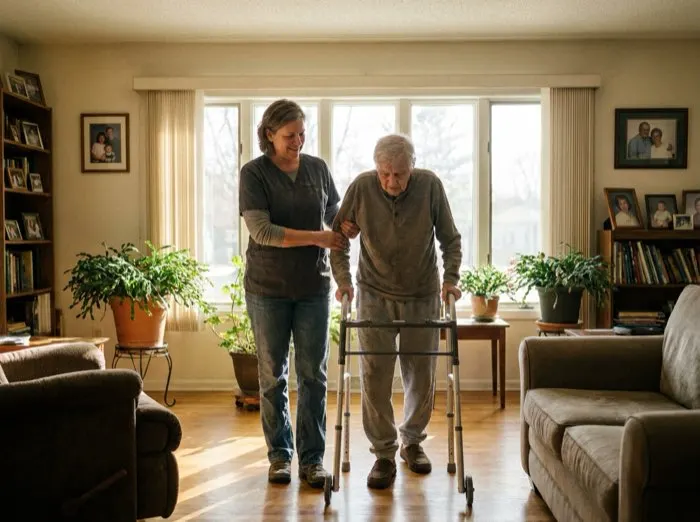
Europe is ageing faster than almost any other region in the world, and its care systems cannot find enough workers. From German nursing homes to Italian live-in care and Nordic home-care services, elderly care is one of the sectors where foreign workers are most consistently needed - and where demand will keep growing for decades. Here is an honest guide to getting into care work in Europe.
What "care work" covers
Care work spans several distinct roles, and it matters which one you target:
- Care assistants / nursing assistants: help with daily living, hygiene, mobility, and meals in care homes or home care. Formal requirements vary from short training courses to recognised vocational qualifications.
- Live-in carers: live with an elderly person and provide round-the-clock support. Common in Italy, Austria, and Germany. Conditions vary hugely - insist on a clear contract covering hours, free time, and accommodation.
- Qualified nurses: a regulated profession everywhere in Europe, requiring diploma recognition and language certificates - we cover this fully in our separate guide to working as a nurse in Europe.
Where the demand is strongest
- Germany: a chronic, officially recognised shortage in both nursing and elderly care. Germany runs recognition programmes that let foreign care workers arrive and complete qualification steps while working.
- Austria and Switzerland: strong demand, particularly for live-in and home care; German language needed.
- Italy: a very large live-in care sector (the "badante" model), where Italian language matters more than formal certificates.
- Netherlands, Belgium, Nordic countries: demand exists but tends to require local language skills and recognised training.
- UK and Ireland (outside/inside the EU respectively) run their own care-worker visa schemes with their own rules - check official sources, as the UK's scheme has been tightened.
The two real requirements: language and papers
Language is non-negotiable in care. You are working with vulnerable, often confused elderly people; employers and regulators require you to communicate. Expect to need roughly B1 level in the local language for assistant roles, and B2 for nursing. Investing in the language before you apply is the single highest-return preparation you can do.
Work permits are employer-driven. As a non-EU citizen you will normally need a job offer first, and the employer applies for or supports your permit. Several countries treat care as a shortage occupation, which speeds up procedures. Read how EU employer sponsorship works and prepare the standard documents you need to work in Europe - police clearance certificates are commonly required in care.
Pay and conditions - the honest version
Care work is demanding: physically heavy, emotionally intense, with shift work including nights and weekends. Pay for assistant roles is usually modest by local standards - around minimum wage to somewhat above it, better in Germany, Austria, and the Nordics, lower in Southern Europe. Live-in arrangements can look attractive because housing is included, but check the hours carefully; a contract that quietly expects 24/7 availability is exploitation. You are entitled to defined working hours, rest time, and social security contributions like any other worker.
Watch out for recruiters charging workers fees for care jobs or "guaranteed visas" - legitimate care employers and their licensed partners never charge the worker. Also be wary of offers where your accommodation, contract, and passport would all be controlled by the same middleman.
A sector with a future
Unlike many entry-level sectors, care offers a real ladder. In several countries (Germany is the clearest example), assistants can complete recognised training on the job and become qualified care professionals with substantially better pay and permanent contracts - and residence status tends to strengthen along the way.
This is general information, not legal advice. Requirements for care roles, recognition, and permits vary by country and change over time. Verify with the official immigration and health authorities of your target country, or via eures.europa.eu and europa.eu.
Let care employers find you
Care homes and home-care agencies across Europe search for candidates abroad because local recruitment has simply run dry. A clear profile - your experience, training, and language levels - is what they look for. Workuro is free for workers: no agency, no fees, no credit card, and employers contact you directly. Take five minutes to create your free profile and make your care experience visible.
Ești gata să fii găsit?
Creează-ți profilul în 2 minute. Gratuit, fără card bancar.
Continuă lectura