Hotel & Hospitality Jobs in Poland for Foreign Workers (2026)
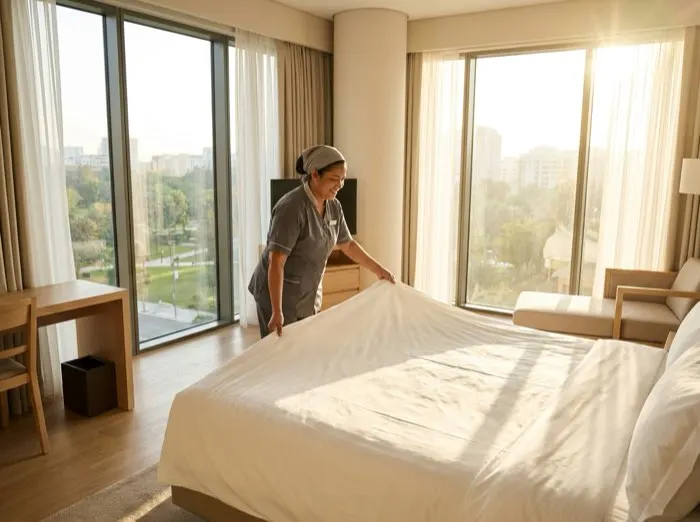
If you want to work in hotel and hospitality jobs in Europe, Poland offers one of the most straightforward entry points for workers coming from outside the European Union. Whether you are from South Asia, Central Asia, Southeast Asia, Africa, Latin America, or the Western Balkans, Polish hotels, resorts, and restaurants actively recruit foreign staff to fill critical labor gaps.
This guide explains how the Polish hospitality sector works for foreign job seekers in 2026. You will learn where the jobs are located, what permits you need, what certificates local law requires, how much money you will take home after tax, and how to position yourself so employers find you directly.
The Hospitality Job Market in Poland for Foreign Workers
Poland has developed a massive tourism and business travel economy over the past decade. Major cities draw corporate travelers year-round, while seaside resorts and mountain towns experience dramatic seasonal surges. Polish workers have moved into higher-paying industrial, technology, and logistics sectors, leaving hotel owners with a constant shortage of reliable staff.
Demand in Poland is split into two distinct categories: year-round commercial hospitality and seasonal tourist hospitality. For foreign workers, back-of-house roles like housekeeping, kitchen assistants, line cooks, and dishwashers offer the easiest path because they do not require fluent Polish. Front-of-house positions like receptionists, bartenders, and main-dining servers are open to foreigners who speak good English and basic Polish, or foreign languages like German in specific border regions.
If you prefer guaranteed multi-year employment without moving every six months, urban hotels in big cities are your best target. If you prefer roles that often include free food and staff lodging, seasonal resort hotels along the coast or in the mountains offer excellent short-term saving potential.
Where the Jobs Are: Key Regions and Seasonal Cycles
Job opportunities vary greatly depending on where you look in Poland. Understanding geography helps you target the right employers at the right time of year.
- Warsaw (Mazowieckie region): The capital city operates year-round with high demand in international chain hotels, conference centers, and upscale restaurants. Hiring happens continuously, but peaks in early spring (March to April) and autumn (September to October).
- Kraków (Małopolskie region) and Wrocław (Dolnośląskie region): These historic cities host millions of international tourists every year. Demand for housekeeping, breakfast chefs, and hotel maintenance workers remains steady throughout all twelve months.
- Baltic Sea Coast (West Pomerania and Pomerania regions): Cities and coastal towns like Gdańsk, Sopot, Gdynia (known as the Tricity), Kołobrzeg, Świnoujście, and Międzyzdroje experience massive summer surges. High hiring season runs from May through September. Resorts here often hire large groups of foreign workers and provide shared accommodation.
- Tatra and Karkonosze Mountain Resorts: Towns like Zakopane, Białka Tatrzańska, Karpacz, and Szklarska Poręba have two distinct peak seasons. Summer runs from June to August, while the winter ski season runs from December through March. Mountain hotels need room attendants, kitchen hands, and spa staff during these months.
- Mazury Lake District (Warmia-Masuria region): Towns like Giżycko, Mikołajki, and Olsztyn feature large lakeside resorts that recruit heavily for the summer season between April and August.
Work Permits, Regulations, and Required Certificates
To work legally in Poland as a non-EU citizen, you must follow specific administrative steps. The responsibility to apply for your primary work document lies with the employer, but you must supply correct documents and obtain your visa.
- Type A Work Permit (Zezwolenie na pracę typ A): This is the standard permit for full-time, long-term employment. Your employer submits the application to the local Voivode (Wojewoda), which is the regional government office. Depending on the Voivodeship (region), processing takes between 2 and 5 months. Warsaw and Kraków offices usually take longer, while smaller regional offices process permits faster.
- Type S Seasonal Work Permit (Zezwolenie na pracę sezonową): Used specifically for seasonal resort work in hospitality and tourism. It allows you to work for up to 9 months within a calendar year. Processing times for Type S permits are usually faster than Type A permits.
- Labor Market Test (Test rynku pracy): Before hiring a non-EU worker, the employer may need to request a document from the local labor office (Powiatowy Urząd Pracy) showing that no qualified Polish or EU jobseekers were available for the role. In many regions, hospitality positions facing severe shortages bypass or pass this test quickly.
- Sanitary Health Certificate (Orzeczenie sanitarno-epidemiologiczne / Sanepid book): By Polish law, every worker who handles food, beverages, kitchen equipment, or clean hotel linen must obtain a health clear card issued through the State Sanitary Inspection (Stacja Sanitarno-Epidemiologiczna). Upon arrival in Poland, you will provide health samples and visit an occupational doctor (Lekarz medycyny pracy). Your employer typically guides you through this process during your first week, and the certificate remains valid for years across future hospitality jobs in Poland.
Language Requirements and Workplace Culture
Language expectations depend entirely on whether your job puts you directly in front of guests or behind the scenes.
- Housekeeping and Laundry Staff: No Polish language required. Basic conversational English (A2 level) or willingness to use translation mobile apps on shift is usually sufficient. Work instructions and safety rules are often translated into English, Ukrainian, or Hindi in large hotel operations.
- Kitchen Helpers and Dishwashers: Basic English or basic conversational Polish is helpful. The work relies heavily on speed, hygiene standards, and physical endurance rather than deep verbal communication.
- Line Cooks and Pastry Chefs: Intermediate English or functional kitchen Polish (B1 level) is required so you can follow order tickets, recipes, and health standards under pressure.
- Receptionists, Waitstaff, and Bartenders: Strong English (B2 or higher) is mandatory. Intermediate spoken Polish (B1) is strongly preferred by most urban hotels. In coastal and western mountain resorts, basic German (A2-B1) is highly valued due to the huge volume of German tourists.
Polish workplace culture values punctuality, honesty, and continuous effort. Hotel managers expect staff to arrive on time, adhere strictly to health standards, and respect scheduled break times.
Wages, Net Earnings, and Living Costs in 2026
In Poland, salaries are usually quoted as gross monthly figures, but what matters to you is net pay (the money hitting your bank account after social security taxes and income tax deductions).
- Housekeeping and Public Area Cleaners: Expect 3,300 PLN to 4,000 PLN net per month for full-time hours (approx. 160 hours per month). In seasonal resorts, employers often provide shared accommodation and at least one meal per shift, which significantly reduces your daily expenses.
- Kitchen Helpers and Dishwashers: Expect 3,400 PLN to 4,200 PLN net per month. Kitchen staff usually receive complimentary shift meals.
- Line Cooks and Preparatory Chefs: Expect 4,200 PLN to 6,000 PLN net per month, depending on culinary experience, certifications, and shift schedules.
- Front Desk Agents and Servers: Base net salary ranges from 3,500 PLN to 4,500 PLN per month. Waitstaff and bartenders in busy urban or resort locations can double their baseline pay through cash and card tips.
- Tax Benefit for Young Workers (Ulga dla młodych): If you are under 26 years old, Polish law exempts you from personal income tax (PIT) on income up to a generous threshold. This means your monthly net income will be noticeably higher than that of a worker over 26 earning the exact same gross rate.
Reality Check: Common Misconceptions About Hotel Work in Poland
- Myth: You can enter Poland on a tourist visa and start working immediately.
Reality: Working on a tourist visa is illegal. You must hold an official Work Permit (Type A or Type S) approved by the Voivode and obtain a corresponding national employment visa (Type D) before starting work. - Myth: Employers will pay for your international flight tickets.
Reality: Almost all Polish hospitality employers expect you to cover your travel costs to Poland. The employer pays for the official permit filing fees in Poland, but flight tickets and local consular visa fees are your responsibility. - Myth: You can easily change employers whenever you want once you arrive in Poland.
Reality: Your Type A or Type S work permit is legally tied to the specific employer named on the document. If you leave that hotel, your new employer must apply for a completely new permit before you can legally start working for them. - Myth: You need formal university degrees to work in hotel housekeeping or kitchens.
Reality: Practical experience, physical fitness, a good attitude, and passing the local Sanepid health check matter far more than academic degrees for entry-level roles. - Myth: Seasonal resort work guarantees year-round residency in Europe.
Reality: Seasonal permits (Type S) are strictly limited to 9 months per year. If you want a long-term residency path (Karta Pobytu), you need a permanent position with a year-round employer who supports a regular Type A permit.
How to Build Your Workuro Profile for Polish Hospitality Employers
Polish hotel recruiters and agency staff actively search the Workuro database to find candidates who match their upcoming operational needs. To make sure your profile appears in top search results, ensure you include specific details:
- Specify target locations: Select specific Polish regions or major cities in your preferences, such as Warsaw, Kraków, Wrocław, West Pomerania, or Tatra/Zakopane region.
- List all language skills accurately: State your exact level in English, Polish, German, or Russian using standard levels (such as A2, B1, B2). Never exaggerate your spoken language skills, as phone interviews are brief and direct.
- Detail your hotel roles: Clearly list the exact duties you handled in past jobs (e.g., deep cleaning guest rooms, operating industrial laundry machines, food prep, salad station, POS register operation).
- Highlight health and safety credentials: Mention if you have prior experience with food safety regulations (HACCP), commercial kitchen hygiene, or if you are ready to undergo the Polish Sanepid health check immediately upon arrival.
- State your start availability clearly: Mention the exact month you can start working. If you want seasonal work on the Baltic Coast, set your availability for April or May. If you want year-round hotel roles in Warsaw, state that you are available immediately.
Handa ka na bang mahanap?
Gawin ang profile mo sa loob ng 2 minuto. Libre, walang credit card.
Magbasa pa