Working in the Netherlands from Bangladesh: Visa, Permit, Costs (2026)
 Netherlands
Is the Netherlands a realistic choice for Bangladeshi workers?
If you live in Bangladesh and work in a trade like welding, driving, construction, or farming, you might be looking at Western Europe for job opportunities. You need to know the honest reality before spending time or money targeting the Netherlands. The Netherlands has strict immigration laws for non-EU manual and trade workers. Under Dutch labor law, an employer must prove that no qualified person in the Netherlands or anywhere in the European Union can fill the vacancy before hiring someone from outside Europe.
Because of these strict rules, the Netherlands is a challenging target country for general, entry-level trade or manual jobs from Bangladesh. A direct work permit for basic warehouse work or standard farm labor from outside the EU is rare. However, pathways exist for specialized technical trades, such as certified industrial welders or high-tech agricultural operators. If you do not have specialized technical certifications, countries in Central and Eastern Europe like Romania, Croatia, Hungary, or Poland are often much more realistic entry points with higher visa approval rates for Bangladeshi workers.
The official visa and permit route: GVVA and MVV
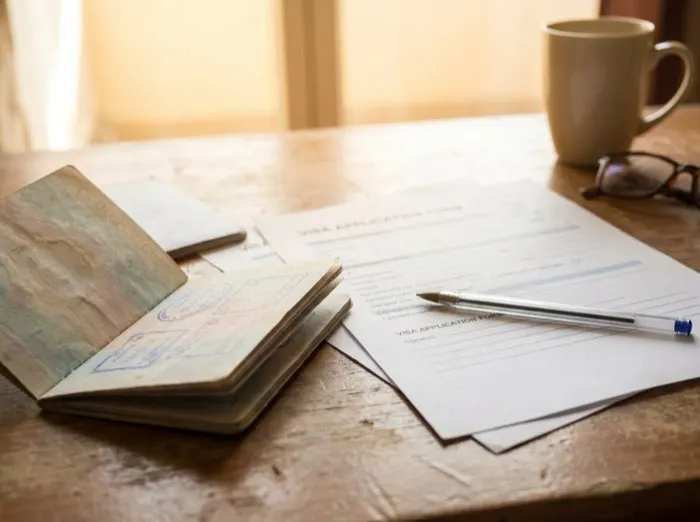
To work legally in the Netherlands as a non-EU national, you need a combined residence and work permit. The official name for this permit in the Netherlands is the GVVA (Gecombineerde vergunning voor verblijf en arbeid). For short-term agricultural work up to six months, there is a seasonal work permit called a Seizoensarbeid permit, but it requires a registered Dutch sponsor and strict seasonal conditions.
You cannot apply for a Dutch work permit by yourself from Bangladesh. The process always starts in the Netherlands:
- Step 1: Employer application. Your prospective Dutch employer files the GVVA application directly with the Dutch Immigration and Naturalisation Service, known as the IND (Immigratie- en Naturalisatiedienst).
- Step 2: Labor market review. The IND consults the Dutch Employee Insurance Agency, known as the UWV (Uitvoeringsinstituut Werknemersverzekeringen). The UWV checks whether the employer searched for local or EU workers first and if the offered salary meets legal standards.
- Step 3: Approval and MVV authorization. Once the IND approves the application, they issue an approval letter. This gives you permission to apply for your entry visa, known as the MVV (Machtiging tot voorlopig verblijf).
Where to submit your application in Bangladesh
Once your Dutch employer receives the official IND approval letter, you must collect your entry visa in Bangladesh. You will present your passport and biometric data at the official visa application location in Dhaka:
- Submission point: You will submit your MVV entry visa application at the Embassy of the Kingdom of the Netherlands in Dhaka or their appointed visa service center (such as VFS Global) located in Dhaka.
- Biometric collection: During your appointment, staff will scan your fingerprints and take a digital photograph.
- Passport collection: Your passport stays at the embassy or visa center while the MVV sticker is processed and placed inside your passport.
You must gather several critical personal documents from Bangladesh before your appointment. Every official document must be properly legalised:
- Valid passport: Your passport must be valid for at least 12 months beyond your planned travel date.
- Signed employment contract: A formal agreement signed by you and the registered Dutch employer.
- Police clearance certificate: Issued by the Bangladesh Police, showing a clean criminal record. This document must be verified and legalised by the Ministry of Foreign Affairs (MOFA) in Dhaka.
- Qualifications and experience proof: Certificates, trade diplomas, and reference letters showing your skill level.
- Medical check: A tuberculosis (TB) test declaration or health certificate if requested by the IND.
Official fees and real costs in Bangladesh
Understanding the costs involved helps protect you from financial exploitation. Official government fees and personal preparation expenses fall into two separate categories.
The IND processing fee for a GVVA work permit is set directly by the Netherlands government. In most cases, the employer pays this official processing fee online directly to the IND. The fee usually ranges from approximately 350 EUR to 400 EUR. You should check the current official fee structure on the IND website before processing.
On the Bangladesh side, you will have personal out-of-pocket expenses to get your documents and travel ready. These costs are your responsibility, but they should always remain reasonable:
- Police clearance certificate: Approximately 500 BDT to 1,500 BDT.
- MOFA attestation and translations: Approximately 3,000 BDT to 8,000 BDT depending on document volume.
- Medical examination: Approximately 6,000 BDT to 12,000 BDT.
- Passport photos and biometrics: Approximately 1,000 BDT to 3,000 BDT.
- One-way flight ticket to Amsterdam: Approximately 70,000 BDT to 120,000 BDT (roughly 550 EUR to 950 EUR).
In total, your legitimate personal preparation and travel costs from Bangladesh typically range from approximately 85,000 BDT to 145,000 BDT (roughly 680 EUR to 1,150 EUR).
Warning about illegal placement fees: In the Netherlands and across the European Union, it is illegal for an employer or recruitment agency to charge a worker a fee simply for offering a job. The employer must cover recruitment costs. Do not pay middlemen or local sub-agents in Dhaka who demand massive sums (such as 8 to 15 lakh BDT) for a "guaranteed Dutch visa." These charges are illegal scams, and paying them offers zero guarantee of legal entry.
Trades in demand in the Netherlands
While general labor permits are difficult to get, Dutch industries do recruit non-EU workers for specific technical roles where local shortages exist:
- Specialized Welders: Industrial fabrication yards and shipbuilding companies recruit experienced TIG and MIG/MAG welders who hold valid international certification standards.
- Greenhouse Technicians: Commercial agricultural operations hire skilled operators who have specific experience in managing automated climate control and irrigation systems.
- Heavy Equipment Operators: Logistics hubs and major infrastructure projects occasionally source experienced drivers for specialized crane, port, and heavy earthmoving equipment.
Myths vs facts
- Myth: You can enter the Netherlands on a Schengen tourist visa and convert it to a work permit while staying there.
Fact: You cannot change a tourist visa into a work permit inside the Netherlands; you must return to Bangladesh and apply for an MVV through the official route. - Myth: Paying 10 lakh BDT to an agency in Dhaka guarantees you a legal Dutch work visa.
Fact: Paying visa money to a middleman is illegal under Dutch law, and fake job offers from unlicensed brokers will lead to visa refusal at the embassy. - Myth: Dutch employers hire non-EU workers for entry-level manual labor without any skill checks.
Fact: Dutch law requires employers to search within the European Union first, meaning non-EU workers are usually approved only for skilled or technical roles. - Myth: You do not need any English skills if you work in manual trades in the Netherlands.
Fact: Basic workplace English is essential for safety, understanding instructions, and interacting with supervisors on Dutch work sites.
Before you sign
Before you accept a job offer or sign any paperwork for work in the Netherlands, review this essential checklist:
- Employer verification: Confirm that the employer name on your contract matches the company listed on the official IND approval notification.
- Salary review: Check that your gross salary meets or exceeds the Dutch statutory minimum wage or the applicable collective labor agreement (CAO) rate.
- Accommodation details: Verify whether your employer provides housing details in writing, including monthly rent costs and living conditions.
- No payment for the job: Make sure nobody asks you to pay money for the job contract itself or for recruitment fees.
- Clear working hours: Ensure the contract states your weekly working hours, overtime policy, and rest days clearly.
Build your Workuro profile today
If you want European employers to find you legally, create a complete profile on Workuro. Select your exact trade, upload your verified work certificates, list your current language skills, and indicate that your passport and police clearance from Bangladesh are ready for processing.
Workuro is free for workers - employers pay to search the register, and nobody may charge you for a job.
Handa ka na bang mahanap?
Gawin ang profile mo sa loob ng 2 minuto. Libre, walang credit card.
Magbasa pa