Cleaner and Housekeeping Jobs in Italy for Foreign Workers (2026)
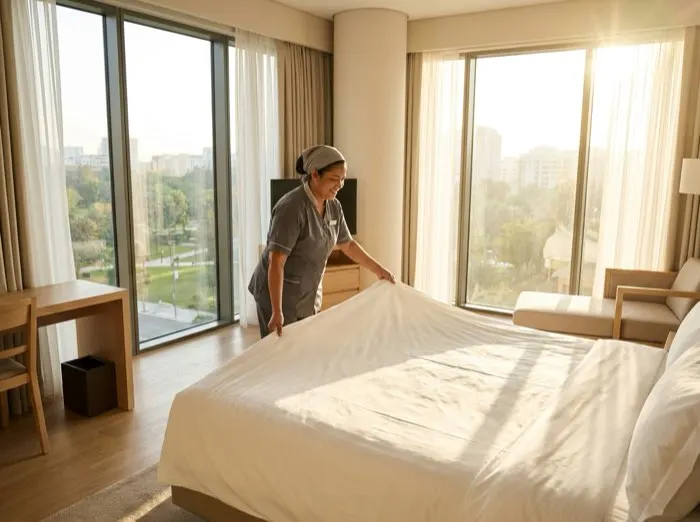
1. Cleaning and Housekeeping Demand in Italy (2026)
Italy has a massive, constant demand for cleaners and housekeeping workers. If you come from a non-EU country in South Asia, Africa, Latin America, Central Asia, or the Western Balkans, there are real job opportunities for you here. The demand comes from two distinct sectors: Italy's world-famous tourism industry and its rapidly aging domestic population.
In Italian cities and resort towns, hotels, holiday apartments, and commercial cleaning firms (known locally as imprese di pulizie) struggle every year to fill open positions. At the same time, Italian families actively hire domestic housekeepers (often called colf or collaboratori familiari) to manage home cleaning, laundry, and cooking. Because local labor supply cannot keep up with these needs, the Italian government sets aside thousands of legal work permit slots specifically for hospitality, general labor, and family assistance under its annual quota system, the Decreto Flussi.
However, getting a housekeeping job in Italy requires understanding how the visa quotas work, where the jobs are located, and what employers expect from international applicants. If you are willing to learn basic Italian and adapt to local hiring seasons, Italy offers a solid pathway to legal employment and steady wages in Southern Europe.
2. Key Regions and Seasonal Hiring Cycles
Where you look for work in Italy depends on whether you want year-round commercial cleaning or seasonal hotel housekeeping. The hiring landscape changes significantly by region and season:
- Lombardy (Milan) and Lazio (Rome): These large urban centers offer year-round work. Cleaning agencies contract staff for corporate offices, residential buildings, and private homes. Demand is constant throughout the entire year without seasonal breaks.
- Veneto and Lombardy (Lake Garda, Venice, and Verona): This region is famous for massive lake and cultural tourism. The hiring peak for resort housekeepers runs from April to October. Employers begin interviewing and submitting visa paperwork as early as January or February.
- Emilia-Romagna (Rimini and Riccione): Known for its long Adriatic coastline, this province hires thousands of hotel room attendants (cameriera ai piani) every summer. The core working months are May through September.
- Trentino-Alto Adige (Dolomites): This mountain region has two distinct peak seasons. The winter ski season runs from December to April, and the summer hiking season runs from June to September. Alpine hotels heavily rely on international housekeeping staff for both periods.
- Tuscany (Florence, Chianti, and the Coast): Luxury countryside estates, boutique hotels, and rental villas hire housekeepers from March to November. Private villa owners often hire live-in staff for the entire high season.
3. Work Permits and the Legal Route
To work legally in Italy as a non-EU citizen, you cannot simply arrive on a tourist visa and start working. You need an official work permit (Nulla Osta) linked to a specific job offer before you enter the country.
The standard route is the annual government quota program called the Decreto Flussi. Under this framework, the Italian government publishes fixed quotas for seasonal work (which covers hotel housekeeping) and non-seasonal work or domestic employment. The legal process follows these key steps:
- Employer Application: Your prospective Italian employer or agency submits a permit request online during the official quota application window (often referred to as click day).
- Clearance Issuance: The local immigration authority (Sportello Unico per l'Immigrazione) reviews the request and issues a clearance document called a Nulla Osta.
- Visa Application: Once the Nulla Osta is approved, you take it to the Italian consulate or embassy in your home country to apply for your National Work Visa (Type D).
- Arrival and Residence Permit: Within eight days of arriving in Italy, you and your employer sign the official contract of stay (Contratto di Soggiorno) at the local immigration office. You then apply for your residence permit (Permesso di Soggiorno).
Processing times for the Nulla Osta and visa range from two to six months depending on the workload of the local prefecture in Italy and the embassy in your home country.
4. Certificates, Skills, and Language Requirements
You do not need a university degree to work as a cleaner or housekeeper in Italy, but certain certificates and practical skills will make your application stand out to employers:
- HACCP Certification: In hotels, restaurants, and commercial kitchens, workers who clean food preparation areas must hold an HACCP safety certificate (Hazard Analysis and Critical Control Points). This course covers basic hygiene, sanitation standards, and chemical safety. It is short, inexpensive, and can be completed online in Italy, but having prior knowledge of hygiene standards is a major advantage.
- National Collective Agreements (CCNL): Housekeeping jobs operate under strict national sector contracts. Domestic cleaning is regulated under the CCNL Lavoro Domestico, which categorizes staff by skill levels (from Level A for basic cleaning to Level B or C for experienced, independent housekeepers). Commercial cleaning falls under the CCNL Imprese di Pulizie. Knowing which category fits your experience helps you understand your legal entitlements.
- Italian Language Skill: Language is the single biggest deciding factor for Italian employers. In four-star or five-star hotels in major tourist spots, basic English may be acceptable. However, for private domestic housekeeping, residential cleaning, and budget hotels, employers expect basic to intermediate Italian (A2 level). You must be able to understand instructions regarding chemical cleaning products, task lists, and daily schedules.
5. Reality Check: Common Misconceptions
Many international candidates arrive with false assumptions about working in Italy. Here are the facts you must keep in mind:
- Tourist visas cannot be converted: You cannot arrive in Italy on a 90-day tourist visa, find a job cleaning houses, and convert your tourist status into a legal work permit inside Italy. You must apply through the Decreto Flussi process while living in your home country.
- English is rarely enough: Outside luxury international hotel chains in Rome or Milan, supervisors and homeowners speak only Italian. Learning fundamental Italian terminology for tools, tasks, and safety before applying is essential.
- Live-in positions reduce cash wages: In domestic housekeeping (colf convivente), employers provide free accommodation and meals. Because housing is provided, the net cash monthly salary is lower than live-out positions, though your overall living expenses are significantly reduced.
- Seasonal jobs end strictly on schedule: If you receive a seasonal visa for coastal hotel housekeeping, your legal permission to stay ends when the contract finishes. To remain in Italy, your employer must apply to convert your seasonal permit into a regular non-seasonal work permit.
6. Wages and Working Conditions in Italy
Pay rates in Italy are set by national collective bargaining agreements (CCNL) to ensure workers are paid fairly regardless of their nationality. All pay figures in Italy are discussed in net monthly terms (money in your bank account after social security and income taxes):
- Seasonal Hotel Housekeeper (Live-out): Between €1,050 and €1,350 net per month for a standard 36 to 40-hour work week. During the high season, extra shifts or overtime (straordinari) are paid at higher rates.
- Domestic Housekeeper (Live-out): Paid hourly or monthly. Hourly rates range from €7.50 to €10.00 net per hour. Full-time monthly pay ranges from €950 to €1,200 net.
- Domestic Housekeeper (Live-in / Convivente): Between €850 and €1,050 net per month, plus free private room and full meals provided by the family.
- Commercial Cleaner (Imprese di Pulizie): Between €900 and €1,250 net per month for full-time schedule shifts, often early morning or late evening.
Under Italian employment law, legal workers receive official payslips (busta paga) every month. You are also entitled to paid annual leave, a 13th-month bonus paid in December (tredicesima), and end-of-contract severance pay (TFR - Trattamento di Fine Rapporto).
7. Build Your Workuro Profile to Match Italian Employers
Italian employers and hiring agencies search the Workuro registry to find reliable foreign candidates ready to relocate. To make your profile stand out to recruiters searching for candidates in Italy, make sure you include these specific details:
- Target Italian Regions: Clearly list the regions you want to work in, such as Lombardy, Veneto, Emilia-Romagna, or Tuscany. Mention whether you prefer seasonal coastal work or year-round city cleaning.
- Language Levels: Honestly rate your Italian skills. Even if you are at a beginner level (A1 or A2), list it clearly. If you speak basic English, French, or Spanish in addition to your native language, add those as well.
- Certificates and Training: Mention any food safety training, HACCP knowledge, industrial cleaning machinery operation, or hospitality certificates you hold.
- Accommodation Flexibility: State clearly if you are open to live-in domestic positions (convivente) or if you require hotel staff housing during tourism seasons.
Keep your contact details up to date and complete every section of your Workuro profile. Complete profiles appear far more frequently in employer search results when Italian companies look abroad for qualified housekeeping staff.
هل أنت مستعد ليجدك أصحاب العمل؟
أنشئ ملفك الشخصي في دقيقتين. مجاني، بدون بطاقة ائتمان.
متابعة القراءة