Cleaner and Housekeeping Worker Jobs in Denmark (2026 Guide)
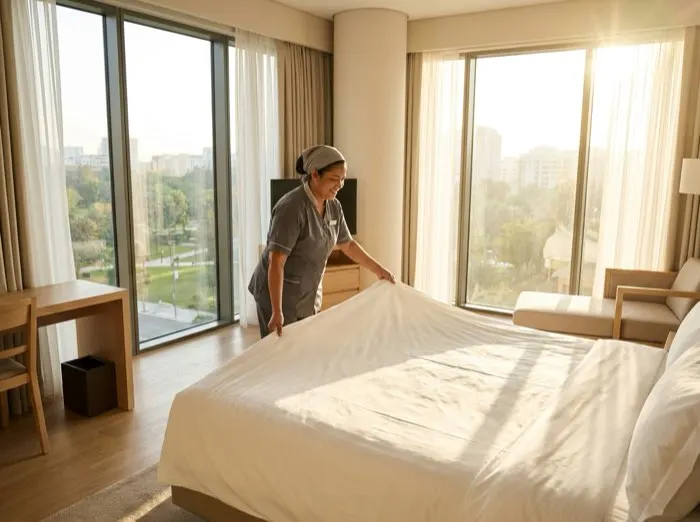
The Reality of Cleaning Jobs in Denmark for Non-EU Workers
If you are looking for cleaner or housekeeping worker jobs in Denmark as a non-EU candidate, you need to understand the immigration landscape right away. Denmark has very high wage floors for foreign work permits. The main visa pathway, managed by the Danish Agency for International Recruitment and Integration (SIRI), requires employers to pay a minimum annual salary under the Pay Limit Scheme or Supplementary Pay Limit Scheme. In 2026, that threshold sits well above the average earnings of an entry-level room attendant or office cleaner.
Because of these strict income limits, securing a direct work visa for entry-level cleaning in Denmark is challenging for applicants from South Asia, Africa, Latin America, or the Western Balkans. If your goal is simply to get a general housekeeping job in Europe quickly without specialized management duties, Sweden or Germany currently offer more accessible entry routes for low-income work permits.
However, getting hired in Denmark is still possible if you target specific employers. Large facility management firms, industrial sites, and luxury hotel chains often sponsor workers for supervisory roles, specialized bio-cleaning, or commercial night shifts that meet higher pay thresholds under Danish collective agreements. If you want to work in Denmark, you must know exact wage requirements, regional hubs, and local certifications.
Where the Jobs Are: Key Regions and Hiring Seasons
Cleaning and housekeeping work in Denmark is concentrated in specific urban centers and tourist zones. Understanding where to look helps you target employers who have the scale to hire foreign staff legally.
- Capital Region (Hovedstaden): Copenhagen and its surrounding industrial suburbs are the largest employment hubs. Hotels in Indre By (the city center) and Vesterbro constantly hire room attendants and floor housekeepers. Facilities companies around Kastrup Airport (Copenhagen Airport) and the pharmaceutical industrial parks in Ballerup and Glostrup require dedicated commercial cleaners year-round.
- Central Denmark (Midtjylland): Aarhus, the second-largest city in Denmark, has a high density of commercial offices, university facilities, and medical centers. The town of Billund, located in southern Midtjylland, is another major hotspot due to the resort complexes, large family entertainment venues, and international travel infrastructure surrounding Billund Airport.
- Southern Denmark (Syddanmark): Odense is expanding rapidly with technology parks and data centers that require specialized cleanroom and industrial maintenance. Along the west coast, towns like Esbjerg offer opportunities in offshore energy facility support and seasonal holiday park cleaning.
- North Denmark (Nordjylland): Aalborg relies on steady hotel operations and industrial harbor maintenance, though overall volume is smaller than in the south.
The hiring cycle in Denmark varies by sector. Hotel housekeeping peak season runs from May through September, with recruitment starting as early as February or March. Seasonal coastal resorts along the North Sea hire heavily for summer shifts. In contrast, commercial office cleaning, hospital sanitation, and industrial facility maintenance hire consistently throughout the year.
Pay, Taxes, and Collective Agreements in Denmark
Denmark does not have a statutory national minimum wage set by the government. Instead, pay is negotiated through collective bargaining agreements (overenskomster) between trade unions and employer associations. For cleaning staff, the dominant union is 3F (Fagligt Fælles Forbund), specifically under the 3F Servicegruppen sector.
Pay in Denmark is strong, but taxes are high. Here is what you can expect in real figures:
- Gross Hourly Wage: Under standard 3F union agreements, basic cleaner pay ranges from 155 DKK to 175 DKK per hour for daytime commercial work. Specialized industrial or hotel night shifts pay extra bonuses (aftentillæg or nattillæg), pushing rates to 185 DKK to 210 DKK per hour.
- Gross Monthly Salary: For a full-time contract of 37 hours per week, a cleaner typically earns between 25,000 DKK and 28,000 DKK per month before taxes.
- Net Monthly Pay: Denmark uses a progressive tax system administered by SKAT. Foreign workers are subject to mandatory labor market contributions (AM-bidrag of 8%) plus municipal and state taxes. After applying your personal tax deduction (personfradrag), a standard cleaner earning 26,000 DKK gross will end up with a net monthly pay of roughly 16,000 DKK to 18,500 DKK in their bank account.
- Holiday Pay and Pensions: Employers pay an additional 12.5% in holiday allowance (særlig opsparing / feriepenge) into an official account, plus mandatory employer pension contributions (typically around 8% to 10% on top of base pay).
Certificates, Languages, and Requirements Employers Look For
Danish employers value reliability, efficiency, and strict adherence to environmental and hygiene standards. To stand out to hiring managers in Denmark, you need specific practical qualifications rather than university degrees.
- Driver's License (Kørekort Category B): Commercial cleaning companies often require workers to drive mobile utility vans between client sites, office parks, and residential areas. A valid manual driving license that can be exchanged for a Danish license is a huge advantage.
- Hygiene and Safety Certificates (Hygiejnebevis): Cleaners working in food preparation facilities, hotel kitchens, or healthcare settings are often required to hold a Danish food hygiene certificate issued under guidelines from the Danish Veterinary and Food Administration (Fødevarestyrelsen).
- Eco-Cleaning Knowledge: Denmark places heavy emphasis on sustainability. Employers frequently require staff to follow Nordic Swan Ecolabel (Svanemærket) cleaning practices, which mandate precise dosing of eco-certified chemical agents and strict water conservation.
- Language Proficiency: While executive management usually speaks fluent English, local supervisors on cleaning crews often conduct daily briefings in basic Danish. You do not need native fluency to start, but having basic English (B1 level) is essential, and showing a willingness to learn basic functional Danish (A1-A2 level) significantly increases your chances of being hired.
Work Permits and Visa Routes in 2026
To legally work in Denmark as a non-EU citizen, you must secure a official work permit issued by SIRI before you start your job. You cannot work on a tourist visa or a Schengen short-stay visa.
Because basic cleaning rarely hits the standard Pay Limit Scheme minimums, non-EU workers generally use one of three potential visa pathways:
- Supplementary Pay Limit Scheme (Den supplerende beløbsordning): This scheme lowers the annual salary threshold if the national unemployment rate is low and the job meets specific criteria. However, the salary requirement remains relatively high, meaning it is usually accessible only for team leaders, facility supervisors, or specialized industrial cleaners working full-time hours with guaranteed overtime.
- Positive List for Skilled Work (Positivlisten for faglærte): SIRI publishes a list of professions experiencing a shortage of qualified workers in Denmark. While general cleaners are rarely listed, specialized maintenance technicians, sanitation specialists, and facility operations roles occasionally appear.
- Fast-Track Scheme: If you are hired by a large facility management company certified by SIRI, they can use the Fast-Track scheme to process your work permit quickly, provided the compensation matches Danish collective agreement standards.
Your employment contract must strictly adhere to standard Danish working conditions. The employer must provide a written contract specifying 37 hours per week, paid holiday rights, and salaries aligned with 3F union standards.
Reality Check: Common Misconceptions About Cleaning in Denmark
Many foreign candidates hold incorrect assumptions about moving to Denmark for work. Here is the direct truth about common misunderstandings:
- Myth 1: You can arrive on a tourist visa and start working immediately. Reality: Working without a valid residence and work permit issued by SIRI is strictly illegal. Employers face severe fines, and workers face deportation and a ban from entering the Schengen zone.
- Myth 2: Private homeowners will sponsor your work visa for residential house cleaning. Reality: Private individuals almost never qualify as approved sponsor companies with SIRI. Work permits are granted through registered commercial enterprises, hotel operators, or facility service providers.
- Myth 3: You get to keep almost all of your high hourly wage. Reality: While 160 DKK per hour sounds very high compared to global averages, the cost of living in Danish cities like Copenhagen or Aarhus is equally high. Rent, transport, and utilities will eat up a significant portion of your net monthly earnings.
- Myth 4: You do not need any formal documentation once you land. Reality: You cannot receive your salary legally until you obtain a Danish CPR number (personal registration number), a MitID digital ID, and a registered tax card (skattekort) linked to a local bank account (NemKonto).
Build Your Workuro Profile to Get Found by Danish Employers
Danish companies and facility management recruitment agencies search international worker registries when they need reliable candidates for hard-to-fill shifts, team leader roles, and specialized facility work. To make your profile visible to employers who can sponsor work permits in Denmark, you must include exact, checkable details.
Log into Workuro and update your profile with these specifics:
- Target Locations: Select specific Danish regions where you are willing to relocate, such as the Capital Region (Copenhagen), Midtjylland (Aarhus/Billund), or Syddanmark (Odense/Esbjerg).
- Driving Licences: Clearly state if you hold a Category B driver's license and whether it is valid for international conversion.
- Specific Certifications: List any professional training you have completed, including hygiene certificates, industrial chemical handling, biohazard cleanup, or Nordic Swan Ecolabel (Svanemærket) cleaning practices.
- Language Levels: Accurately indicate your English proficiency and any basic Danish language courses you have started.
- Detailed Experience: Mention exact experience in commercial office cleaning, hotel housekeeping, floor machine operation, or team supervision.
Complete profiles that include specific regions, licenses, and verified skill sets appear far more frequently in employer searches. Keep your details updated on Workuro so European employers can match you with available jobs.
هل أنت مستعد ليجدك أصحاب العمل؟
أنشئ ملفك الشخصي في دقيقتين. مجاني، بدون بطاقة ائتمان.
متابعة القراءة