Security Guard Jobs in Lithuania for Foreign Workers (2026)
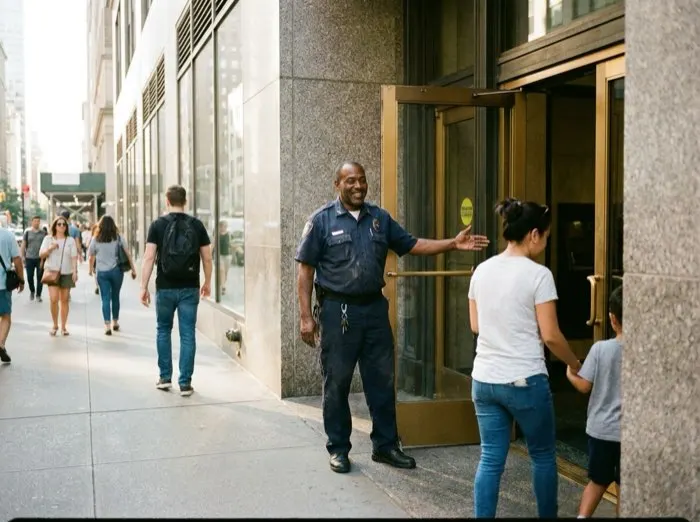
The reality of security guard jobs in Lithuania
If you are a non-EU worker looking for security guard jobs in Lithuania, you need to know the direct truth upfront. Demand for third-country nationals in standard security positions in Lithuania is extremely small. In fact, for most traditional security roles, foreign candidates face heavy legal barriers that make hiring almost impossible for local employers.
Lithuanian law regulates private security strictly. To work as a security guard, you must hold a local guard license, pass police background checks, and speak the Lithuanian language fluently. Because of these rules, Lithuanian security companies rarely sponsor work permits or visas for workers coming directly from outside Europe.
If your primary goal is to work in physical security in Europe, you will find far better opportunities in countries like Poland, where language requirements for industrial site security are sometimes more flexible, or in the Gulf region. However, if your goal is to relocate specifically to Lithuania, your best path is to look at non-security trades like logistics, warehouse operations, or construction, where non-EU hiring is fast and established. If you still want to understand how security roles work in Lithuania, this guide breaks down the full legal reality for 2026.
Licensing, security clearances, and language rules
Security work in Lithuania is governed by strict laws managed by the national police. You cannot simply apply for a job and start working on site. Every security guard must meet specific mandatory standards before step one.
- Official guard certificate: You must obtain the Security Guard Certificate (Apsaugos darbuotojo pazymejimas). This official credential is issued by the Police Department under the Ministry of the Interior (Policijos departamentas prie Vidaus reikalu ministerijos).
- Language requirements: Under Lithuanian law, personnel who interact with the public or handle emergency safety must hold a certified level of Lithuanian language proficiency (Category I or Category II State Language qualification). English or Russian alone is almost never accepted for licensed security positions.
- Background clearance: Candidates must undergo a thorough background check by Lithuanian authorities. A clear criminal record check from your home country, certified with an Apostille or double legalization, is mandatory.
- Medical and psychological fitness: You must pass a specialized medical review (Sveikatos pazyma) inside Lithuania, including psychiatric and addiction evaluations, to prove you are fit to carry out security duties.
Because these certificates require you to already reside in Lithuania and speak the language, securing a job offer from overseas as a security guard is very difficult.
Work permits and visa pathways for non-EU workers
To move to Lithuania from a non-EU country (such as India, Nigeria, Nepal, Pakistan, Brazil, or Uzbekistan), you need a official employer sponsorship, a work permit, and a Temporary Residence Permit (TRP).
- Shortage occupation list status: Lithuania maintains an official list of shortage occupations (Truktamu profesiju sarasas), managed by the Employment Service (Uzimtumo tarnyba). Security guard roles are not on this list. This means an employer cannot use simplified hiring procedures for you.
- Labor market test: Before hiring a non-EU citizen for a security role, a Lithuanian employer must advertise the vacancy locally for several weeks. They must prove to the Employment Service that no qualified Lithuanian or EU citizen applied.
- MIGRIS process: Once the Employment Service approves the labor request, the application moves to the Lithuanian Migration Department (Migracijos departamentas) through their digital portal, MIGRIS. You then submit your biometric data at an external VFS Global center or Lithuanian embassy.
- Processing time: The entire work permit and visa application route usually takes between 2 and 4 months from initial application to final approval.
Working conditions, main locations, and pay
If you qualify to work in security in Lithuania, jobs are concentrated in major urban centers and industrial economic zones. Employers include commercial security firms, facility management businesses, and logistics parks.
- Vilnius region: The capital city offers roles in commercial office towers, shopping hubs like Akropolis and Ozas, and diplomatic embassy grounds. Requirements for public communication here are very strict.
- Kaunas region: A major hub for supply chain and distribution. Security guards here protect large warehouses, manufacturing plants, and logistics parks near the Kaunas Free Economic Zone (FEZ).
- Klaipeda region: Lithuania's major port city on the Baltic Sea. Security roles focus on maritime facilities, cargo yards, and industrial storage zones.
Pay rates for security guards in Lithuania reflect basic wage levels across the country. Most basic security positions pay between 800 EUR and 1,100 EUR gross per month. After standard income taxes and social security contributions (Sodra), typical monthly net pay ranges from 700 EUR to 900 EUR net.
Work schedules usually operate on shift rotations, such as 12-hour day or night shifts, or 24-hour shifts followed by three days off. The Lithuanian Labor Code (Darbo kodeksas) requires higher pay rates for night work and overtime, but net income rarely exceeds 1,000 EUR per month for basic roles.
Reality check: Common mistakes foreign candidates make
Many jobseekers fall for incorrect information found on social media or unofficial forums. Keep these realities in mind when searching for work in Lithuania:
- Myth: English is enough for security work. Fact: Local law requires official state language proficiency for public safety and security roles in Lithuania.
- Myth: Security guarding is an easy entry visa job. Fact: Security guards are not on the national shortage occupation list, meaning employers must complete a complex labor market test first.
- Myth: Foreign security licenses transfer automatically. Fact: A guard license from another country is not recognized. You must complete training and security checks in Lithuania under the Police Department.
- Myth: You can work in security on a visitor visa. Fact: It is illegal to work on a tourist or short-term Schengen visa. Working without a valid residence permit leads to deportation and an entry ban.
- Myth: Employers pay for your guard training from abroad. Fact: Lithuanian employers will not fund local language school or guard certification for non-EU candidates who are still overseas.
Practical alternative job options in Lithuania
If you want to move to Lithuania legally as a non-EU worker, you will have much better success applying for sectors with active worker shortages. Employers in these industries regularly sponsor work permits and provide housing assistance for overseas candidates.
- Logistics and warehousing: Roles like warehouse operator (Sandelio darbuotojas), order picker, and forklift driver have high demand. Basic English is often accepted, and language laws are far less strict than in security.
- Long-haul transport: International truck drivers (CE category drivers) are in top demand across Lithuanian transport fleets.
- Construction trades: Welders, concrete workers, scaffolders, and bricklayers frequently qualify for expedited visa processing under the shortage occupation list.
- Food production and processing: Packaging plants and food processing factories in regions like Panevezys and Siauliai routinely recruit non-EU staff for shift work.
Build a stronger Workuro profile to reach European employers
If you want European companies to notice your background, your candidate profile must be clear, honest, and complete. Employers searching the Workuro registry look for accurate details so they can make real hiring decisions.
Make sure to update your Workuro profile with specific facts:
- Specify your exact languages: List your level in English, Russian, Lithuanian, or any other languages accurately. Do not claim fluent language skills unless you can pass a job interview in that language.
- List valid certifications: Mention any heavy equipment licenses, driver licenses (such as B or CE categories), or professional safety cards you already hold.
- Target specific regions: State clearly whether you want to work in major Lithuanian hubs like Vilnius, Kaunas, or Klaipeda, or if you are open to working across the broader Baltic region.
- Detail your work history: Provide exact years of experience in physical security, industrial safety, warehouse work, or military service.
A complete profile with exact skills and honest qualifications makes it easy for genuine European employers to find you and initiate contact directly.
هل أنت مستعد ليجدك أصحاب العمل؟
أنشئ ملفك الشخصي في دقيقتين. مجاني، بدون بطاقة ائتمان.
متابعة القراءة