Warehouse & Logistics Jobs in Lithuania: Foreign Worker Guide (2026)
Logistics Hubs and Demand in Lithuania
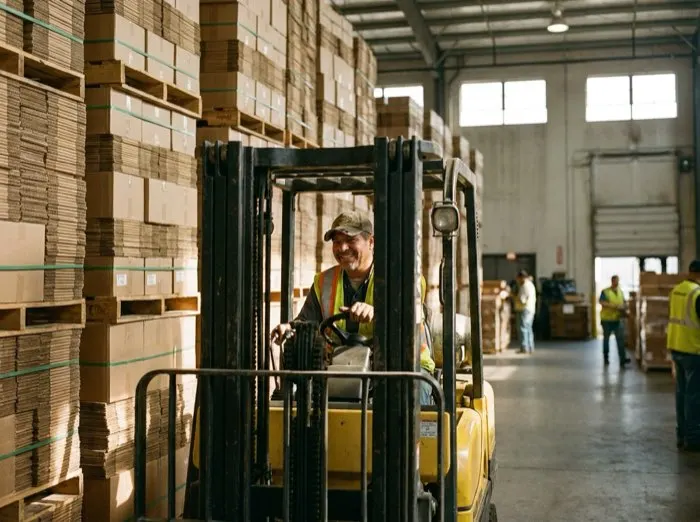
Lithuania is one of the key transport and freight hubs in Northern and Eastern Europe. Strategic location, well developed road networks, and major Baltic sea access make logistics a core industry in the country. If you are coming from outside the European Union - such as South Asia, Central Asia, Africa, or the Balkans - Lithuania offers steady demand for warehouse staff, reach truck operators, order pickers, and loader workers.
Demand is concentrated in distinct geographic clusters rather than spread evenly across the country. Knowing where employers operate helps you target the right regions when building your job preferences.
- Vilnius Region: The capital area contains major retail supply centers and modern e-commerce hubs around Gariūnai, Aukštieji Paneriai, and Kirtimai. Companies here distribute consumer goods, pharmaceuticals, and online retail packages across the Baltic states.
- Kaunas and Kaunas FEZ: Kaunas is the primary logistics crossroads of Lithuania, located at the intersection of the Via Baltica highway and the main east-west trade route. The Kaunas Free Economic Zone (FEZ) and nearby Karmėlava host international freight centers, cold-storage facilities, and high-volume fulfillment plants.
- Klaipėda Seaport and Klaipėda FEZ: Klaipėda is Lithuania's major ice-free seaport. Logistics jobs here revolve around maritime cargo, container yards, timber handling, and industrial storage facilities connected directly to port terminals.
- Šiauliai and Panevėžys: These central northern cities host large commercial transport companies like Girteka, Vlantana, and Hoptrans. They operate expansive logistics centers, trailer maintenance hubs, and staging warehouses.
Work Permits and Visa Routes for Non-EU Workers
To work legally in a Lithuanian warehouse as a non-EU citizen, you must follow the official immigration route managed by the Migration Department (Migracijos departamentas) and the Employment Service (Užimtumo tarnyba). You cannot work on a standard short-stay Schengen tourist visa.
The process depends heavily on whether your specific trade appears on Lithuania's official shortage-occupation list (trūkstamų profesijų sąrašas), which is updated twice a year by the government.
- Shortage List Routes: Roles like forklift driver (krautuvo vairuotojas) and heavy cargo handler frequently appear on the shortage list. When a trade is listed, your employer can hire you under a simplified quota system without conducting a long local labor market test.
- Labour Market Test: If the exact role is not on the shortage list or regional quotas are exhausted, the employer must register the vacancy with Užimtumo tarnyba for up to 14 days. If no suitable Lithuanian or EU citizen applies, the Employment Service issues a permit decision allowing the employer to sponsor you.
- MIGRIS and Temporary Residence Permits: All applications are processed online through the MIGRIS platform. Most non-EU warehouse workers apply for a Temporary Residence Permit (TRP) based on employment, valid for 1 to 2 years. Processing takes between 1 and 3 months.
- National Visa D Option: In some urgent hiring cases, employers arrange a multiple-entry National Visa D, which allows faster entry to Lithuania while your long-term TRP application finishes processing.
Licences, Qualifications, and Practical Skills
Lithuanian logistics companies rely on modern automated systems, electric machinery, and precise inventory tracking. Demonstrating specific operational skills helps your application stand out to recruiting teams.
- Forklift Driver Certificate: Operating a counterbalance forklift or reach truck requires a valid driver certificate (krautuvo vairuotojo pažymėjimas). Certificates issued outside the EU are not automatically valid. However, if you have documented experience, employers often place you in a short conversion training course accredited by the State Labour Inspectorate (Valstybinė darbo inspekcija - VDI) upon your arrival.
- Warehouse Management Systems (WMS): Practical experience using handheld radio-frequency (RF) scanners, voice-picking systems, and inventory software such as SAP, Manhattan, or standard barcode equipment is highly valued by shift managers.
- Heavy Machinery Categories: For specialized port handling in Klaipėda or large construction logistics, holding a TR1 or TR2 tractor/machinery driver licence is a distinct advantage.
- Language Expectations: You do not need to speak fluent Lithuanian to start working in major distribution hubs. Basic English or Russian is widely spoken on warehouse floors in Kaunas and Vilnius. However, learning basic Lithuanian safety terms, numbers, and directional instructions shows commitment and helps you advance to shift lead roles.
Expected Pay, Tax, and Working Conditions
Pay rates in Lithuania are regulated by national labor legislation, minimum wage standards, and individual employment agreements. It is essential to understand the difference between gross pay (ant popieriaus) and net pay (į rankas), as job offers in Lithuania are frequently quoted in gross figures.
- Net Monthly Pay Ranges: Entry-level order pickers and general warehouse workers earn between €850 and €1,050 net per month after taxes. Skilled reach truck operators and certified forklift drivers earn higher rates, typically between €1,000 and €1,350 net per month.
- Taxes and Deductions: Gross wages undergo deductions for Personal Income Tax (GPM at 20%) and State Social Insurance contributions (Sodra at approximately 19.5%). Standard social security covers health insurance and emergency healthcare services.
- Night Shifts and Overtime: Under the Labour Code of the Republic of Lithuania, work performed at night (between 22:00 and 06:00) must be compensated at a minimum of 1.5 times your standard hourly rate. Overtime and holiday shifts are paid at 1.5 to 2 times the normal rate.
- Work Hours and Shifts: Most modern distribution facilities operate on 12-hour rotating shifts (such as 2 days on, 2 days off) or standard 8-hour three-shift schedules.
- Housing and Commuting: Employers hiring foreign workers often organize company-rented shared apartments or dormitories near Kaunas FEZ or Vilnius industrial zones. The cost (usually €100 to €200 per month) is often deducted directly from your net monthly wage or subsidized by the firm.
Seasonal Hiring Cycles and Peak Demand
Warehouse recruitment in Lithuania follows seasonal demands tied to international trade, agriculture, and retail shopping habits.
- Autumn/Winter E-Commerce Rush (September to December): This is the busiest hiring period of the year. Retail chains, international delivery services, and fulfillment centers expand staff to prepare for Black Friday, Cyber Monday, and Christmas sales. Employers start processing work permits for foreign workers in July and August to ensure teams are ready by autumn.
- Spring Logistics and Port Acceleration (March to May): As Baltic shipping lanes clear and seasonal construction starts up, Klaipėda Port freight yards and building material suppliers increase their warehouse headcount.
- Summer Agricultural Storage (July to August): Central regions around Panevėžys and Kėdainiai require short-term warehouse staff for grain, fertilizer, and agricultural product storage. Overall industrial hiring slows down slightly mid-summer due to standard staff vacations.
Reality Check: Common Misconceptions About Working in Lithuania
To avoid fraud, delays, or unexpected costs, keep these real-world facts in mind when planning your move to Lithuania.
- You cannot work on a visitor visa: You must receive an official work permit decision and hold a valid Visa D or Temporary Residence Permit before starting employment.
- Foreign forklift licences require verification: Having a licence from your home country proves experience, but local safety regulations require passing a local practical evaluation or VDI-approved conversion course.
- Gross is not what hits your bank account: Always convert gross salary (ant popieriaus) quotes into net pay (į rankas) using official Lithuanian tax calculators to understand your true disposable income.
- Location matters for expenses: Living in central Vilnius costs significantly more than living in dormitories near Kaunas FEZ or Šiauliai. Evaluate housing costs alongside your offer.
- Family members cannot join immediately: Entry-level logistics permits rarely meet the income thresholds required for instant family reunification. Most workers bring family later after securing long-term residence.
Set Up Your Workuro Profile to Get Found by Lithuanian Employers
Lithuanian logistics companies and licensed employment agencies actively search Workuro to find reliable workers from outside the EU. They handle the work permit filing, arrange MIGRIS submissions, and coordinate your entry to Lithuania.
To make sure Lithuanian employers choose your application, include exact specifics in your Workuro profile:
- Target Cities: Mention specific logistics centers you want to work in, such as Kaunas FEZ, Vilnius industrial parks, or Klaipėda Seaport.
- Machinery Skills: Clearly state if you can operate reach trucks, high-rack stackers, electric pallet jacks, or counterbalance forklifts.
- Certificates: List any machinery operator licences, trade diplomas, or safety certificates you hold, along with issuing authorities.
- Languages: Clearly indicate your proficiency level in English, Russian, or basic Lithuanian.
- Availability: State how soon you can start the visa application process once an employer sponsors your permit.
By filling out every detail in your free Workuro profile, you allow verified Lithuanian employers to locate your background and contact you directly with real job opportunities.
নিয়োগকর্তাদের নজরে আসতে প্রস্তুত?
২ মিনিটে আপনার প্রোফাইল তৈরি করুন। ফ্রি, কোনো ক্রেডিট কার্ড লাগবে না।
আরও পড়ুন