Warehouse and Logistics Worker Jobs in Austria for Foreign Workers (2026)
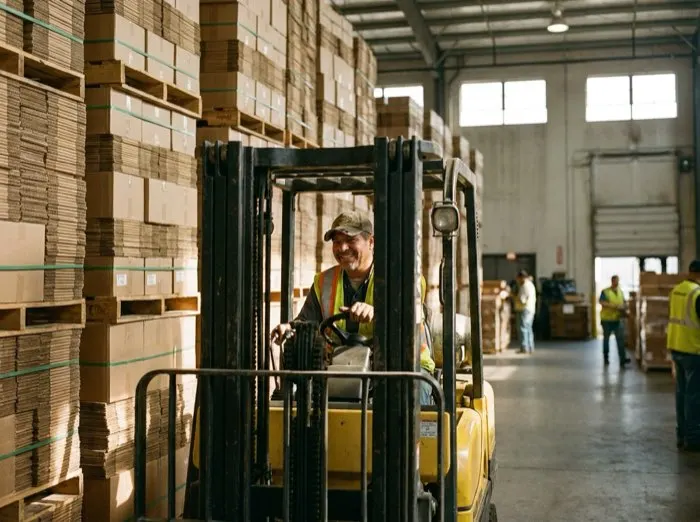
If you are looking for a job in a warehouse or distribution center in Europe, Austria is a country worth considering. Located in the center of the continent, Austria connects trade routes between Western, Central, and Eastern Europe. This makes logistics a major sector in the local economy. However, if you come from outside the European Union (EU) or European Economic Area (EEA), getting hired requires a clear strategy, a recognized work permit, and specific practical skills.
You must understand the Austrian hiring system before applying. If you are an unskilled general packer without specialized licences or German language skills, securing a work visa from outside the EU is very difficult. Austrian employers are required to search for available local or EU candidates first. However, if you have experience operating material handling equipment, hold a forklift licence, or know how to operate digital warehouse systems, your opportunities increase significantly. This guide explains how the Austrian market operates, where the jobs are located, what credentials you need, and how to prepare your profile so employers can find you.
Where the Warehouses Are: Key Logistics Hubs in Austria
Industrial warehousing in Austria is not spread evenly across the country. Most large distribution hubs, fulfillment centers, and cargo terminals are clustered around key transport corridors, rail terminals, and major airports. When searching for employment, focus your attention on these four specific regions:
- Lower Austria and the Vienna Outer Ring (IZ NÖ-Süd and Schwechat): Located directly south of Vienna, Industriezentrum NÖ-Süd in Wiener Neudorf is one of the largest industrial and logistics parks in Austria. It houses major distribution hubs for retail networks, consumer goods, and pharmaceutical suppliers. Nearby Schwechat, located next to Vienna International Airport, is the central hub for air cargo operations and international freight forwarders.
- Upper Austria Hub (Linz, Wels, and Enns): Upper Austria is the country's manufacturing heartland. Wels is a major European rail freight node with large dry-goods warehouses. Linz features specialized heavy-machinery logistics and automotive parts distribution, while Enns offers container terminals connected to the Danube River transport route.
- Styria (Cargo Center Graz in Werndorf): Positioned south of Graz, Cargo Center Graz (CCG) in Werndorf is a modern intermodal logistics park. It handles goods moving along the Baltic-Adriatic transport route and services major automotive manufacturing operations in southern Austria.
- Central Logistics Depots (Hagenbrunn and Allhaming): Key sorting hubs for national postal services and courier parcel delivery companies are located in areas like Hagenbrunn (just north of Vienna) and Allhaming (in Upper Austria). These sites experience high volume spikes, especially during autumn and winter.
Work Permits and Visa Rules for Non-EU Logistics Workers
To work legally in Austria as a citizen from a non-EU country (such as countries in South Asia, Africa, Latin America, the Balkans, or Central Asia), you need a combined residence and work permit. You cannot work on a tourist or visit visa.
- The Red-White-Red Card (Rot-Weiß-Rot-Karte): This is the primary work permit route for non-EU professionals. It is a points-based system managed jointly by the Austrian Migration Authority and the Public Employment Service (Arbeitsmarktservice, or AMS). Points are awarded based on your age, work experience, qualification level, and language abilities (in German or English).
- Shortage Occupations (Mangelberufe): Every year, the Austrian Ministry of Labour publishes an official list of shortage professions. Skilled positions such as heavy goods vehicle drivers and specialized logistics technicians frequently appear on regional or national lists. General warehouse labor is rarely listed, which means applicants must qualify under the category for Other Key Workers.
- The Labour Market Test (Ersatzkraftverfahren): Before an Austrian company can hire a candidate from outside the EU for a standard warehouse role, they must list the open position with the AMS. The AMS conducts a labor market check for several weeks to determine if any qualified Austrian or EU jobseeker is registered for the position. If no candidate is found, the company receives authorization to proceed with your work permit application.
- Seasonal Work Quotas (Saisonarbeitskräfte): For temporary demand surges (such as the peak retail shipping season from September to December), the government occasionally opens limited seasonal quotas. These permits allow temporary employment for a specific contract duration but do not automatically grant long-term residency rights.
Licences, Language, and Required Qualifications
Austrian workplace health and safety laws are strict. Employers prioritize candidates who already hold certified operational qualifications and understand safety instructions on the warehouse floor.
- The Forklift Licence (Staplerschein): This is the single most valuable credential for warehouse applicants in Austria. Operating a forklift (Hubstapler) legally requires an official certificate regulated under the Austrian Worker Protection Act (Arbeitnehmerschutzgesetz) and the Special Knowledge Regulations (Fachkenntnisnachweis-Verordnung). The training involves theoretical coursework and a practical driving test administered by recognized Austrian institutions like WIFI (Wirtschaftsförderungsinstitut), BFI (Berufsförderungsinstitut), or TÜV Austria. If you hold a forklift licence from outside the EU, it is not automatically valid; you will usually need to pass a short evaluation or conversion module in Austria.
- German Language Requirements: While basic English is accepted in international air freight facilities around Vienna Airport, the standard language on Austrian warehouse floors is German. Operational safety commands, pick lists, and safety briefings are delivered in German. Aim for a German language level of at least A2 for entry-level packing roles, and B1 or higher if you operate heavy machinery, manage inventory, or lead a team.
- Digital Tools and WMS: Modern logistics sites in Austria rely heavily on automated Warehouse Management Systems (WMS). Practical experience using handheld barcode scanners, radio-frequency terminals, and enterprise software systems like SAP gives you a major advantage over candidates with purely manual experience.
Pay, Contracts, and Working Hours in Austria
Pay rates and working conditions in Austria are highly structured. Salaries are governed by industry-wide collective bargaining agreements called a Kollektivvertrag (KV).
- Collective Bargaining Agreements: Most logistics workers are covered either by the Kollektivvertrag for the Freight Forwarding and Logistics Sector (Spedition und Logistik) or the Kollektivvertrag for the Retail/Wholesale Trade (Handelsgewerbe). These legal agreements set mandatory pay floors, overtime rates, and shift premium rules.
- Gross Pay Ranges: For a standard 38.5-hour workweek, an entry-level warehouse picker or handler typically earns a gross base salary between 1,950 EUR and 2,300 EUR per month. Experienced forklift operators and inventory specialists earn higher base rates, often between 2,250 EUR and 2,650 EUR gross per month, depending on night shift or weekend allowances.
- Net Monthly Pay: Austria has mandatory social security contributions (covering health insurance, accident insurance, and pension) and progressive income tax. After standard tax and social contributions, a net monthly take-home salary for an entry-level logistics role usually ranges from 1,500 EUR to 1,850 EUR net per month.
- The 13th and 14th Month Salaries: A significant benefit of legal employment in Austria is the mandatory double salary payments. You receive 14 payments per year instead of 12. You receive your regular monthly wage, plus a holiday bonus (Urlaubsgeld) paid around June, and a Christmas bonus (Weihnachtsgeld) paid around November. These extra payments are taxed at a lower preferential rate.
Reality Check: Common Myths About Working in Austrian Warehouses
Before applying, ensure you have accurate expectations about the hiring process:
- Myth: You can enter Austria as a visitor and convert to a work permit locally.
Reality: You cannot legally start working or switch from a tourist visa to a regular employment permit within Austria in most cases. Your employment permit application must be approved before you begin working. - Myth: English is sufficient for every warehouse position in Austria.
Reality: Outside a few international cargo hubs, shift managers, team leaders, and safety inspectors communicate exclusively in German. Basic German is essential for long-term integration and safety compliance. - Myth: Any non-EU forklift licence is recognized automatically in Austria.
Reality: Non-EU certificates are evaluated against Austrian safety laws. You must usually complete a local conversion course through an accredited body like WIFI or BFI to operate machinery legally on site. - Myth: General packing jobs guarantee visa sponsorship.
Reality: Unskilled jobs rarely meet the minimum point or salary requirements for a Red-White-Red Card unless you possess specialized technical skills or fall under a targeted regional quota.
How to Build Your Workuro Profile for Austrian Employers
Austrian logistics recruiters search Workuro to find non-EU candidates who meet their technical standards. To ensure your profile appears in relevant searches, add specific details rather than general statements:
- List Recognized Licences: State clearly if you hold a Staplerschein or have formal certification for operating reach trucks, order pickers, or electric pallet jacks.
- State Your Exact German Level: Use the official CEFR framework (such as A2, B1, or B2). Be realistic about your current speaking and reading abilities.
- Name Specific Industrial Locations: Indicate your willingness to work in key logistics hubs like Lower Austria (IZ NÖ-Süd), Vienna/Schwechat, Upper Austria (Linz/Wels), or Styria (Graz).
- Detail Systems Experience: Clearly mention your experience with specific software tools, such as SAP WMS, handheld scanners, or voice-picking hardware.
A accurate and complete Workuro profile gives Austrian employers the information they need to evaluate your skills, verify your qualifications, and initiate the formal permit process.
নিয়োগকর্তাদের নজরে আসতে প্রস্তুত?
২ মিনিটে আপনার প্রোফাইল তৈরি করুন। ফ্রি, কোনো ক্রেডিট কার্ড লাগবে না।
আরও পড়ুন