Caregiver Jobs in Estonia for Foreign Workers: 2026 Guide
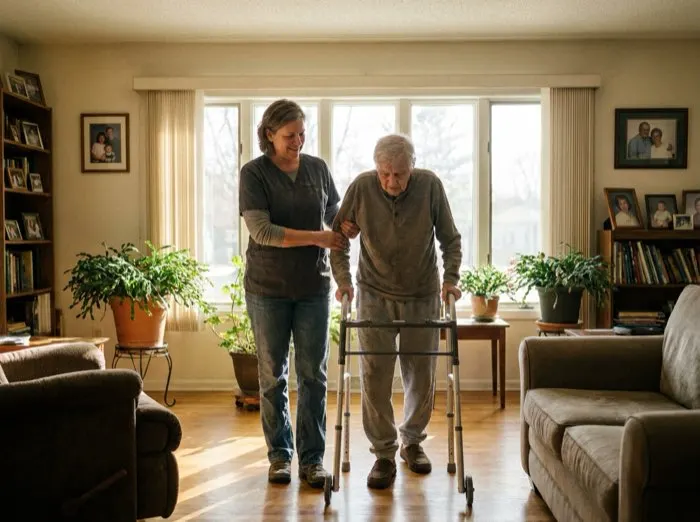
Demand for care workers in Estonia
Estonia has a growing elderly population and a clear shortage of care home workers. State-run care centers and private care facilities (*hooldekodud*) regularly seek reliable staff to assist elderly residents with daily living, hygiene, mobility, and meal support. However, you need to understand the realities of the Estonian job market before you start applying from outside the European Union.
Estonia enforces strict language laws in healthcare and social services. If you speak only English, finding a direct caregiver position from abroad is difficult. If you do not plan to learn basic Estonian, you may want to look at countries like Germany or Finland, which run larger international care recruitment projects with English-to-local language training pathways. But if you are willing to learn Estonian, or if you already speak basic Estonian or Russian, Estonia offers steady work, clean facilities, and a secure employment system.
Where caregiving jobs are located
Care worker vacancies are scattered across the country, but the largest volume of hiring happens in specific administrative and urban regions.
- Tallinn and Harju County: The capital city and surrounding area have the highest concentration of nursing homes and residential facilities, such as Iru Hooldekodu. The cost of living is higher here, but wages are slightly above the national average for care staff.
- Tartu and South Estonia: Tartu is the medical hub of Estonia, home to major hospital networks and large elder care centers. Demand for attentive care workers is constant year-round due to the large medical infrastructure.
- Pärnu and West Estonia: Pärnu is a coastal city with several well-established senior care homes and rehabilitation facilities. Hiring stays steady, with slight spikes before the summer season.
- Ida-Viru County (Narva, Jõhvi, Kohtla-Järve): In this northeastern region, a large portion of the population speaks Russian. Many care facilities use Russian for daily communication among staff and residents. However, official documentation and state regulations still require care workers to work toward official Estonian language certification.
Qualifications, certificates, and language rules
Working in social care in Estonia requires specific qualifications. Employers must ensure their staff meet standards recognized by national authorities.
- Occupational Qualification (Kutsetunnistus): Care workers in Estonia usually hold the Care Worker Level 3 or Level 4 qualification (*Hooldustöötaja, tase 3 või 4*). This qualification standard is established by the Estonian Qualifications Authority (*Kutsekoda*). If you trained outside the EU, your employer must evaluate whether your training matches this standard.
- Diploma Recognition (Harno): Your educational certificates from your home country must be submitted to the Estonian ENIC/NARIC center, operated by the Education and Youth Board (*Harno*). They assess whether your nursing or social care diploma equals Estonian vocational requirements.
- Language Requirements: The Language Board (*Keeleamet*) monitors language compliance in social care institutions. Care assistants must generally prove Estonian proficiency at the A2 or B1 level to handle daily documentation and emergency communication. In specialized care facilities, a B2 level is required.
- Health and Background Checks: Before starting work, you must pass a medical checkup in Estonia, including a chest X-ray for tuberculosis screening, and provide a clean police clearance certificate from your home country.
Work permits, visas, and legal steps
As a citizen of a non-EU country (whether you are from South Asia, Africa, Latin America, Central Asia, or the Balkans), you cannot work in Estonia on a tourist visa. Your employer must initiate the legal process.
- Short-Term Employment Registration: Before you apply for a visa, your Estonian employer must register your short-term employment (*Lühiajalise töötamise registreerimine*) with the Police and Border Guard Board (*Politsei- ja Piirivalveamet* or PPA). This process takes about 10 to 15 working days.
- D-Visa (Long-Stay Visa): Once the PPA approves your short-term employment, you apply for a Long-Stay D-Visa at the nearest Estonian embassy or visa center. This visa lets you enter Estonia and begin working immediately upon arrival.
- Temporary Residence Permit (TRP): After arriving in Estonia, your employer will assist you in applying for a Temporary Residence Permit for Employment (*Tähtajaline elamisluba töötamiseks*). A TRP is typically issued for up to 2 years and can be renewed.
- Immigration Quota: Estonia has an annual immigration quota (*sisserändepiirand*) that caps the number of work permits granted to non-EU citizens each year. Because this quota often fills up early in the calendar year, employers prefer to submit applications as early in January as possible.
Pay, hours, and living costs
Care worker salaries in Estonia are regulated by wage agreements in the healthcare sector, though private care homes may offer varying scales.
- Gross Monthly Pay: A full-time care worker (*hooldustöötaja*) generally earns between 1,050 EUR and 1,400 EUR gross per month.
- Net Monthly Pay: After income tax, unemployment insurance, and pension deductions, your typical net take-home pay ranges from 880 EUR to 1,150 EUR per month.
- Shift Bonuses: Care facilities operate 24 hours a day. Working night shifts, public holidays, or extra shifts (*ületunnitöö*) increases your monthly earnings. Estonian law requires employers to pay 1.25 times the normal rate for night work and 2 times the normal rate for public holidays.
- Working Hours: Standard full-time work is 40 hours per week. Shift work usually follows a schedule of 12-hour or 24-hour rotations, followed by rest days.
- Living Expenses: Rent for a single room or modest apartment outside Tallinn ranges from 250 EUR to 400 EUR per month, plus utilities. In Tallinn, expect to pay 350 EUR to 550 EUR per month for housing.
Reality check: What foreign care workers get wrong
It is easy to make assumptions when looking for jobs abroad. Here are the most common mistakes non-EU applicants make when applying for care worker positions in Estonia:
- Assuming English is enough for patient care: Elderly residents in local care homes usually speak Estonian or Russian. You cannot care for patients safely without understanding basic daily instructions in their language.
- Expecting Western European salaries: Estonia offers high safety, modern infrastructure, and efficient digital services, but net wages are lower than in Sweden, Norway, or Germany.
- Thinking you can enter on a tourist visa to search for jobs: Tourist visas do not allow you to convert to a work permit inside Estonia without a registered employer approval from the PPA.
- Ignoring the annual immigration quota: Applications submitted late in the year can be delayed if the national immigration quota limit has been reached.
- Forgetting local certification rules: Having care experience in your home country is helpful, but you must still complete local health checks and have your qualifications evaluated by Harno.
Hiring cycles and seasonal trends
Care facilities in Estonia operate continuously, so recruitment needs exist throughout the year. However, specific periods see increased recruitment activity.
The busiest hiring window occurs from March to May. Care centers recruit extra staff to prepare for the summer vacation period (*puhkuste aeg*), when regular employees take scheduled leave. Submitting your applications in early spring gives you the best chance of matching with employers who are actively planning their staffing needs for the rest of the year.
How to update your Workuro profile for Estonia care jobs
Estonian employers search Workuro to find qualified candidates who are ready to move. To make sure your profile appears in their searches, include specific and verifiable details rather than general statements.
- List your exact language levels: Clearly state your current level in English, Estonian, or Russian. Use standard CEFR indicators (such as A2, B1, or B2).
- Specify your care qualifications: Name your diplomas, CPR certificates, or elder care training certificates. Mention if your documents have already been evaluated or apostilled.
- Detail your practical experience: List the exact duties you performed in previous roles, such as mobility support, patient hygiene, medication assistance, or dementia care.
- Select preferred regions in Estonia: Indicate whether you are open to working in Tallinn, Tartu, Pärnu, or regional areas like Ida-Viru County.
- Confirm your passport status: Ensure your profile shows that you hold a valid international passport with at least two years remaining before expiration.
¿Listo para que te encuentren?
Crea tu perfil en 2 minutos. Gratis, sin tarjeta de crédito.
Sigue leyendo