Trabajo de andamiero en Polonia para extranjeros (2026)
 Poland
If you are a skilled scaffolder looking for legal employment in Europe, Poland is one of the most active hiring markets in 2026. Polish construction companies, shipyards, and industrial facilities frequently hire foreign workers from outside the European Union to keep up with continuous building projects. However, securing a job requires understanding local regulations, technical expectations, and the official work permit process. This guide covers the essential details you need to know about working as a scaffolder in Poland.
Scaffolding Demand and Target Regions in Poland
Demand for scaffolders in Poland is strong, but it is concentrated in specific industrial hubs and growing urban centers. Knowing where major projects are located will help you focus your job search effectively.
Key hiring regions in Poland include:
- Pomeranian Voivodeship (Gdańsk, Gdynia, Szczecin): The northern Baltic coast is known for large shipyards, marine repair docks, and port infrastructure. Scaffolders here build complex modular systems around large vessels and offshore equipment. Industrial yards in this area recruit skilled height workers year-round.
- Mazovian Voivodeship (Warsaw and Płock): Warsaw has ongoing commercial building construction, creating steady work for facade scaffolding. Nearby Płock hosts massive petrochemical complexes, including major oil refineries. Refinery maintenance projects require large teams of scaffolders for temporary support towers and access structures.
- Silesian Voivodeship (Katowice, Gliwice, Rybnik): Silesia is Poland's heavy industrial core. Power stations, chemical plants, and manufacturing facilities need constant maintenance during scheduled plant turnarounds.
- Lower Silesia (Wrocław): Commercial investments, dynamic urban building, and modern logistics parks create consistent demand for frame and system scaffolders.
The hiring cycle varies by sector. Civil building projects start ramping up in March and stay busy through November. In contrast, industrial plants in Płock and marine shipyards in Gdańsk hire throughout the winter because maintenance must continue in all seasons.
Certifications and Safety Standards in Poland
Poland enforces strict safety rules for work performed at heights. You cannot build or dismantle scaffolds on a Polish site without meeting legal safety qualifications and passing medical checks.
- Polish Scaffolding Qualifications (IMBiGS / UDT): Scaffolding certifications in Poland are governed by institutions like the Institute of Mechanised Construction and Rock Mining (IMBiGS) or monitored by the Office of Technical Inspection (UDT). The official trade title is Monter rusztowań. Foreign safety certificates like UK CISRS or Dutch VCA are highly valued by recruiters, but your Polish employer may still require you to complete a short local safety course to comply with national labor laws.
- Height Medical Exam (Badania Wysokościowe): Before working on any Polish site, you must pass a medical check conducted by a certified occupational doctor (lekarz medycyny pracy). The examination checks your vision, balance, blood pressure, and general physical health to confirm you can safely work above 3 meters.
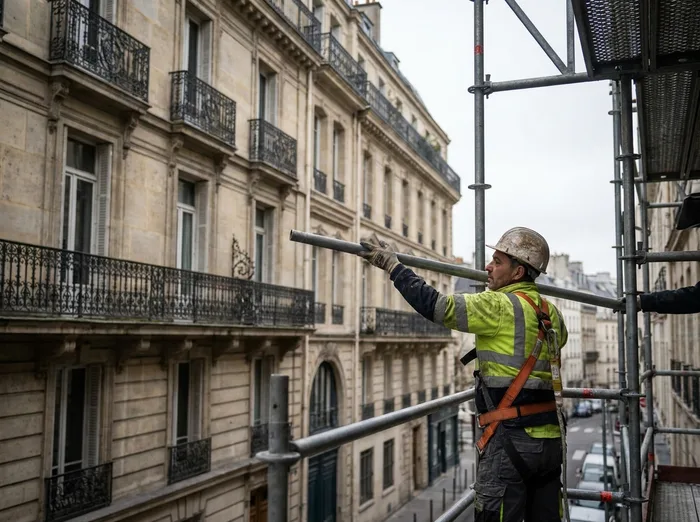
- On-Site Safety Gear (BHP Regulations): Workplace safety laws, known in Poland as BHP rules, require full protective equipment. You must wear safety harnesses with double lanyards, high-visibility vests, steel-toe safety boots, and hard hats with chin straps at all times.
Expected Pay Rates and Working Hours
Salaries in Poland are calculated and paid in Polish Złoty (PLN). Foreign workers are usually paid monthly into a local Polish bank account. Here is a realistic overview of monthly net pay after taxes and social security contributions in 2026:
- Entry-Level Scaffolder: Workers with basic site experience or helpers earn between 4,000 PLN and 5,000 PLN net per month. This works out to approximately 22 PLN to 25 PLN net per hour.
- Experienced Scaffolder: Skilled workers who can read technical blueprints, assemble complex systems like Layher or Cuplok, and lead small crews earn between 5,500 PLN and 7,500 PLN net per month. Hourly rates average between 27 PLN and 35 PLN net.
- Specialized Industrial & Marine Scaffolders: Advanced scaffolders working on high-risk industrial plant overhauls or shipyard projects can earn 8,000 PLN net per month or more, especially when working overtime hours.
- Working Hours: A normal work week is 40 hours (8 hours a day, 5 days a week). Overtime is common during peak building months and plant maintenance shutdowns, with many crews working 50 to 60 hours per week.
- Accommodation: Many recruitment agencies and Polish construction employers provide shared worker accommodation or cover part of your rental cost. Always clarify if housing expenses will be deducted from your net pay before accepting an offer.
Work Permit Process for Non-EU Workers
If you hold a passport from outside the EU, such as from South Asia, Africa, Latin America, Central Asia, or the Balkans, you must follow official legal steps to work in Poland. You cannot work legally on a standard tourist visa.
- Type A Work Permit (Zezwolenie na Pracę Typ A): Your prospective Polish employer must submit an application for a Type A work permit to the regional Voivodeship Office (Urząd Wojewódzki) where their business is registered.
- Permit Processing Time: Getting a Type A permit issued generally takes between 2 and 5 months, depending on the workload of the regional office. Offices in major cities like Warsaw may take longer than those in Pomerania or Silesia.
- National Work Visa (Type D, Code 06): Once your employer receives the official work permit, they send you the original document. You then schedule an appointment at the Polish embassy or visa application center in your country to apply for your Type D work visa.
- Temporary Residence Card (Karta Pobytu): After arriving in Poland and starting your job, your employer can help you apply for a Temporary Residence and Work Permit (Karta Pobytu), allowing you to live and work legally in Poland long term without returning home to renew your visa.
Language Requirements and Daily Site Life
While Polish is the primary language across the country, construction sites vary depending on the type of work and the makeup of the crew.
- Communication on Site: Local building sites operate in Polish. However, major industrial jobs in Płock or shipyard projects in Gdańsk frequently use basic English or Ukrainian. Basic English is often sufficient for multinational crews, provided you learn essential Polish safety terms.
- Useful Polish Site Words: Learning key site vocabulary helps you work safely and communicate with site managers. Important words include: rusztowanie (scaffold), kask (helmet), szelki (safety harness), uważaj (watch out), praca na wysokości (work at height), and kierownik (supervisor).
- Work Culture: Polish foremen value reliability, punctuality, and hard work. Arriving on time, following safety instructions, and maintaining good attendance are critical to holding a steady job.
Reality Check: Common Myths About Working in Poland
Here are a few quick facts to clarify common misunderstandings foreign workers have about working in Poland:
- Myth: You can enter Poland on a tourist visa and start working right away.
Fact: Working on a tourist visa is illegal. You must obtain a Type A work permit and a Type D national work visa before you begin working. - Myth: A Polish work permit allows you to work for any employer in Europe.
Fact: A Type A work permit is tied strictly to the specific Polish employer named on the document. Changing employers requires a new permit application process. - Myth: Medical exams are just a quick signature.
Fact: The height medical examination is strict. Issues like uncorrected vision, high blood pressure, or balance disorders can prevent medical approval for height work. - Myth: Scaffolding work disappears completely during winter.
Fact: While exterior building facade work slows down during cold winter months, industrial refinery projects and shipyard maintenance continue throughout the year.
Add Your Polish Scaffolding Details to Your Workuro Profile
Employers and recruiting agencies in Poland regularly search Workuro to find qualified candidates from overseas for scaffolding contracts. To make sure your profile appears when Polish companies search for workers, update your profile with detailed, accurate information.
Be sure to add the specific details mentioned in this article to your profile:
- Certifications: List any official credentials you hold, including IMBiGS, UDT, CISRS, VCA, or national vocational diplomas.
- Scaffolding Systems: Specify which modular systems you know how to assemble and dismantle, such as Layher Allround, Plettac, Peri UP, or traditional tube-and-fitting scaffolding.
- Height Experience: Highlight your experience working at heights, industrial safety training, and previous medical clearances.
- Preferred Polish Regions: Indicate if you are open to working in regions like Pomerania (Gdańsk), Mazovia (Płock/Warsaw), Silesia (Katowice), or Lower Silesia (Wrocław).
- Language Ability: Clearly state your level of English, Polish, or other languages spoken on European worksites.
By filling out these specific details, you make it easier for Polish employers to evaluate your qualifications and contact you directly with job opportunities.
¿Listo para que te encuentren?
Crea tu perfil en 2 minutos. Gratis, sin tarjeta de crédito.
Sigue leyendo