Truck Driver Jobs in Poland for Foreign Workers (2026)
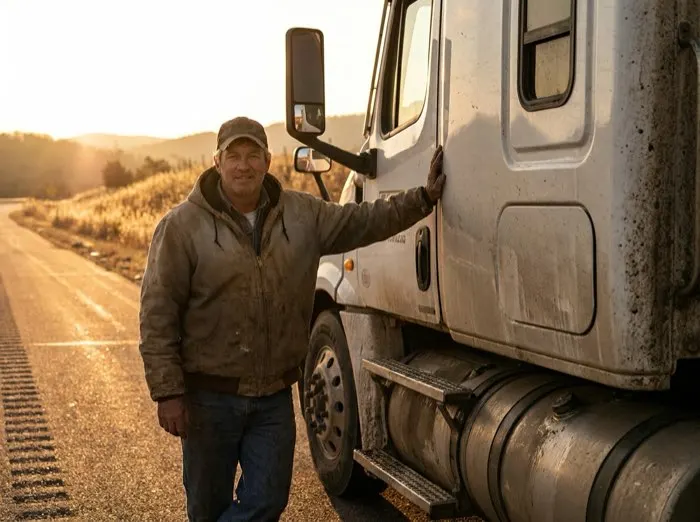
Truck driving in Poland: What the market looks like in 2026
Poland is the road freight leader of the European Union. Polish transport companies operate a massive portion of all long-distance road haulage across Western and Central Europe. Because of this large fleet size, Polish hauliers face an ongoing shortage of qualified heavy goods vehicle drivers. If you hold a commercial driver licence and want to work in Europe, Poland is one of the main entry points for non-EU drivers.
Demand is strongest in major transport and logistics corridors. Key hiring regions include:
- Lubuskie and Zachodniopomorskie: Towns like Słubice, Świecko, and Szczecin sit directly on the German border. Transport fleets here specialize in international runs across Western Europe.
- Wielkopolska: The area around Poznań and Swarzędz features dense logistics parks and large international transport firms.
- Łódzkie: The town of Stryków is one of the largest motorway junction hubs in Central Europe, home to dozens of national and international distribution centers.
- Mazowieckie: Industrial zones around Warsaw, Pruszków, and Grodzisk Mazowiecki focus on both domestic distribution and cross-border freight.
- Dolnośląskie and Śląskie: Cities like Wrocław, Katowice, and Gliwice connect southern freight routes toward the Czech Republic, Austria, and Germany.
Hiring stays active throughout the year. The busiest hiring push happens from late August through November as transport fleets prepare for the pre-holiday retail surge across Europe.
Required licences, Code 95, and Polish certificates
To drive a heavy truck legally in Poland and across the EU, you need specific qualifications recognized by Polish authorities. Having a Category C or C+E licence from your home country is the starting point, but you must complete additional steps before taking the wheel.
Here are the core documents required for professional drivers in Poland:
- Category C+E licence: You must hold a valid licence for heavy trucks with trailers. Non-EU licences must eventually be exchanged for a Polish licence if you reside in the country for more than 185 days.
- Code 95 (Świadectwo Kwalifikacji Zawodowej): This entry in your driver profile is mandatory for professional road transport in the EU. If you obtained your C licence after September 2009, you must complete a qualification course in Poland. A periodic refresher course takes 35 hours if you already hold an EU qualification, while initial qualification (kwalifikacja wstępna) takes longer for first-time drivers in Europe.
- Driver Qualification Card (Karta Kwalifikacji Kierowcy): Foreign drivers who do not yet hold a Polish driving licence receive Code 95 recorded on a separate Driver Qualification Card issued in Poland.
- Digital Tachograph Card (Karta Kierowcy): Issued in Poland by PWPW (Polska Wytwórnia Papierów Wartościowych). You cannot drive modern haulage trucks without this card to record your driving and rest hours.
- Medical and psychological tests: You must pass a specialized medical exam (orzeczenie lekarskie) and a psychological evaluation (psychotesty) with an authorized doctor in Poland before starting work.
Work permits, visa routes, and processing times
As a worker from outside the European Union, you cannot start working until your Polish employer secures official legal authorization for you. Poland lists heavy driver positions on its national shortage lists, which simplifies some administrative checks, but official steps must be followed carefully.
The permit process involves the following stages:
- Type A Work Permit (Zezwolenie na pracę typ A): Your employer applies for this document at the Voivodeship Office (Urząd Wojewódzki) in the region where the firm is registered.
- Processing times: Permit issuance takes anywhere from 2 to 5 months depending on the regional office. Offices in Mazowieckie (Warsaw) can take longer than offices in Wielkopolska or Lubuskie.
- National Visa (Type D): Once your employer receives the approved work permit, they send the original document to you. You then apply for a Type D employment visa at the Polish embassy or visa center in your country.
- Driver Certificate (Świadectwo Kierowcy): After you arrive in Poland and complete medical checks and Code 95 steps, your employer applies to the Road Transport Inspection (Główny Inspektorat Transportu Drogowego) for a Driver Certificate, which allows you to drive international routes for a Polish company.
Earnings, pay structure, and working schedules
Pay for truck drivers in Poland depends heavily on whether you drive national routes inside Poland or international routes across Western Europe.
Here is a breakdown of typical earnings and working conditions:
- International routes (Trasa międzynarodowa): Expect a net monthly income between 7,500 PLN and 11,500 PLN net per month.
- National routes (Krajówka): Driving solely inside Polish borders pays less, typically between 4,500 PLN and 6,500 PLN net per month.
- Pay structure breakdown: Income in Polish international transport usually consists of a standard base salary (podstawa) combined with daily allowances (diety) and travel reimbursements for working abroad. Make sure your employment contract clearly states how base pay and daily allowances are calculated.
- Work schedules and rotations: International drivers often work on system schedules. Common rotation patterns include 3/1 (three weeks on the road, one week off) or 4/1 (four weeks driving, one week off). During your driving weeks, you live and sleep in modern sleeper cabs fitted with heating and refrigerators.
Language requirements and daily communication
Language skills are an important part of working as an international driver based in Poland. You do not need fluent Polish to start, but key language skills help you navigate daily routes safely.
Here is what employers expect on the job:
- Basic workplace Polish: You need enough basic Polish to communicate with your transport dispatcher (dyspozytor), understand company route instructions, and complete depot checks.
- Basic English or German: International routes take drivers through Germany, France, the Netherlands, and Belgium. Knowing basic conversational English or German helps when speaking to warehouse staff at loading docks and border officials.
- Transport documentation: You must be able to read and complete standard international transport documents like the CMR consignment note (Międzynarodowy List Przewozowy) and read digital tachograph prompts.
Reality check: What foreign drivers get wrong about Poland
- Expecting to drive on day one: You cannot start driving immediately after landing. Completing your medical exams, psychotesty, and Code 95 training or card issuance can take 2 to 4 weeks after arriving in Poland.
- Assuming home licences transfer instantly: Holding a heavy vehicle licence outside the EU does not give you an immediate right to drive commercially in Europe. You must go through formal Code 95 qualification steps.
- Confusing gross base salary with total net take-home pay: Pay in international transport relies heavily on daily allowances (diety). Always ask the employer to clarify total expected net pay and how allowances are paid out.
- Expecting family visas right away: Work permits and Type D visas apply only to the driver. Family reunification processes take additional time and require stable residence and income proof inside Poland.
Build a complete Workuro profile to reach Polish employers
Polish transport companies regularly search for qualified non-EU drivers to keep their international fleets moving. Having a detailed profile on Workuro makes it easy for verified employers to review your qualifications and reach out directly.
Make sure your Workuro profile includes these exact details:
- Licence categories: State clearly whether you hold a Category C or Category C+E licence and the year you obtained it.
- Certificates and cards: Mention if you already hold an EU Code 95, a digital tachograph card, or previous European driving experience.
- Language levels: List your spoken level in English, Polish, German, or Russian. Be honest about your reading and speaking abilities.
- Target regions: Select preferred regions in Poland like Wielkopolska (Poznań), Lubuskie (Słubice), Łódzkie (Stryków), or Dolnośląskie (Wrocław).
Keep your contact details updated so hauliers can contact you directly about job opportunities and permit sponsorship.
¿Listo para que te encuentren?
Crea tu perfil en 2 minutos. Gratis, sin tarjeta de crédito.
Sigue leyendo