Security Guard Jobs in Czechia for Foreign Workers (2026)
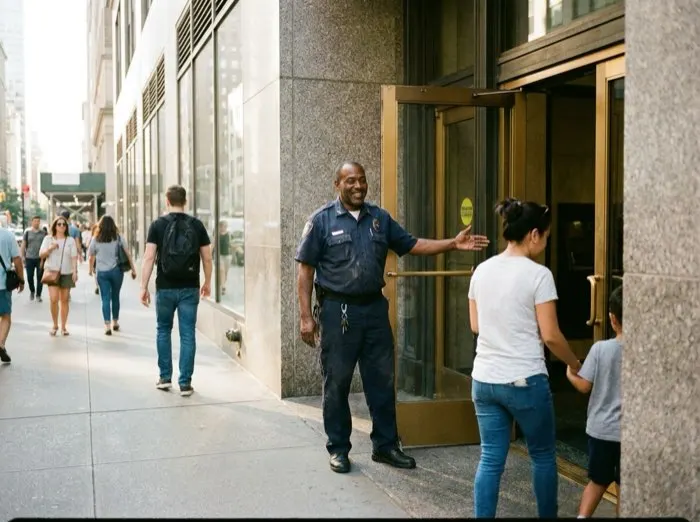
If you want to work as a security guard in Czechia, you need a clear view of the job market before you start your search. Hiring a non-EU worker requires a full Czech visa process, so local security agencies only sponsor foreign candidates when they cannot fill open spots locally. That means demand exists, but it is focused heavily on specific types of guarding roles rather than every security job in the country.
If you are looking for positions in shopping malls or customer service desks, you will face tough competition because those roles require fluent, native-level Czech. However, large industrial zones, international logistics parks, and night-shift facility monitoring across Czechia actively seek dependable guards, including non-EU nationals. If you cannot meet basic Czech language expectations or want higher entry-level wages without specialized licensing, construction or warehouse logistics in Poland or Romania may be faster targets. But if you want to settle in Central Europe and are ready to pass a vocational test, Czechia offers steady work and clear legal pathways.
1. Demand and Reality for Non-EU Security Guards in Czechia
The Czech labor market has very low unemployment, but security companies still have to follow strict foreign hiring rules. Before an employer can sponsor your visa, they must list the job opening on the official Czech Ministry of Labor portal for 30 days. If no local or EU citizen takes the job, the position opens up for non-EU applicants.
Because of this process, security guard demand for workers from South Asia, Central Asia, Africa, and non-EU Balkan states is concentrated in heavy industrial centers rather than public retail spaces. Czech security agencies rarely hire overseas workers for high-visibility public posts. Instead, they need guards for quiet, high-security locations where reliability, shift discipline, and physical presence matter more than constant public interaction.
- Industrial perimeter guarding: Continuous monitoring of corporate borders, vehicle gates, and warehouse fences in large logistics parks.
- Night-shift monitoring: Overseeing CCTV consoles, checking access control points, and conducting timed walking rounds through empty factories.
- Asset protection in manufacturing: Verifying shipping paperwork at gatehouses and inspecting outgoing transport trucks.
- Event and temporary guarding: Seasonal or project-based crowd safety roles, though these rarely offer long-term visa sponsorship on their own.
2. Key Regions and Industrial Hubs That Need Guarding
Security work is tied directly to real estate and manufacturing. You will find almost no foreign-sponsored security jobs in small rural villages. Your job search should focus on the major industrial belts surrounding big Czech cities.
- Prague and Central Bohemia: The area around Prague Airport (Václav Havel Airport) and the large logistics sites along the D1 highway near Jažlovice and Čestlice are major employment zones. These hubs require round-the-clock gate control and cargo surveillance.
- Plzeň (Pilsen): Home to the massive Borská Pole industrial zone. This area hosts major automotive component factories and electronics plants that employ thousands of workers and require constant site security.
- Brno and South Moravia: CTPark Brno and surrounding technology parks host dozens of international firms. Security providers here look for guards who can handle basic English along with elementary Czech.
- Pardubice and Kolín: Large chemical plants and automotive assembly hubs in this central corridor run massive facilities that need 24-hour perimeter control.
- Ostrava and Moravia-Silesia: The industrial heartland around Mošnov and Ostrava has extensive heavy manufacturing sites and logistics centers requiring dedicated facility protection.
3. Mandatory Licences, Background Checks, and Language Requirements
You cannot simply step onto a Czech work site and start working as a guard. Czech law strictly regulates the security industry. To work legally, you must satisfy three core conditions set by the state and your employer.
First, you must hold a clean criminal record. You need an official police clearance certificate (Výpis z Rejstříku trestů) from your home country, fully legalized or apostilled, and translated into Czech by a certified translator. Any recent criminal conviction for property damage or violence will prevent you from getting certified.
Second, you must earn the official Czech professional qualification certificate known as Strážný (code 68-008-E). This qualification is regulated under the National Qualifications Framework (Národní soustava kvalifikací) and overseen by the Czech Ministry of the Interior (Ministerstvo vnitra). The exam includes a written multiple-choice test and a practical oral scenario where you demonstrate your knowledge of legal self-defense, property rights, and emergency actions.
Third, you must consider the language barrier. While some night gatehouse roles accept basic conversational Czech, you must know enough Czech to understand warning signs, read safety procedures, and speak with emergency services or facility managers. A target level of A2 to B1 spoken Czech is recommended if you want employers to take your application seriously.
4. Salary, Shift Allowances, and Cost of Living
Pay for security guards in Czechia is calculated on an hourly base rate, supplemented by legally mandated allowances for unsocial hours. Security roles operate on 12-hour shifts, often following a pattern of two day shifts, two night shifts, and four days off.
- Base hourly rate: Standard guard positions offer between 125 CZK and 165 CZK gross per hour, depending on the site complexity and location.
- Night and weekend surcharges: Under the Czech Labor Code, night shifts earn a mandatory 10 percent minimum add-on, and weekend shifts add another 10 percent allowance.
- Net monthly earnings: A foreign guard working a standard 160-hour to 180-hour monthly schedule can expect to earn between 18,000 CZK and 25,000 CZK net (after tax and health insurance contributions).
- Overtime possibilities: Many security workers take extra shifts during busy holiday seasons or summer holiday rotations, which can increase monthly net pay to around 28,000 CZK.
- Living costs context: Rent for a private room in a shared apartment or worker dormitory outside central Prague usually costs between 6,000 CZK and 9,500 CZK per month, making regional industrial hubs like Plzeň or Ostrava more affordable relative to your wage.
5. Reality Check: Common Mistakes and Misconceptions
Many candidates from non-EU countries make simple mistakes when trying to enter the Czech security market. Here are the facts you must keep in mind:
- Tourist visas cannot be changed inside Czechia: You cannot travel to Prague on a short-term Schengen visa, find a security job, and swap to a work permit while inside the country. You must apply through a Czech embassy in your home region.
- English alone is rarely enough: Unless you are guarding an international IT firm office where English is the company language, you need working knowledge of basic Czech to handle daily site logs and safety calls.
- The Strážný exam is compulsory: Employers cannot bypass the official 68-008-E qualification. Some agencies will help you take the course upon arrival, but you must pass the test to remain employed long-term.
- You cannot carry firearms on standard guard permits: Basic security guards in Czechia do not carry guns. Armed security requires a completely different Czech concealed carry license (Zbrojní průkaz), which is rarely granted to non-resident foreign nationals.
6. How the Czech Employee Card Process Works
To move to Czechia as a foreign worker from outside the EU, you need an Employee Card (Zaměstnanecká karta). This is a combined residency permit and work permit issued by the Czech Ministry of the Interior.
First, you apply for a job with a recognized Czech security provider or industrial employer. Once they choose you, they register the position on the central portal and send you a signed work contract and proof of provided accommodation in Czechia.
Next, you book an appointment at the Czech embassy or consulate in your home country. You submit your contract, accommodation papers, apostilled police check, and application forms. The official processing time takes between 60 and 90 days.
Once approved, you receive a temporary entry visa to enter Czechia. Within three working days of arriving in the country, you must report to the Foreign Police Office (Cizinecká policie), register your address, and visit the Ministry of the Interior office to give your biometric data and receive your plastic Employee Card.
7. Update Your Workuro Profile to Connect with Czech Employers
Czech hiring managers look for complete, accurate profiles when searching for foreign candidates. If you want employers operating in Czechia to find you, take time to fill out your Workuro profile with exact details.
Be specific about your skills. If you already hold a security certificate in your home country, list it clearly. Specify your exact level of Czech language ability, even if you are currently studying basic vocabulary. Select your target Czech regions, such as Plzeň, Central Bohemia, or South Moravia, so local recruiters know where you are willing to work.
Remember that a fully completed profile with verified contact details, clear physical availability, and accurate work histories will always show up first when Czech employers filter candidates for sponsored work permits.
¿Listo para que te encuentren?
Crea tu perfil en 2 minutos. Gratis, sin tarjeta de crédito.
Sigue leyendo