Working in Portugal from Uzbekistan: Visa, Permit, Costs (2026)

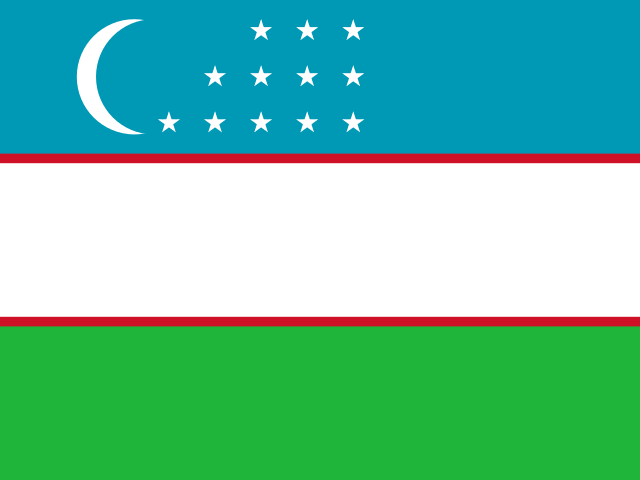
 Portugal
Is Portugal a realistic choice for Uzbek workers in 2026?
If you are an Uzbek worker planning to move to Portugal for a trade job, you must understand recent changes to Portuguese immigration laws. In past years, many workers entered Portugal on tourist visas and applied for legal residency after arriving through a system called the expression of interest (manifestação de interesse). Portugal officially closed this pathway in mid-2024. Today, you cannot travel to Portugal as a visitor and convert your status into a work permit from inside the country.
To work legally in Portugal now, you must secure a job contract before leaving Uzbekistan and apply for a national work visa from abroad. Furthermore, Portugal does not maintain a full resident embassy in Tashkent equipped to process national work visas on-site. Uzbek applicants must submit their visa applications through the nearest Portugal embassy or visa centre serving Uzbekistan, which often requires coordination with processing points in Ankara or regional visa service partners. Because processing can take several months, Portugal is a slower option compared to countries like Poland, Lithuania, or Croatia, which have more direct recruitment pipelines for Central Asian workers. However, if you secure a genuine job offer from a Portuguese company willing to sponsor your visa, the legal pathway remains open.
The legal work visa route for Uzbek citizens
The standard legal route for long-term skilled and manual work in Portugal is the national work visa, official name: Visto de Residência para Exercício de Atividade Profissional Subordinada (commonly referred to as the Visto D1). If you are going for short-term agricultural or tourist industry work lasting under nine months, a seasonal work visa (Visto D9) applies instead.
In this process, the employer in Portugal must act first. Before hiring a non-EU worker, the Portuguese company must post the job vacancy locally through the Institute for Employment and Vocational Training (IEFP) to demonstrate that no qualified Portuguese or EU citizen was available to fill the position. Once the employer clears this step, they send you an official, signed employment contract (contrato de trabalho) or a legally binding job promise (promessa de contrato de trabalho).
Once you hold the contract, you submit your visa application. You must lodge your application through the nearest Portugal embassy or visa centre serving Uzbekistan. You will submit your physical file, pay official consular fees, and complete your biometrics appointment at this location.
Required documents and legalisation in Uzbekistan
Preparing your paperwork in Uzbekistan requires careful attention to detail. Missing stamps or uncertified translations will lead to immediate visa delays or rejections. You will need to gather and legalise the following items:
- Valid international passport: Must be valid for at least three months beyond your planned stay in Portugal and contain at least two blank pages.
- Signed employment contract: A formal contract or binding offer from a registered Portuguese business stating your position, weekly hours, and monthly salary.
- Uzbek criminal record certificate: An official police clearance certificate (spravka) issued by the Public Service Centers (Davlat Xizmatlari Markazi) or the Ministry of Internal Affairs of Uzbekistan.
- Official Uzbek Apostille: Portugal is a member of the Hague Convention, which means your Uzbek police clearance certificate must receive an official Apostille stamp. In Uzbekistan, Apostilles on police records are issued by the Ministry of Justice or the Ministry of Foreign Affairs.
- Certified translations: All Uzbek public documents, including your police record and trade certificates, must be translated into Portuguese or English by a certified translator.
- Proof of qualifications: Work books (mehnat daftarchasi), vocational diplomas, or reference letters from past employers showing you have experience in your trade.
- Travel medical insurance: Policy covering urgent medical expenses and repatriation for the initial months of your stay, until you are registered with the Portuguese National Health Service (SNS).
- Biometrics: Fingerprint scans and digital photos taken at the visa application appointment.
Costs, processing times, and fee rules
Moving abroad involves both official fees paid to the Portuguese state and practical preparation expenses inside Uzbekistan. Official government fees are separate from your personal travel setup costs.
- Official Portuguese visa fee: Set directly by Portugal, the consular fee for a long-stay national work visa is approximately 90 EUR.
- Visa processing time: Once your full document package is submitted, processing typically takes approximately 30 to 90 days.
On the Uzbekistan side, you will cover essential document preparation and travel costs. These figures vary based on local providers:
- Police clearance and Uzbek Apostille: Approximately 150,000 to 450,000 UZS (10 to 30 EUR).
- Certified document translations: Translation of background checks and work certificates into Portuguese or English costs approximately 300,000 to 900,000 UZS (20 to 65 EUR).
- Medical check and insurance: Medical certificates and travel health insurance cost approximately 400,000 to 1,200,000 UZS (30 to 90 EUR).
- Flight from Tashkent to Lisbon: Airfare from Tashkent to Portugal costs approximately 4,500,000 to 9,000,000 UZS (330 to 650 EUR), depending on layovers and season.
Rules on placement fees: Under Portuguese labor laws and European standards, no employer or recruitment agency is legally allowed to charge a job seeker a fee for placing them in a job. The employer must carry all internal recruitment costs. You should check the specific employment rules for Portugal before paying anyone. Be extremely cautious of local brokers in Uzbekistan charging thousands of dollars for a work contract or visa guarantee. Agencies charging high processing fees are often selling fake documents or outdated information.
In-demand trades in Portugal right now
Portugal currently experiences labor shortages in several physical trades where foreign workers are regularly hired:
- Construction: Qualified welders, masons, and carpenters are actively recruited for civil infrastructure and commercial building projects across central and southern Portugal.
- Agriculture: Farm workers and heavy equipment operators are hired for harvesting and greenhouse operations, particularly in the agricultural hubs of Alentejo and the western coast.
- Hospitality and service trades: Kitchen assistants, line cooks, and commercial hotel housekeepers are needed in high volumes across tourist regions including Lisbon, Porto, and the Algarve.
Myths vs facts
- Myth: You can travel to Portugal on a Schengen tourist visa and start working legally while waiting for a permit.
Fact: Portugal eliminated this route in 2024. You must hold an official D1 or D9 work visa issued outside Portugal before you begin working. - Myth: Unofficial agencies in Tashkent can buy guaranteed work visa approvals from Portuguese authorities.
Fact: No agency can buy a visa. Approvals are decided solely by Portuguese consular officers who verify your job contract and criminal record. - Myth: An official Uzbek document works in Portugal without special verification stamps.
Fact: Portugal requires an official Uzbek Apostille on your police clearance document, along with a certified translation into Portuguese or English. - Myth: You must pay your future Portuguese employer for issuing your employment contract.
Fact: Charging job candidates for employment contracts is illegal under European standards; legitimate Portuguese employers cover their own hiring costs.
Before you sign
Before you sign a contract or pack your bags, use this checklist to safeguard your move:
- Verify company details: Confirm that the employer is a legally registered business in Portugal with an active Tax Identification Number (NIF).
- Review wage terms: Ensure the gross monthly salary stated on the contract meets or exceeds the Portuguese national minimum wage and covers full working hours.
- Refuse illegal payments: Never pay recruitment agents money in exchange for a contract offer or job promise.
- Confirm housing details: Ask your employer where you will live, who pays for utility bills, and whether rent will be deducted directly from your earnings.
- Secure the Uzbek Apostille early: Obtain your background check and Ministry of Justice Apostille stamp in Uzbekistan before booking consular appointments.
- Identify the official submission point: Check the exact procedures and travel steps required for the nearest Portugal embassy or visa centre serving Uzbekistan.
Build your profile on Workuro
If you are an Uzbek trade worker ready to find legal employment in Europe, create a complete profile on Workuro. List your specific technical skills, such as arc welding, heavy driving, agricultural machinery operation, or commercial cooking. Include your practical work history, educational certificates, and foreign language abilities. Make sure to detail which documents you already have prepared, such as an active passport or an apostilled criminal record. Having your profile updated helps genuine European businesses view your background and contact you directly regarding open vacancies. Workuro is free for workers - employers pay to search the register, and nobody may charge you for a job.
Prêt à vous faire remarquer ?
Créez votre profil en 2 minutes. Gratuit, sans carte bancaire.
Continuer la lecture