Summer Tourism Jobs on the Mediterranean Coast (2026 Guide)
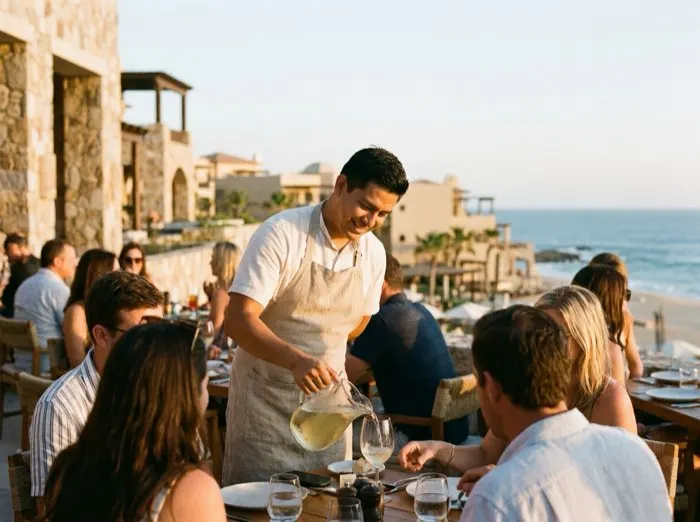
From April to October, the Mediterranean coastline becomes Europe's largest seasonal labour market. Spain, Italy, Greece, Croatia and Cyprus together host hundreds of millions of tourist nights, and the hotels, beach bars, campsites and ferries serving them hire seasonal staff on a massive scale. Here is how the market actually works, country by country and role by role.
Where the demand concentrates
- Spain - the Balearics, Costa del Sol and Costa Blanca; the largest single market, with hotel chains hiring entire seasonal teams each spring.
- Greece - the islands (Crete, Rhodes, Santorini, Corfu) depend almost entirely on seasonal staff; Greece has used seasonal permit schemes and bilateral agreements for non-EU workers, and demand regularly outstrips local supply.
- Croatia - Dalmatia's boom continues; Croatia issues large numbers of seasonal work permits to non-EU workers, notably from the Balkans and increasingly from Asia, because its own workforce has emigrated.
- Italy - coastal Emilia-Romagna, Sardinia, Sicily and the lakes; non-EU seasonal hiring runs through the annual decreto flussi quotas.
- Cyprus and Malta - long seasons, English widely used, established channels for third-country hospitality workers.
The roles and what they typically pay
The volume jobs are housekeeping, kitchen help, dishwashing, waiting and bar work, animation (entertainment teams), lifeguarding and reception. Pay is southern-European modest: as a rough 2026 guide, expect around 1,000 to 1,500 euros gross per month in Greece and Croatia, around 1,300 to 1,800 in Spain and Italy for standard roles, with tips adding meaningfully in service jobs at busy venues. Animation and reception roles that require multiple languages pay somewhat better. These are honest but not generous wages - the season makes financial sense when accommodation is provided, which is common on the islands, or when you treat it as a paid way to gain European work history and references.
The housing question - ask it first
The single biggest mistake seasonal workers make on the Mediterranean is accepting a job without securing housing. In Santorini, Ibiza or Hvar, tourist demand prices workers out of every rental by June. Reputable island employers provide staff quarters - sometimes basic, shared rooms - and deduct a modest amount. Get the arrangement in writing: where, how many people per room, what it costs. A job offer on a premium island with no housing attached should be treated as half an offer.
Timing, contracts and rights
Hiring runs January to April, with the islands recruiting earliest. EU citizens can accept work directly; non-EU workers need the employer to obtain a seasonal permit, which takes weeks to months depending on country and quota timing - another reason to start early. Insist on a written contract before travelling: the EU's seasonal workers rules entitle you to equal treatment on pay and conditions, but only a declared, contracted job gives you social security, accident coverage and proof of employment for any future application. Undeclared beach-bar work still exists and leaves you with nothing when the season ends. For the permit basics, see EU work permits and visas explained.
And never pay for a job: legitimate hotels and agencies on the Mediterranean do not charge workers for offers. Fee-charging "recruiters" for Greek and Croatian island jobs are a recurring scam.
Which role should you target?
Match the role to your languages and stamina. With English only, aim for housekeeping, kitchen and campsite roles, or animation teams at international resorts where English is the working language. With German, target hotels serving German and Austrian package tourists - half the coast, effectively - where German-speaking service staff earn better and are chronically scarce. With Russian or French, the picture shifts by island and market. Physically, service and kitchen jobs in a heatwave are demanding in a way that surprises northern Europeans; hydration and pacing are genuinely part of the job. First-timers often do best starting in a large hotel with structured shifts rather than a family beach bar where the workday ends when the last guest leaves.
Legal note
This is general information, not legal advice. Seasonal permit schemes, quotas and bilateral agreements vary by country and change yearly. Check the immigration authority of your target country or eures.europa.eu for current rules.
Mediterranean employers begin browsing candidates in winter. Create your free profile on Workuro - free, no credit card, employers contact you directly - and be visible before the season fills.
Chcesz dać się znaleźć pracodawcom?
Stwórz profil w 2 minuty. Za darmo, bez karty.
Czytaj dalej

