Cleaner & Housekeeping Jobs in Poland for Foreign Workers (2026)
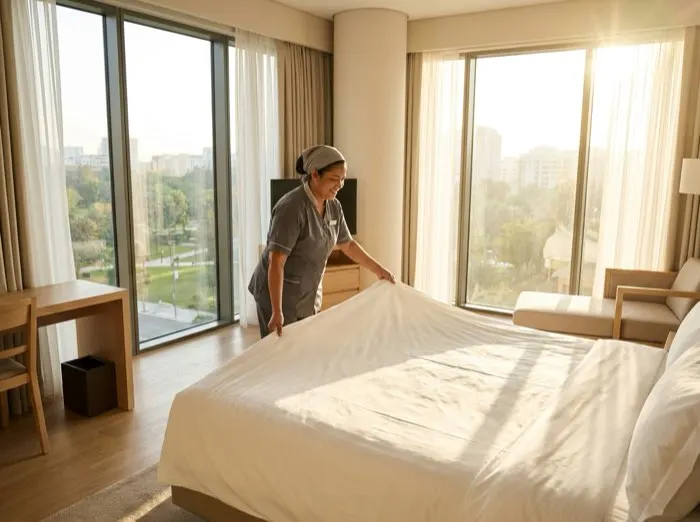
Cleaning and Housekeeping Jobs in Poland: What to Expect
If you are planning to move to Europe from outside the EU, Poland is one of the most accessible destinations for formal work permits. Cleaning and housekeeping roles are among the most common starting positions for candidates from South Asia, Africa, Latin America, Central Asia, and the Western Balkans. Polish businesses rely heavily on foreign workers to keep offices, hotel chains, industrial facilities, and residential properties running smoothly.
Demand for cleaning staff in Poland is steady, but it varies widely depending on the region and the sector. You can find full-time office cleaning shifts in major urban centers, fast-paced housekeeping roles in tourist hotspots, or heavy-duty sanitation work in industrial zones. The pay in Poland is lower than in Western European nations like Germany or the Netherlands, but local living expenses are also lower, and the legal route to a work permit is straightforward when you have an interested employer.
Workuro exists to connect you directly with those employers. Employers pay for access to candidate profiles, while workers create profiles without paying any fee. Understanding how the Polish market operates helps you stand out to hiring managers and secure a valid job offer.
Where the Jobs Are: Key Polish Regions and Seasons
The location you choose in Poland determines your work environment, seasonal demand, and even how quickly your paperwork is processed. Hiring patterns are concentrated in specific economic centers across the country.
- Warsaw (Mazowieckie Region): As the national capital, Warsaw has the highest concentration of corporate office buildings, luxury hotels, and international embassies. Cleaning jobs here are year-round and rarely affected by seasonal drops. Shift options often include early morning or late night office cleaning.
- Kraków and Wrocław (Lesser Poland and Lower Silesia): These historical and commercial hubs host large international corporate centers and massive hotel sectors. Kraków has constant year-round tourism, keeping hotel housekeepers busy in every season. Wrocław features both corporate complexes and expanding residential cleaning agencies.
- Tricity (Gdańsk, Sopot, Gdynia) and Baltic Coast: The northern coast experiences a major spike in housekeeping demand between May and September. Hotels, seaside resorts, and short-term holiday rentals hire hundreds of seasonal room attendants to prepare for summer tourists.
- Zakopane and Southern Mountain Resorts: Mountain destinations operate on two peak seasons. Winter peak runs from December to March for ski tourism, while summer peak covers July and August for mountain hikers. Housekeeping staff are in high demand during these exact months.
- Silesian Agglomeration (Katowice Area): This dense industrial region has fewer hotel roles but high demand for commercial and factory cleaning staff. Workers clean large shopping malls, logistics warehouses, and production facilities on rotating shifts.
Work Permits and Official Documents in Poland
You cannot start working in Poland on a standard tourist visa. To work legally as a non-EU citizen, you need a formal work permit processed through your Polish employer.
- Type A Work Permit (Zezwolenie na pracę typ A): This is the standard permit for full-time regular employment. Your employer applies for this document at the regional Voivodeship Office (Urząd Wojewódzki) where the business is registered. Processing time varies by region, taking anywhere from 2 to 5 months.
- Seasonal Work Permit (Zezwolenie na pracę sezonową - Type S): Used specifically for hotel and resort housekeeping jobs during high seasons. This permit allows work for up to 9 months within a calendar year and is usually processed faster than a Type A permit.
- Sanitary Booklet (Orzeczenie do celów sanitarno-epidemiologicznych): Often called the SANEPID health certificate, this document is mandatory for housekeepers working in hotels, medical facilities, or anywhere handling food service area cleaning. You complete a simple medical test issued by the local Sanitary-Epidemiological Station (SANEPID) after arriving in Poland. Employers often assist with setting up this test.
- Labor Market Test (Test rynku pracy): In some Voivodeships, the employer must first list the cleaning position locally to confirm no Polish or EU worker is available. Many regions list cleaning staff as a priority role, which speeds up or skips this requirement.
Pay Rates, Taxes, and Practical Earnings
In Poland, pay for cleaning and housekeeping roles is set relative to the national minimum wage. Wage rates are usually calculated on an hourly basis or a fixed monthly contract.
- Expected Net Pay Range: After income tax and social security deductions, a standard 160-hour monthly shift in a cleaning or housekeeping role typically yields between 3,200 PLN and 4,200 PLN net per month. High-volume commercial cleaners working overtime or night shifts can earn up to 4,800 PLN net.
- Standard Employment Contract (Umowa o pracę): This contract type guarantees paid annual leave, paid sick leave, overtime rates, and full social insurance contributions. It is common in major hotel chains and large cleaning management companies.
- Mandate Contract (Umowa zlecenie): Very common among smaller cleaning service agencies. Under this contract, you are paid per hour worked. It offers flexibility in taking extra shifts, though paid vacation days are not guaranteed unless specified in your agreement. Candidates under 26 years of age on a mandate contract are exempt from income tax, resulting in higher net pay.
- Housing Considerations: Some resort hotels along the Baltic coast or in mountain areas offer free or discounted shared staff housing. In major cities like Warsaw, Kraków, or Wrocław, workers usually rent a room in a shared apartment, which costs between 800 PLN and 1,400 PLN per month.
Language Skills and Workplace Requirements
Working as a cleaner or housekeeper in Poland requires physical endurance, attention to detail, and practical communication abilities.
- Polish Language Expectations: You do not need to be fluent in Polish to land an entry-level cleaning job. However, knowing basic workplace Polish (level A1 to A2) is extremely useful for reading cleaning product labels, understanding safety warnings, and taking directions from supervisors.
- English Capabilities: In international hotel chains operating in major cities, basic English is often enough for daily tasks. Your supervisor or team leader usually speaks English or translates instructions for the team.
- Health and Safety Training (BHP - Bezpieczeństwo i Higiena Pracy): Every employer in Poland is required by law to provide mandatory occupational safety training before you start your first shift. This training covers safe chemical handling, proper lifting techniques, and emergency procedures.
- Work Pace and Expectations: Hotel housekeepers are typically expected to clean between 14 and 22 rooms during an 8-hour shift, maintaining precise brand hygiene standards. Commercial office cleaners work efficiently within specific night or early morning shift windows.
Reality Check: Common Misconceptions About Cleaning Work in Poland
Before applying for positions, clear up these common misunderstandings about moving to Poland for cleaning work:
- Myth: You can enter on a tourist visa and start working immediately.
Reality: Working on a tourist visa is illegal. You must wait for your employer to secure your official work permit, then obtain a national work visa (Type D) from a Polish embassy before starting employment. - Myth: Cleaning roles pay Western European wages right away.
Reality: Wages in Poland reflect local living costs. Earnings are sufficient for living comfortably and sending modest savings home, but they are not equivalent to pay scales in Scandinavian or German markets. - Myth: You must pay an agency to get your work permit.
Reality: Employers are required by Polish law to handle and pay the official state filing fees for your work permit application. Never pay an agency money for a promised job offer. - Myth: Hotel housekeeping is easy, casual work.
Reality: Hotel housekeeping is physically demanding work with tight room turnaround schedules and strict quality inspections.
Build Your Workuro Profile to Get Found by Polish Employers
Polish employers and registered recruitment agencies use Workuro to search for reliable international candidates. To increase your chances of being selected for a cleaning or housekeeping vacancy in Poland, build a profile that presents clear, accurate information about your background.
When filling out your Workuro profile, make sure to include these specific details:
- Target Regions: Indicate whether you are willing to work in major corporate cities like Warsaw, Wrocław, and Kraków, or if you prefer seasonal resort regions along the Baltic coast or southern mountains.
- Certificates and Health Status: Mention if you have prior professional hygiene training, chemical safety certificates, or if you are ready to complete the Polish SANEPID medical assessment upon arrival.
- Language Abilities: Be accurate about your language levels. Specify whether you speak basic English, introductory Polish, or other languages like Ukrainian, Russian, Spanish, or Hindi.
- Specific Work Experience: List the environments you have cleaned before, such as commercial offices, industrial warehouses, private apartments, or international hotel brands. Mention experience operating commercial cleaning machinery like floor scrubbers or carpet extractors.
By keeping your Workuro profile updated with accurate details, you make it easy for Polish hiring managers to locate your profile, review your capabilities, and extend a formal offer to start your employment permit process.
Pronto para ser encontrado?
Crie seu perfil em 2 minutos. Grátis, sem cartão de crédito.
Continue lendo