Tiler and Floor Layer Jobs in Poland for Foreign Workers (2026)
 Poland
Understanding Tiler and Floor Layer Demand in Poland
Poland has enjoyed a massive building boom for over a decade. Private housing, residential apartments, hotels, and commercial offices are constantly being constructed or renovated across the country. Because of this, experienced tilers (known locally as glazurnik) and floor layers (posadzkarz) are in high demand. Many Polish tradespeople have moved to Western Europe over the last fifteen years, creating a direct shortage of skilled interior finishing workers in the domestic Polish market.
If you specialize in ceramic tiles, porcelain stoneware, marble, vinyl planks, or wooden floor systems, Poland offers steady work opportunities for foreign tradespeople from non-EU countries. The market relies heavily on workers from abroad to keep commercial and residential finishing projects on schedule. You do not need a university degree, but you must prove that you can lay tiles level, cut materials cleanly, and prepare surfaces properly.
Key Polish Regions and Cities Hiring Tilers
While smaller rural towns offer some residential renovation work, foreign workers are primarily hired in Poland's large urban centers and surrounding industrial hubs where large general contractors operate.
- Warsaw and Mazowieckie Voivodeship: As Poland's capital, Warsaw is the largest construction market in the country. High-rise apartment blocks, luxury commercial developments, and office fit-outs in areas like Wola and Mokotów require continuous tiling and flooring crews.
- Wrocław and Lower Silesia (Dolnośląskie): Wrocław is a fast-growing tech and commercial hub. The region sees heavy residential building activity alongside industrial park fit-outs along the A4 motorway corridor.
- Kraków and Lesser Poland (Małopolskie): Known for commercial offices, residential expansions, and hotel renovations, Kraków maintains consistent demand for skilled tilers capable of precise, high-end finishing work.
- Gdańsk, Gdynia, and Sopot (Tricity / Pomorskie): The northern coastal region has active residential projects, waterfront apartment buildings, and commercial logistics buildings requiring specialized industrial floor layers.
- Poznań and Greater Poland (Wielkopolskie): Poznań is a key logistics and manufacturing center with steady housing development that consistently looks for finishing specialists.
Salaries, Working Hours, and Seasonal Trends
Pay for tilers and floor layers in Poland depends on whether you are paid an hourly rate or a piece-rate based on square meters completed (known as na metry). On large commercial sites, hourly pay is standard, while residential finishing often uses square-meter rates.
- Net Monthly Earnings: Most foreign tilers and floor layers earn between 4,500 PLN and 7,500 PLN net (after tax and social security) per month. Highly skilled workers setting large-format porcelain slabs or intricate natural stone can earn upwards of 8,500 PLN net per month when working piece-rate.
- Payment Structure: Hourly rates for base finishing work generally start around 25 PLN to 35 PLN net per hour for assistants or intermediate layers, rising to 40 PLN to 55 PLN net per hour for main tilers. For piece-rate work, basic tile laying ranges from 50 PLN to 110 PLN net per square meter, depending on tile size, surface prep, and location.
- Working Hours: Standard workweeks are 40 to 48 hours, usually Monday through Friday, with optional Saturday shifts available on fast-track projects.
- Seasonal Cycles: Exterior tiling and unheated sites slow down during the coldest winter months (January to February). However, indoor tiling and floor laying continue year-round once buildings reach the closed-shell stage (stan surowy zamknięty). Spring (April) through late autumn (November) is the peak hiring season when contractors staff up for major deadlines.
Work Permits, Deficit Lists, and Qualifications
To work legally in Poland as a non-EU citizen, you need a valid work permit and a corresponding national work visa (Type D).
- Work Permit Type A (Zezwolenie na pracę typ A): Your Polish employer applies for this document at the local Voivodeship Office (Urząd Wojewódzki) in the region where the company is registered. Processing time takes between 1 and 4 months depending on the specific voivodeship office (offices in Wrocław and Warsaw often take longer than those in smaller regional cities).
- Shortage Occupation Status: Poland uses an official survey called Barometr Zawodów (Occupations Barometer) to track labor shortages. Tilers, floor layers, and general finishing workers are listed as deficit professions in almost every voivodeship. This shortage simplifies the hiring process because employers can often skip or speed up the labor market test (test rynku pracy), which checks if a Polish citizen is available for the job.
- Certificates and Trade Recognition: Formal trade diplomas (such as a Czeladnik or Mistrz certificate issued by the Polish Craft Association / Izba Rzemieślnicza) are appreciated, but non-EU diplomas do not usually need formal state recognition (nostryfikacja) for private sector hiring. Polish employers care far more about actual hands-on skills.
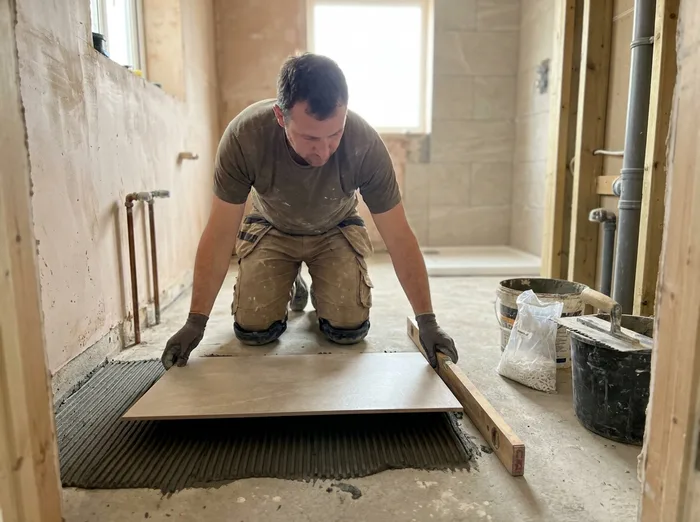
- Practical Skill Tests (Próba pracy): Most contractors evaluate foreign candidates through a practical trial during their first week. You will be asked to prepare glue, cut tiles, lay a test section, and check levels and grout lines.
On-Site Expectations and Language Requirements
Working on a Polish site requires specific technical knowledge and basic communication skills to keep work moving safely and accurately.
- Polish Tool Terminology: You do not need fluent Polish, but learning basic construction Polish is vital. Key terms include poziomica (spirit level), paca zębata (notched trowel), klej do płytek (tile adhesive), fuga (grout), szlifierka (angle grinder), and jastrych or wylewka (floor screed).
- Language Level: On large international sites, site managers may speak basic English. On smaller residential projects, team leaders speak Polish. Having a basic A1/A2 level of communicative Polish or being willing to learn key technical words will make you significantly more attractive to Polish employers.
- Site Safety and Health: You must complete a basic Occupational Health and Safety training (BHP - Bezpieczeństwo i Higiena Pracy) upon arrival, along with a mandatory occupational medical check-up (badania lekarskie) paid for by the employer.
Reality Check: Common Misconceptions
Here are key facts that foreign tilers and floor layers often get wrong about working in Poland:
- Expecting employers to supply all hand tools: While contractors provide heavy machinery, mixers, and cutters on site, professional tilers are expected to have basic personal hand tools and proper work clothes.
- Assuming floor laying means only ceramic tiles: Polish jobs cover a wide variety of materials, including LVT (luxury vinyl tile), resin flooring (posadzki żywiczne), carpet tiles, and wood parquetry. Being versatile doubles your hiring chances.
- Ignoring floor preparation time: Polish employers evaluate how well you prepare the substrate (podłoże), self-leveling compounds, and waterproofing layers (hydroizolacja). Laying tiles on an unlevel or unprimed surface is the main reason workers fail their initial trial.
- Assuming visa approval is instant: Even when an employer secures your work permit (Zezwolenie na pracę), obtaining a visa appointment at the Polish embassy or consulate in your home country can take several weeks or months. Plan ahead.
Update Your Workuro Profile to Get Hired in Poland
Polish employers search Workuro directly when looking to recruit tilers and floor layers for upcoming commercial and residential projects across Poland. To ensure your profile appears in top employer search results, make sure your details are complete and precise.
Include the exact cities or voivodeships you want to work in, such as Warsaw, Wrocław, Kraków, or Poznań. State your specific practical skills, whether you specialize in large-format porcelain, marble, self-leveling screeds, or vinyl flooring. List the tools you are experienced with and mention your current language abilities, including any basic Polish or English you know. Upload clear photos or videos of your past tile layout projects, grout lines, and finished floors. When Polish general contractors look for dedicated tradespeople, a complete and detailed Workuro profile ensures they can find you first.
Pronto para ser encontrado?
Crie seu perfil em 2 minutos. Grátis, sem cartão de crédito.
Continue lendo