Tiler and Floor Layer Jobs in Iceland for Foreign Workers (2026)
 Iceland
Tiler and Floor Layer Market in Iceland
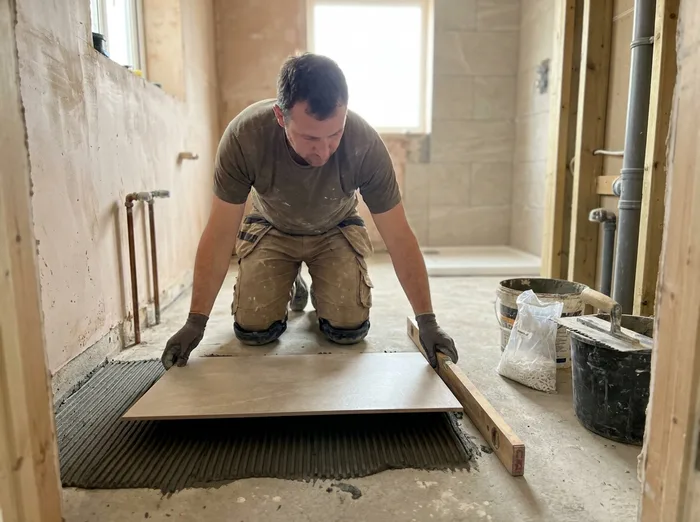
If you are planning to move to Iceland as a non-EU tiler or floor layer, you need an honest picture of the market. Iceland is a small island nation with around 390,000 residents. The construction sector is active, but the total number of open roles for international workers is much smaller than in larger European countries. If you are looking for massive job volume, nearby targets like Norway or Germany hire hundreds of floor installers every month. Iceland hires in much smaller numbers.
However, Iceland is an attractive destination if you manage to secure a job offer. The country pays strong wages, enforces strict safety standards, and offers robust union protections for every worker on the site. Foreign workers from South Asia, Africa, Latin America, the Balkans, and Central Asia are hired when local or European Union labor falls short. Most tiling and flooring jobs involve indoor commercial spaces, high-end residential housing, and hotel renovations connected to Iceland's large tourism sector.
Work Permit Routes for Non-EU Trade Workers
You cannot move to Iceland to look for work on a tourist visa. You must first secure a job offer from an Icelandic employer who is willing to sponsor your work permit. As a citizen from outside the EU or EEA, your legal route goes through two main government bodies: the Directorate of Immigration (Útlendingastofnun) and the Directorate of Labour (Vinnumálastofnun).
Your employer handles the initial application process in Iceland. They must prove that they advertised the vacancy locally and within the European Economic Area for at least four weeks without finding a qualified candidate. Once that condition is met, they submit your employment contract to the authorities.
- Temporary Work Permit for Shortage Occupations: This is the most common permit route for skilled trades like tiling and flooring. It is tied directly to your sponsoring employer and is usually granted for one year at a time, renewable up to two years.
- Specialist Work Permits: These permits are reserved for highly specialized technical experts or master craftspeople who hold formal master certificates and specialized industrial skills.
- Processing Timeframes: Expect the work permit process to take anywhere from two to four months. You must remain outside Iceland while the Directorate of Immigration processes your initial permit.
Trade Recognition and Craft Certification
In Iceland, construction trades are divided into regulated master trades and general site work. Tiling (flísalagning) and masonry work (múraravinna) sit under regulated craft frameworks. Synthetic flooring, carpet, and wood installation (dúklagning) are also governed by clear industry guidelines. Holding a formal trade qualification from your home country gives you a significant advantage, but it must be evaluated.
The main trade organization oversight comes from BYGGIÐN (the union for building trades) along with IÐAN Educational Centre (IÐAN fræðslusetur). They review vocational certificates to see if your education matches the Icelandic journeyman examination standard (Sveinspróf).
- Journeyman Equivalency: If your home country diploma is formally recognized as equivalent to a Sveinspróf, your employer can hire you under the higher pay scale for certified craftsmen.
- Uncertified Specialized Installer: If you have solid practical experience but lack a recognized diploma, employers can still hire you as a skilled site worker. You will perform installation work under a supervisor, but your minimum pay rate will follow the general construction worker scale rather than the certified master scale.
- Language Expectations: While you do not need to speak fluent Icelandic to land an entry job, English is required on almost every international job site. Site safety briefings, contract terms, and daily instructions are given in English or Icelandic. Learning basic Icelandic trade terms will speed up your career progress.
Real Wages, Taxes, and Net Monthly Pay
Pay rates in Iceland are never decided randomly by employers. They are governed by strict collective bargaining agreements (Kjarasamningar) negotiated between trade unions like BYGGIÐN or Efling and the national employers' association. It is illegal for an employer to pay you less than the minimum union rate for your job category.
Wages are calculated in Icelandic Króna (ISK). Construction workers are typically paid an hourly rate or a monthly base rate, with extra compensation for piecework (ákvæðisvinna) or overtime (yfirvinna).
- Gross Monthly Pay: A qualified tiler or floor layer with recognized skills earns a gross monthly salary ranging from 550,000 ISK to 720,000 ISK, depending on overtime and shift structure. Uncertified helpers generally start around 450,000 ISK to 520,000 ISK gross.
- Income Tax and Deductions: Iceland operates a progressive income tax system. The baseline tax rate starts around 31.45% for lower income tiers and rises to 37.95% for higher brackets. However, every worker gets a monthly personal tax credit (persónuafsláttur), which lowers your total tax burden. Union dues (around 1%) and pension contributions (4%) are deducted automatically.
- Net Monthly Income: After tax deductions and credit applications, a certified worker can expect a realistic net take-home pay between 380,000 ISK and 500,000 ISK per month. Uncertified installers typically take home between 320,000 ISK and 370,000 ISK net.
- Cost of Living Reality: Take-home pay in Iceland looks high on paper, but rent and groceries are expensive. If your employer provides shared staff housing, expect them to deduct a fair rental fee directly from your monthly pay check according to union guidelines.
Key Regions and Seasonal Hiring Cycles
Construction activity in Iceland is unevenly distributed across the country. Outdoor masonry work drops sharply during the harsh winter, but indoor tiling, epoxy coating, and floor laying continue throughout the year inside climate-controlled structures.
- Capital Region (Höfuðborgarsvæðið): Includes Reykjavík, Kópavogur, and Hafnarfjörður. This area accounts for over 70% of all commercial and residential building projects in the country. High-density residential apartments and office complexes are built here year-round.
- Reykjanes Peninsula (Reykjanesbær): The area surrounding Keflavík International Airport sees continuous development in hotel infrastructure, logistics centers, and industrial facilities.
- North Iceland (Akureyri): Akureyri is the largest urban center outside the capital region. Demand here centers on municipal projects, residential refurbishments, and regional commercial builds.
- Seasonal Cycle: Major hiring pushes happen between February and April. Companies bring on international site crews right before the spring thaw to ensure building shells are sealed, allowing tilers and floor layers to finish interior surfaces throughout the autumn and winter months.
Reality Check: Common Misconceptions
Many international job seekers make avoidable mistakes when looking for trade opportunities in Iceland. Keep these facts in mind:
- You cannot work on a tourist visa: Entering Iceland as a tourist and trying to work cash-in-hand is illegal. Violating this rule leads to immediate deportation and a multi-year ban from entering the Schengen zone.
- Housing is limited: Finding an apartment on your own in Reykjavík is difficult and costly. Always ask prospective employers if they offer assistance with staff accommodation before agreeing to a contract.
- Trade titles matter: Claiming to be a master tiler without certified papers will not work. Employers test your skills on day one, and union pay rates require proof of credentials.
- Winter impacts transport: Snow and high winds can pause site work outside the capital region for days at a time. Interior floor layers work inside, but travel between job sites can still be delayed.
Update Your Workuro Profile for Icelandic Employers
Icelandic employers and recruitment partners search the Workuro registry when they need skilled workers from outside the EU. To make sure your profile appears in their candidate searches, make your details as specific as possible.
List your exact trade skills, including experience with specific materials such as ceramic tiles, large-format porcelain, vinyl rolls, hardwood, or industrial epoxy resin. State whether you hold formal trade certificates from your home country, and list your exact level of spoken English. If you are open to working in specific regions like Reykjavík, Reykjanesbær, or Akureyri, highlight those locations in your profile. Complete profiles give employers the confidence to start the visa sponsorship process.
Pronto para ser encontrado?
Crie seu perfil em 2 minutos. Grátis, sem cartão de crédito.
Continue lendo