Farm and Agricultural Worker Jobs in Malta for Foreign Workers (2026)

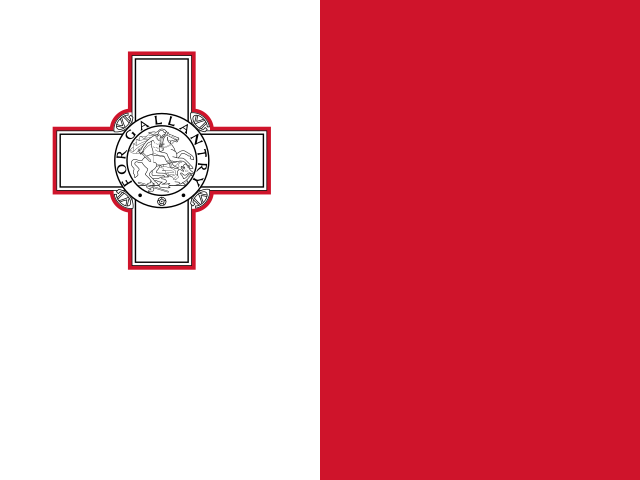 Malta
MaltaMalta is a small island nation in the southern Mediterranean Sea. Because of its limited land area, the agricultural sector here is very small compared to other European countries. If you are looking for large-scale crop fields, massive fruit orchards, and thousands of open seasonal farm positions, Malta is probably not the best target for you. Nearby countries like Italy, Spain, or Greece have vastly larger agricultural industries and hire far more foreign workers every year.
However, Malta still has an active agricultural sector that faces a constant shortage of local workers. Young Maltese citizens rarely choose farming careers, which creates steady opportunities for workers coming from outside the European Union (EU). Local farms produce potatoes, tomatoes, wine grapes, greenhouse vegetables, and livestock products. If you want to work on a Maltese farm, you need to understand how this unique, compact market operates, what documents you need, and how to position yourself so employers can find you.
Key Agricultural Regions and What Farms Produce
Farming in Malta takes place in specific geographic zones across the main island of Malta and the smaller island of Gozo. Because space is tight, farms are usually family-owned, small-scale, and highly concentrated in specific villages and rural valleys.
- Mġarr and Rabat (Northern and Western Malta): This area is the heart of crop farming in Malta. Mġarr is famous for strawberry fields, open-field vegetables, and vine crops. Nearby Rabat features larger plots dedicated to potato cultivation, which is one of Malta's primary agricultural exports.
- Siġġiewi and Dingli (Southwestern Coast): Known for high-altitude terrain and dry farming, these areas host vineyards, olive groves, and field crops. Work here often involves manual harvesting, trellising, and ground maintenance.
- Burmarrad and Żabbar: These regions host several large commercial greenhouse operations. Greenhouses produce tomatoes, cucumbers, peppers, and fresh herbs throughout the year.
- The Island of Gozo (Xagħra, Nadur, and Xewkija): Gozo has a greener landscape than the main island. It holds a high concentration of livestock farms (dairy cows, sheep, and goats) along with small vegetable plots and vineyards. Farm workers in Gozo often handle both crop cultivation and animal care.
Work Permits: How Identita and Jobsplus Process Applications
As a candidate from outside the EU (such as South Asia, Africa, Central Asia, or the Balkans), you cannot simply travel to Malta on a tourist visa and start working. You need a formal work permit tied to a specific employer before you can begin employment legally.
In Malta, the work permit process goes through a single portal called Identita (the national identity agency) under the Single Permit procedure. Here is how the process works in practice:
- Employer Sponsorship: A licensed Maltese farm owner or agricultural company must sponsor your application. They apply on your behalf through the Identita online portal.
- Jobsplus Labour Market Test: Jobsplus is Malta's national employment agency. Before granting permission to hire a non-EU candidate, Jobsplus checks whether any local or EU citizen is available for the job. Because local farm labor is scarce, agricultural applications generally pass this test easily.
- Processing Time: Processing usually takes between 2 to 4 months. Once approved, Identita issues an Approval in Principle letter, which allows you to apply for an entry visa (if required for your nationality) and travel to Malta to finalize your residency card.
- Permit Duration: A Single Permit for agricultural work is usually granted for one year and must be renewed annually with your employer.
Required Qualifications, Licences, and Language Skills
You do not need a university degree to work as a general farm worker in Malta, but practical skills and specific basic certifications will make your application stand out to local farm owners.
- Pesticide Applicator Certificate: Malta enforces strict European regulations on plant protection products. The Malta Competition and Consumer Affairs Authority (MCCAA) issues the official Certificate of Competence for handling pesticides. Candidates who already have certified training in safe pesticide application or crop protection hold a strong advantage.
- Driving Licences (Category B or TR): Moving equipment, harvested crops, and supplies between scattered farm plots is a major part of daily work in Malta. A valid driving licence for cars (Category B) or broad experience driving tractors (Category TR) is highly valued by local employers.
- Language Level: English is one of Malta's two official languages (alongside Maltese). Employers do not expect academic English, but you must have a practical, functional level of spoken English (A2 or B1 level). You must be able to understand safety instructions, read product labels, and communicate clearly with your employer on the field.
Pay Rates, Net Income, and Seasonal Cycles
Pay in Malta is calculated using national minimum wage rules, local collective agreements, and overtime policies. Agricultural work is physical and often tied to weather patterns.
- Monthly Net Pay: A general farm worker in Malta typically earns between €850 and €1,150 net per month after tax and social security deductions. Experienced tractor drivers, greenhouse supervisors, or specialized livestock handlers can earn closer to €1,200 to €1,400 net per month.
- Working Hours: Standard work shifts run around 40 hours per week, but hours increase significantly during peak harvest periods. Overtime is common during crop gathering and is paid on top of your base salary.
- Seasonal Cycles: Unlike cold northern European countries, Malta's Mediterranean climate allows farming activity all year long.
- Spring (March to May): Peak season for potato harvesting, strawberry picking, and sowing summer crops.
- Summer (June to August): High demand for tomato harvesting (for local processing), grape picking in vineyards, and heavy irrigation work during hot weather.
- Autumn and Winter (September to February): Greenhouse planting, citrus fruit picking, soil preparation, livestock care, and routine maintenance across farm properties.
Reality Check: What Workers Get Wrong About Malta
Many candidates jump into applying without knowing the ground reality. Here are key facts you should know before planning your move:
- Malta is not a huge farming hub: Demand for farm labor exists, but the total number of vacancies is small compared to major European agricultural producers.
- Summer conditions are extreme: Summer temperatures frequently exceed 35 degrees Celsius with high humidity. Outdoor field work in July and August requires high physical endurance.
- Accommodation is expensive: Rent in Malta can take a significant portion of your salary. Many farm owners offer shared staff housing near the farm or help cover accommodation costs, so always clarify housing support with your employer before accepting an offer.
- Changing employers takes time: Your work permit is linked to the specific employer who sponsored you. If you leave your job, your new employer must submit a new Single Permit application through Identita before you can start working for them.
Put These Malta Specifics Into Your Workuro Profile
Employers in Malta search the Workuro registry when they need reliable candidates for open positions. To make sure your profile appears when a Maltese farm owner or agricultural hiring agent searches the database, fill out your profile with precise, real information.
- List Your Driving Capabilities: Clearly state if you hold a valid driver's licence and if you have practical experience operating tractors, farm utility vehicles, or irrigation pumps.
- Mention Machinery and Chemical Skills: Add any experience you have with pesticide safety, greenhouse climate controls, drip irrigation setup, or crop harvesting tools.
- Specify Your Target Regions: Mention that you are looking for opportunities in Malta or Gozo, including areas like Mġarr, Rabat, Siġġiewi, or Burmarrad.
- Be Clear About Languages: Mark your actual spoken English level accurately so employers know you can communicate on the job site from day one.
By keeping your Workuro profile complete, honest, and filled with accurate trade details, European employers looking for agricultural talent will be able to evaluate your skills and contact you directly for open roles.
Ești gata să fii găsit?
Creează-ți profilul în 2 minute. Gratuit, fără card bancar.
Continuă lectura