Fish & Seafood Processing Worker Jobs in Romania (2026 Guide)
 Romania
The reality of fish processing jobs in Romania
If you are looking for work in fish and seafood processing in Europe, you need an honest picture before you start applying. Romania does hire foreign workers from outside the European Union for factory and agriculture work, but its fish processing industry is relatively small. The country has a coastline along the Black Sea and a large network of freshwater lakes, rivers, and fish farms, but it does not have the massive marine processing sector that you will find in some other European nations.
If your main goal is to land a high-volume seafood processing job with continuous recruitment throughout the year, Poland is a much larger target in Central Europe. Poland operates huge ocean-fish processing facilities that process salmon, herring, and cod for the entire continent. However, Romania does have an active, growing niche in freshwater aquaculture, cold storage packing, and local Black Sea seafood processing. Romanian employers regularly recruit non-EU workers from South Asia, Central Asia, Africa, and Southeast Asia to fill labor gaps in these plants.
In Romania, fish processing work is practical and physical. You will work in controlled cold environments, handling raw freshwater fish like carp, trout, and catfish, or processing imported frozen seafood and local marine species. The job market is smaller than general food manufacturing, but for workers who obtain a valid job offer, it provides a stable legal entry point into the European Union labor market.
Where the jobs are located in Romania
Fish processing and packaging facilities in Romania are concentrated in a few specific geographic areas. Knowing where these hubs are will help you understand job offers and target your search effectively.
- Dobrogea Region (Constanța and Tulcea): This is the heart of Romania's maritime and Danube Delta fishing industry. Tulcea is famous for freshwater and delta processing, while Constanța handles marine imports, cold storage logistics, and Black Sea catches. Processing units near Mangalia and Murighiol also process seasonal catches.
- Moldova Region (Iași and Suceava): Eastern Romania has extensive freshwater fish farming systems, known locally as carp and trout ponds. Areas around Hârlău in Iași county and mountain aquaculture sites in Suceava have localized processing facilities that gut, fillet, and package fish for national supermarkets.
- Southern Plains (Călărași and Giurgiu): Located along the Danube River, these counties feature major freshwater aquaculture operations and regional distribution centers that process live and fresh fish for the Bucharest metro area.
- Central Logistics Hubs (Brașov and Prahova): Major inland cold storage warehouses receive imported frozen seafood in bulk, where workers thaw, repackage, label, and prepare seafood products for retail chains.
Work permits, health checks, and food safety rules
To work legally in Romania as a non-EU citizen, you must follow a strict legal pathway. You cannot travel to Romania on a tourist visa and start working. An employer must apply for a work authorization document on your behalf before you travel.
The process starts when a Romanian employer submits an application for a work permit (called an aviz de muncă) to the General Inspectorate for Immigration (Inspectoratul General pentru Imigrări or IGI). The employer must prove that they offered the job locally first and that they are paying all standard business taxes. Getting the work authorization usually takes between one and three months, depending on the workload at the local IGI office.
Once the work authorization is approved, you must apply for a long-stay visa for employment (Type D/AM) at the Romanian embassy or consulate in your home country. After you arrive in Romania, your employer will assist you in getting your temporary residence permit (permis de ședere) and a personal numerical code (CNP).
Food handling in Romania is strictly regulated to meet European Union standards. Before you can touch food products in a plant, you must meet two mandatory requirements:
- Occupational Health Pass (Fișa de Aptitudini): Issued by a certified occupational health physician (medicina muncii) in Romania. This requires a medical exam, blood tests, and stool samples to ensure you carry no transmissible diseases.
- Hygiene Certificate (Certificat de Igienă): Issued under the supervision of the National Sanitary Veterinary and Food Safety Authority (Autoritatea Națională Sanitară Veterinară și pentru Siguranța Alimentelor or ANSVSA). You must complete a brief training course on basic food hygiene and pass a simple test. Employers usually arrange and pay for this training during your onboarding week.
Pay, working hours, and daily conditions
Pay in Romania is calculated around the national legal minimum wage, though factory work in refrigerated environments often includes additional allowances. Salaries are usually quoted in Romanian Leu (RON).
For an entry-level fish processing worker in 2026, typical net monthly take-home pay ranges between 2,400 RON and 3,200 RON net (roughly 480 EUR to 640 EUR net per month), depending on overtime, night shifts, and bonuses. In addition to base pay, almost all legal employers in Romania provide meal vouchers (tichete de masă). These vouchers can add up to 600 to 800 RON per month in value, which you can use directly at grocery stores.
Working conditions require physical stamina and resilience to cold temperatures:
- Temperature: Processing rooms are kept cold, usually between 2°C and 8°C, to preserve the quality of the fish. Employers must provide insulated protective clothing, thermal boots, and waterproof gloves.
- Shift Structures: Most plants operate on eight-hour shifts, five days a week, though peak harvest periods may require 10-hour or 12-hour shifts with overtime pay. Common shifts include morning, afternoon, and night rotations.
- Physical Tasks: Daily tasks include washing, de-scaling, gutting, filleting, weighing, vacuum-packing, labeling, and stacking heavy crates into cold storage rooms.
Seasonal hiring cycles in Romania
Unlike standard factory assembly lines that operate steadily all year, fish processing in Romania follows specific seasonal spikes tied to natural cycles and regional holidays.
- Autumn Harvest (October to December): This is the busiest time for freshwater fish processing in Romania. Fish ponds across Iași, Călărași, and Tulcea drain their stocks before winter. Processing plants run at maximum capacity to supply fresh carp, trout, and pike to markets for the Christmas and New Year holidays.
- Spring Peak (March to April): Demand rises sharply ahead of the Easter holiday season, leading to increased recruitment and temporary overtime work.
- Summer Marine Season (June to August): Along the Black Sea coast in Constanța and Mangalia, processing focuses on seasonal marine catches like sprat, anchovies, and turbot, alongside processing frozen imports for coastal restaurants and tourists.
Reality check: Myths vs facts about fish jobs in Romania
Here are direct facts regarding common misunderstandings about moving to Romania for fish processing work:
- Myth: You will work outdoors on sea vessels.
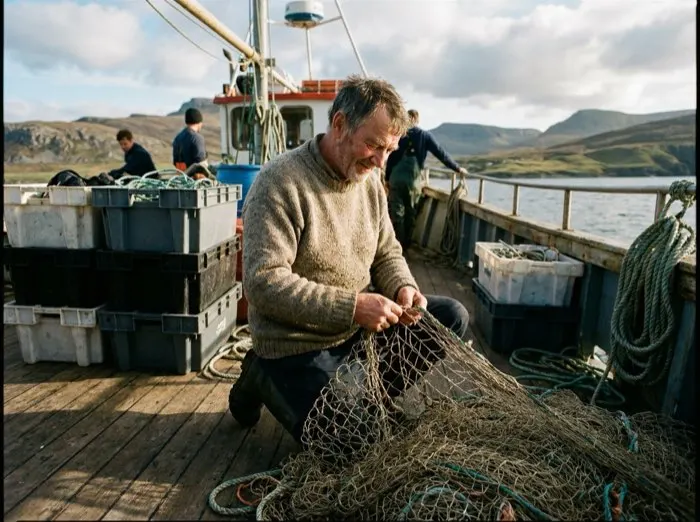
Fact: Foreign recruitment for this sector is almost entirely for land-based processing plants, cold storage facilities, and inland fish farm packing houses, not commercial fishing boats. - Myth: You need to speak fluent Romanian before applying.
Fact: Most processing lines use simple visual signals and basic routines. Work instruction is typically managed by team leaders who speak basic English or through translated safety manuals, though learning basic conversational Romanian helps you settle in quickly. - Myth: You can switch employers immediately after arriving.
Fact: Your work permit is legally tied to the specific Romanian employer who sponsored your application. Changing employers requires a new work authorization approval through IGI, which takes time and legal steps. - Myth: The job guarantees access to the entire Schengen zone.
Fact: While Romania is part of the Schengen area for air and sea travel, your work permit gives you the right to work only for your sponsored employer in Romania, not in other European countries.
Put your specific details into your Workuro profile
If you want European employers and licensed recruitment agencies to find you, your candidate profile must be clear and complete. Generic profiles get overlooked, but specific details catch the attention of hiring managers.
When you fill out your Workuro profile, make sure you include the exact terms that matter for this trade:
- Highlight specific hands-on skills: Mention if you have experience in manual filleting, machine operation, fish gutting, sorting, weighing, or vacuum sealing.
- List food safety knowledge: Include any previous experience with HACCP standards, industrial hygiene rules, or food packing protocols from your home country.
- Specify preferred locations: Name Romanian processing regions like Constanța, Tulcea, Iași, or Brașov if you have contacts or preferences there.
- State your environment tolerance: Clearly state that you are physically ready and comfortable working in cold storage conditions (2°C to 8°C) and doing shift work.
- Detail language capabilities: State your English communication level clearly, along with any basic Romanian phrases or other languages you speak.
By keeping your Workuro profile complete and accurate, you make it easy for Romanian employers looking for reliable food processing staff to evaluate your background and contact you directly.
Ești gata să fii găsit?
Creează-ți profilul în 2 minute. Gratuit, fără card bancar.
Continuă lectura