Fish and Seafood Processing Worker Jobs in Denmark (2026)
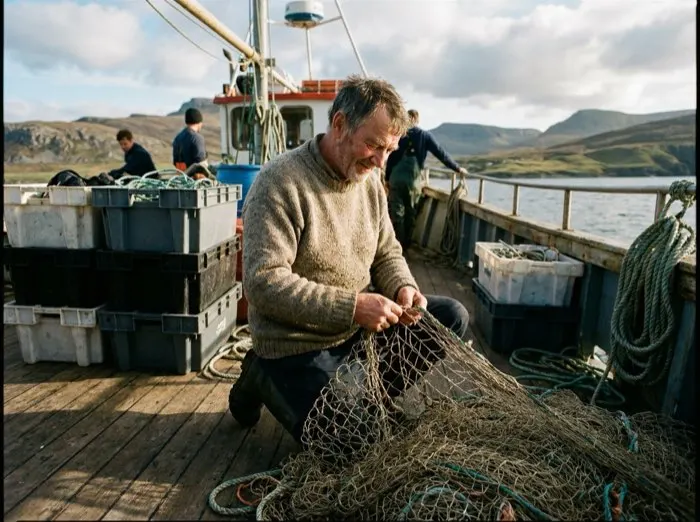
The reality of seafood processing jobs in Denmark in 2026
Denmark is one of Europe's largest exporters of processed fish and seafood. Despite being a small nation, its northern and western coasts process vast quantities of salmon, herring, mackerel, cod, and cold-water shrimp every day. The industry relies heavily on modern facilities, high-speed filleting technology, and strict quality controls. If you are a candidate from South Asia, Africa, Latin America, the Balkans, or Central Asia, there are opportunities for you here, provided you meet the country's strict entry and employment standards.
Demand for processing staff is stable throughout the year, with sharp spikes during major fishing seasons. However, Denmark's immigration laws are strictly enforced. Unlike some regions where informal seasonal work exists, every non-EU worker in Denmark must have a formal job offer, an approved work permit, and a tax registration before stepping onto the factory floor.
To find work, you must target the specific regions where processing plants operate. General job searches in major cities like Copenhagen will not yield results. The core seafood processing hubs are concentrated in two primary administrative regions: Nordjylland (North Denmark) and Syddanmark (Southern Denmark).
- Skagen (Nordjylland): Located at the northernmost point of Denmark, Skagen is the nation's largest fishing port. It specializes heavily in pelagic fish like herring and mackerel, as well as fish meal and oil processing plants.
- Hirtshals (Nordjylland): A major maritime and logistics hub that processes large volumes of farmed Norwegian salmon, whitefish, and pelagic species for export across continental Europe.
- Hanstholm (Nordjylland): Home to one of Europe's premier whitefish auctions, with numerous processing facilities focused on filleting cod, saithe, haddock, and plaice.
- Esbjerg (Syddanmark): A major port on the southwest coast with dedicated facilities for flatfish processing, shrimp packaging, and cold-storage distribution.
- Strandby and Saeby (Nordjylland): Smaller coastal towns with long-standing factories specializing in specialized fish filleting, salmon smoking, and canning operations.
Navigating Danish work permits and SIRI requirements
To work legally in a Danish seafood processing plant as a non-EU citizen, you must secure a work and residence permit issued by SIRI (the Danish Agency for International Recruitment and Integration). Denmark does not allow foreign workers to arrive on a tourist visa and transition to a work visa from inside the country. Entering on a tourist visa to search for manual work can lead to immediate administrative detention and a multi-year entry ban across the entire Schengen area.
The legal process requires a Danish employer to initiate the application on your behalf. To obtain approval, the job offer must meet specific regulatory standard set by Danish law:
- Collective Agreement Standards: Your contract must match the standard pay and working conditions set by the Danish labor market. For seafood processing, terms are negotiated by the trade union 3F (Fagligt Fælles Forbund). Employers cannot pay lower rates to foreign candidates.
- Visa Schemes: Foreign factory candidates usually qualify through specific labor market routes, such as the Supplementary Pay Limit Scheme or positions listed on official labor shortage frameworks when machinery operating experience is required (e.g., Baader machine technicians or industrial processing operators).
- Processing Timelines: Once your employer submits their portion of the application and you complete your biometrics at a Danish embassy or visa center abroad, SIRI usually takes between 1 and 3 months to issue a decision.
- Permit Validity: Initial work permits are granted for the length of your formal employment contract, typically up to 3 or 4 years, with options for extension as long as your job remains active.
Wages, taxes, and net monthly pay in Danish Krone
Denmark offers strong compensation, but living costs and income taxes are high. The country does not have a single statutory national minimum wage. Instead, pay rates are established through collective bargaining agreements between union bodies and employer federations.
For fish and seafood processing workers, the 3F collective agreement establishes clear base earnings across the industry:
- Gross Hourly Rate: Standard starting pay for factory floor workers ranges between 155 DKK and 185 DKK (Danish Krone) per hour for normal day shifts.
- Shift Supplements: Working non-standard hours earns additional hourly supplements (tillæg). Evening shifts, night shifts, and weekend work can raise your gross rate to 200 DKK - 230 DKK per hour.
- Gross Monthly Pay: Based on a standard 37-hour work week, gross monthly earnings generally fall between 25,000 DKK and 30,000 DKK before taxes.
- Tax Deductions (SKAT): Income tax is collected automatically by the Danish tax authority (SKAT). Deductions include an 8% labor market contribution (AM-bidrag) plus state and municipal income taxes (A-skat). Every taxpayer receives an annual personal tax allowance (personfradrag). Your effective overall tax rate typically lands between 36% and 39%.
- Net Monthly Income: After tax deductions, a full-time processing worker can expect a realistic net income ranging from 16,000 DKK to 21,000 DKK per month (approximately 2,150 EUR to 2,800 EUR), depending on overtime and shift allowances.
Wages are paid electronically into your registered Danish bank account (NemKonto). Employers do not pay cash under any circumstances.
Certificates, shift patterns, and peak hiring seasons
Modern Danish seafood plants are highly automated, cold, and fast-paced environments. While manual filleting and trimming remain essential skills, much of the work involves operating sorting, weighing, vacuum-sealing, and skinning machinery.
To stand out to employers, you should understand the required standards and seasonal cycles of the Danish market:
- Food Hygiene Certification: Safety standards are strictly regulated by Fødevarestyrelsen (the Danish Veterinary and Food Administration). Workers must pass basic food hygiene training (hygiejnebevis) covering sanitation, temperature regulation, and bacterial prevention.
- HACCP Standards: Practical knowledge of Hazard Analysis Critical Control Point (HACCP) rules is highly valued by plant managers.
- Language Expectations: Fluent Danish is rarely required for entry-level floor roles, but you must have functional English (B1 level or higher). Machine interfaces, daily safety briefings, and instruction manuals are delivered in English or basic Danish.
- Forklift Licences: Possessing an internationally recognised forklift licence (gaffeltruck certifikat) significantly increases your employment options in warehouse and cold-storage operations.
- Seasonal Hiring Cycles: Salmon processing operates year-round, with peak demand occurring ahead of major holidays like Easter and Christmas. Herring and mackerel processing in Nordjylland experiences intense seasonal peaks from September through January. Whitefish processing peaks during spring months.
Factory halls are maintained at cold temperatures, typically between 2 and 6 degrees Celsius. Employers supply thermal clothing, safety boots, and protective gloves, but you must be physically prepared to spend long shifts standing in cold environments.
Reality check: Common mistakes foreign workers make
- Traveling on a tourist visa to look for work: Danish companies will not hire you on the spot if you hold a tourist visa. You must apply for a permit from outside Denmark through the official SIRI procedure.
- Expecting cash payments or informal work: All wages in Denmark are tracked by SKAT. Working without a contract or off the books is illegal and leads to immediate deportation.
- Applying without English proficiency: Employers require you to understand basic safety instructions and machinery warnings. If you cannot communicate in English, your application will likely be set aside.
- Searching in major urban centers: Searching for seafood processing jobs in Copenhagen or Odense is ineffective. Focus your efforts entirely on coastal industrial areas like Skagen, Hirtshals, Hanstholm, and Esbjerg.
- Assuming general labor requires no skill: Modern processing plants value candidates with experience in line automation, quality assurance, or specific filleting machinery over untrained applicants.
Set up your Workuro profile to get noticed by Danish employers
Danish seafood processors and specialized recruitment partners search the Workuro registry to connect directly with qualified applicants abroad. Because employers pay for recruitment while foreign candidates use Workuro for free, keeping your profile detailed and accurate is the best way to be discovered.
When creating or updating your Workuro profile, make sure to include the exact details Danish recruiters look for:
- Preferred Locations: Name specific Danish ports and administrative regions, such as Nordjylland, Syddanmark, Skagen, Hirtshals, Hanstholm, and Esbjerg.
- Certifications: Clearly list any completed food hygiene certificates, HACCP training modules, or forklift operator licences (gaffeltruck).
- Machinery Experience: Highlight any hands-on experience with industrial filleting machines (such as Baader equipment), skinning tools, automated scales, or cold-room storage systems.
- Language Skills: Specify your exact English proficiency level (e.g., B1, B2) and note any basic Danish language courses you have started.
- Shift Availability: Explicitly mention your willingness to work rotational shifts, night shifts, and in cold-temperature production environments.
Including these specific keywords in your profile ensures your information appears at the top of search results when Danish employers look to fill open positions.
Handa ka na bang mahanap?
Gawin ang profile mo sa loob ng 2 minuto. Libre, walang credit card.
Magbasa pa