Warehouse Jobs in Norway for Foreign Workers (2026 Guide)
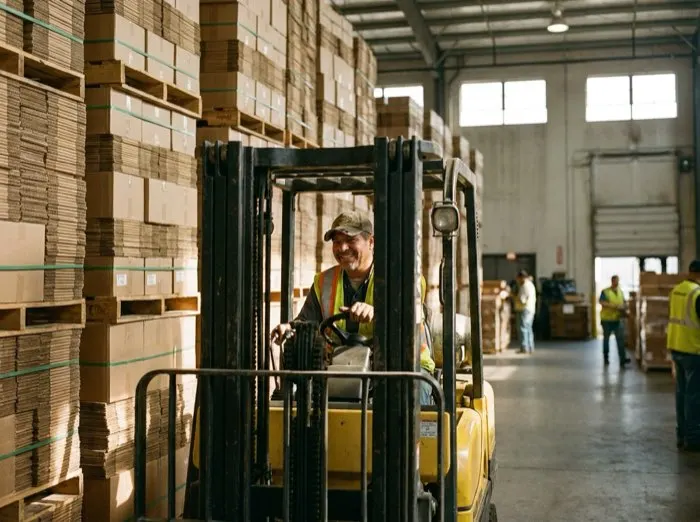
Warehouse work in Norway: The honest truth for non-EU workers
If you are a worker coming from outside the European Union - such as South Asia, Africa, Latin America, the Balkans, or Central Asia - you must understand Norway's immigration rules before applying. Norway has high wages and excellent working conditions, but getting a work permit for basic warehouse tasks is challenging.
The Norwegian Directorate of Immigration (UDI) requires non-EU citizens to qualify for a specific residence permit. For most job seekers, this means the Skilled Worker permit (Faglært). To qualify, you must have completed a formal vocational training program equivalent to a Norwegian trade certificate, or hold higher education relevant to logistics. General picking and packing without formal credentials rarely meets the UDI requirement for a standard work permit.
If you do not have a formal trade diploma or specialized heavy-equipment certification, finding an employer-sponsored entry visa for Norway is very difficult. If you are seeking general entry-level labour without formal certifications, nearby countries like Sweden or Poland offer broader general work permit pathways. However, if you hold formal logistics credentials, certified forklift skills, or apply for seasonal roles, Norway remains an incredible destination. Here is exactly how the industry operates in Norway and what you need to succeed.
Where the logistics jobs are: Key regions and industrial hubs
Logistics activity in Norway is concentrated around major transport corridors, import ports, and airport freight zones. Knowing where employers operate helps you target your applications effectively.
- Vestby and Nordre Follo (Akershus): Located just south of Oslo, Vestby is Norway's largest primary logistics hub. Massive distribution centers for major retail chains, grocery suppliers, and central e-commerce brands operate here.
- Gardermoen and Ullensaker: Surrounding Oslo Airport (OSL), this region focuses on air freight, perishables, express parcel distribution, and international mail routing. Cold-chain storage is very strong in this area.
- Drammen (Buskerud): Drammen is Norway's primary sea import terminal for vehicles and heavy freight. The area features broad warehousing infrastructure for automotive, industrial, and construction logistics.
- Bergen and Sotra (Vestland): On the western coast, logistics revolves around maritime shipping, seafood export processing, and offshore supply chain bases servicing the energy sector.
- Sandnes and Tananger (Rogaland): Located near Stavanger, these hubs focus heavily on oil, gas, industrial machinery, and international container transport.
Required licences, skills, and language levels
Norwegian employers prioritize safety and efficiency. Working in a warehouse requires specific certifications and functional language abilities.
- Truckførerbevis (Forklift Driver Licence): This is the most crucial credential for warehouse workers in Norway. Training standards are regulated under Arbeidstilsynet (The Norwegian Labour Inspection Authority). The most common categories are T1 (pallet trucks and low-lifting stackers), T2 (reach trucks), and T4 (counterbalance trucks). Foreign forklift certificates are not automatically valid; you must complete a conversion or verification process with a certified Norwegian safety instructor.
- Fagbrev i Logistikkfaget (Trade Certificate): Having a formal trade certificate in logistics or supply chain management significantly boosts your chances. For non-EU workers, presenting an equivalent national vocational diploma helps satisfy UDI requirements for a Skilled Worker permit.
- Driver Licences: A standard Class B driver licence is helpful. If your role involves transport between local distribution centers, holding a Class C or CE heavy goods licence along with a valid Driver CPC (Yrkessjåførkompetanse - YSK) makes your application much stronger.
- Language Requirements: While many international air cargo operations use English, safety protocols in most domestic warehouses require Norwegian. Employers generally expect a minimum of B1 level Norwegian for safety briefings, inventory control software, and team communication. Knowing basic Norwegian is often the difference between getting hired or rejected.
Pay, collective agreements, and net monthly income in Norway
Norway does not have a single national minimum wage set by law. Instead, pay floors are established through collective bargaining agreements (Tariffavtale) between trade unions and employer organizations.
The logistics sector is largely governed by the Wholesale Agreement (Grossistoverenskomsten), negotiated between the union Fellesforbundet and the employer association NHO Logistikk og Transport.
- Hourly Gross Rates: Entry-level warehouse workers typically earn between 210 NOK and 245 NOK per hour. Experienced workers operating specialized reach trucks or handling shift duties can earn between 250 NOK and 280 NOK per hour.
- Shift Bonuses (Skift- og ulempestatik): Working evening shifts, night shifts, or weekends adds mandatory hourly bonuses. Night work allowances typically add between 30 NOK and 60 NOK extra per hour to your base pay.
- Monthly Net Pay (After Tax): Taxes in Norway are handled by Skatteetaten. For a standard worker, income tax and national insurance contributions typically average between 22 percent and 28 percent depending on deductions and earnings. A full-time warehouse employee can expect a realistic net monthly income of 26,000 NOK to 34,000 NOK after taxes.
Reality check: What foreign workers get wrong about Norwegian logistics
- Assuming general packing grants a visa: UDI does not grant skilled worker visas for basic, entry-level warehouse sorting unless you hold a recognized trade diploma or higher education degree in the field.
- Expecting foreign forklift cards to work instantly: You cannot legally operate a forklift in Norway without approval under Arbeidstilsynet standards. Your profile must reflect willingness to complete local certification.
- Underestimating living costs: While net pay is high, rental costs in regions like Vestby or Ullensaker can consume 30 to 40 percent of your monthly income. Factor housing costs into your planning.
- Ignoring local language needs: Many candidates assume English is enough everywhere. Internal health and safety (HMS) procedures are almost strictly in Norwegian. Showing effort to learn the language is essential.
Hiring seasons and how employers recruit
Understanding recruitment cycles helps you time your job search effectively.
- Autumn Peak (September to December): The busiest period of the year. E-commerce platforms, retail chains, and freight forwarders expand their workforce to handle Black Week and the Christmas holiday rush. Recruitment for these positions usually starts in August.
- Summer Vacation Cover (May to August): Norwegian labor laws guarantee workers annual holiday leave (Ferie). Employers recruit seasonal staff to cover shifts while permanent employees are on leave.
- Seafood Processing Cycles: Along the western coast, salmon and mackerel processing and packaging follow harvesting peaks, creating temporary demand throughout the year.
How to set up your Workuro profile to get noticed
Employers in Norway search Workuro to find qualified candidates from abroad. To stand out in employer searches, make sure your profile contains accurate, specific details rather than vague statements.
- List precise certificates: If you hold a forklift qualification, state the exact categories you operate, such as T1, T2, or T4. Mention any Arbeidstilsynet-recognized training you have completed.
- Detail your trade education: Explicitly outline your vocational diplomas, apprenticeships, or certificates related to logistics. This helps employers verify if you qualify under UDI skilled worker rules.
- Specify language abilities: Clearly list your Norwegian level (such as A2 or B1) alongside your English proficiency.
- Select target locations: Tag specific Norwegian industrial regions where you want to work, such as Vestby, Gardermoen, Drammen, or Bergen.
By keeping your Workuro profile detailed, accurate, and aligned with Norwegian industry standards, European employers searching for skilled logistics talent can easily find and review your application.
Handa ka na bang mahanap?
Gawin ang profile mo sa loob ng 2 minuto. Libre, walang credit card.
Magbasa pa