Warehouse Jobs in Slovakia for Foreign Workers (2026)
 Slovakia
Warehouse and logistics demand in Slovakia
If you are looking for warehouse work in Central Europe, Slovakia is one of the strongest choices you can make in 2026. The country is a massive manufacturing and distribution engine. Major global brands move millions of products through Slovak distribution centers every day. Because the domestic workforce cannot fill all the open positions in logistics, employers actively look to recruit workers from non-EU countries.
The demand here is real and steady. You do not need to look elsewhere in Europe if you want a reliable job in picking, packing, or operating material handling equipment. Slovakia has a high concentration of large-scale fulfillment centers, third-party logistics (3PL) providers, and automotive supply chain hubs that rely on foreign labor to keep their operations running smoothly around the clock.
As a candidate from outside the European Union, your path to working in a Slovak warehouse requires a formal work permit and residence authorization. Slovak employers who hire foreign workers are accustomed to navigating this legal process. However, understanding how the system works, where the job hubs are located, and what employers expect will give you a massive advantage when building your career plan.
Key logistics hubs and where the jobs are
Warehouse work in Slovakia is concentrated in specific industrial zones along major highway corridors. When you apply for positions or set up your profile, targeting these regions will place you directly where the highest volume of hiring takes place.
- Senec and the Bratislava Region: Senec is the logistics capital of Slovakia. Located just outside Bratislava along the D1 highway, it houses massive industrial parks like Prologis Park Senec and CTPark. Millions of square meters of warehouse space serve broad European retail and e-commerce networks here. This area has the highest number of entry-level warehouse openings in the entire country.
- Trnava and Nitra: These western regions are heavy automotive and manufacturing hubs. Industrial parks surrounding Trnava and Nitra feed components directly to major car manufacturing plants. Warehouses here hire workers for parts sorting, line feeding, inventory management, and forklift driving.
- Žilina and Martin: Located in northern Slovakia, this cluster focuses heavily on industrial logistics, heavy machinery components, and regional distribution along the D1 transport corridor.
- Košice and Prešov: In eastern Slovakia, sites like CTPark Košice and industrial zones in Kechnec or Haniska are growing rapidly. They offer steady opportunities in regional product routing and manufacturing support.
Work permits, forklift licences, and legal requirements
To work legally in a Slovak warehouse as a citizen from outside the EU, you need a Single Permit for employment and temporary residence. Slovakia uses a centralized system where your employer submits a job declaration to the local Labour Office, known as Úrad práce, sociálnych vecí a rodiny (ÚPSVaR).
The Labour Office checks if the job can be filled by a local citizen. If no candidate is found within a set period (often shortened for regions on the shortage-occupation list), ÚPSVaR issues a positive confirmation. With this confirmation, you apply for a Temporary Residence for Employment (Prechodný pobyt na účel zamestnania) at the Slovak embassy in your country or at the Foreign Police (Cudzinecká polícia) in Slovakia if you enter legally.
The regular permit process typically takes between 2 and 4 months from initial employer filing to your final residence card approval. Many regions like Senec, Trnava, and Nitra frequently place warehouse and forklift roles on official shortage lists, which helps streamline employer approvals.
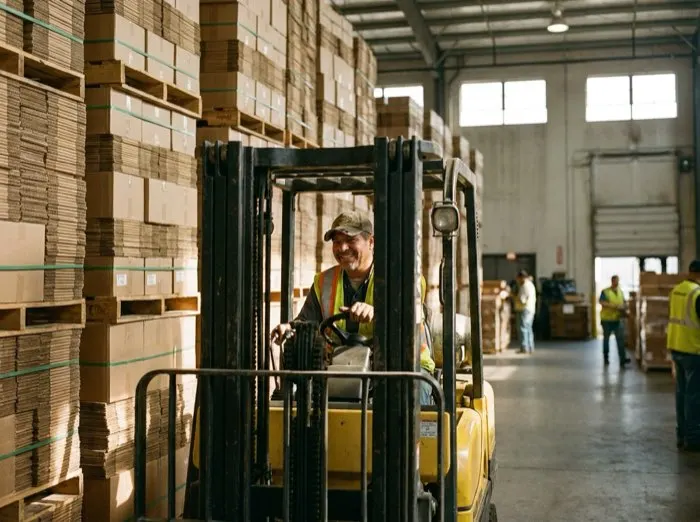
If you want to drive a forklift in Slovakia, you need an official forklift licence known as a preukaz obsluhy vysokozdvižných vozíkov (VZV licence). These licences are regulated under standards overseen by the National Labour Inspectorate (Národný inšpektorát práce - NIP). If you hold a forklift operator certificate from a non-EU country, it will not automatically convert. Most Slovak employers will pay for or conduct an on-site practical test and safety course through an accredited training body to certify you legally in Slovakia before you operate equipment on the warehouse floor.
Pay expectations, bonuses, and working hours
Pay in Slovak logistics is transparent and strictly protected by the Slovak Labour Code (Zákonník práce). Wages are quoted in euros (€), and contracts clearly separate your basic base salary from legally mandated shift allowances.
- General Warehouse Worker (Picker / Packer): The standard net pay after taxes and social contributions ranges between €750 and €950 per month. Entry-level tasks include scanning items, assembling orders, packing boxes, and moving pallets with manual hand trucks.
- Forklift Driver (VZV Operator): Experienced forklift operators earn higher rates. Net monthly pay typically ranges between €950 and €1,200 per month, depending on equipment type (reach truck drivers usually earn on the higher end of this scale).
- Shift Allowances: Under Slovak labor law, employers must pay mandatory hourly bonuses for night shifts, Saturday work, Sunday work, and public holidays. Since many large warehouses run on a 3-shift rotation (morning, afternoon, night), these legal bonuses can raise your monthly net earnings significantly.
- Non-Wage Benefits: Slovak law requires employers to provide meal contributions (stravné) or electronic meal cards for every working day. Many logistics companies also offer subsidized accommodation near industrial parks or free transport buses from surrounding towns directly to the facility.
Language expectations and seasonal hiring cycles
You do not need to speak fluent Slovak to begin working in a logistics center, but language skills directly impact your safety and job growth. Basic communication skills in Slovak (level A1 or A2) make a huge difference during safety briefings and daily operations.
In large distribution centers around Senec and Bratislava, shift leaders often speak English or work with multi-lingual supervisors. Scanner handheld computers can often be set to different display languages. However, learning basic workplace Slovak terms for directions, safety warnings, and tool names will help you build trust with team leaders quickly.
The hiring season in Slovak logistics follows clear annual patterns:
- Late Summer and Autumn Peak (September to December): E-commerce and retail warehouses ramp up hiring aggressively to prepare for Black Friday and holiday shopping. This is the busiest hiring window of the year.
- Winter Processing (January to February): Hiring slows slightly as companies process post-holiday returns and conduct annual inventory counts.
- Spring and Summer Steady Cycle (March to August): Automotive and industrial logistics maintain constant hiring year-round. Note that many automotive plants run a planned factory shutdown (celozávodná dovolenka) for two weeks in July or August, which briefly pauses hiring in automotive supply chain warehouses.
Reality check: Common myths about warehouse work in Slovakia
Before you start your job search, clear away these common misunderstandings so you can avoid costly mistakes:
- Myth: You can enter Slovakia on a tourist visa and start working immediately.
Reality: It is illegal to work on a tourist visa or short-stay Schengen visa. You must have a formal job offer and wait for your work and residence approval through the Labour Office and Foreign Police before starting work. - Myth: Your home country forklift licence allows you to drive legally on day one.
Reality: Foreign non-EU licences are not recognized directly on Slovak warehouse floors without verification. You must pass a practical evaluation or safety safety course certified under Slovak labor rules. - Myth: Free accommodation means a luxury private apartment.
Reality: Employer-provided housing usually means shared dormitory-style rooms or hostels close to the industrial park. Rooms are clean and functional, but you will often share kitchen facilities and living space with co-workers. - Myth: Pay rates are identical across the entire country.
Reality: Salaries and shift bonuses are usually higher in the western logistics hubs near Bratislava and Senec compared to smaller facilities in eastern districts.
Update your Workuro profile to stand out to Slovak employers
Slovak logistics companies and registered international recruitment agencies regularly search Workuro to find reliable workers for major warehouse contracts. To make sure your profile appears in their search results, you must include the specific details that Slovak recruiters look for.
Log in to your Workuro profile today and update the following details:
- Specify your exact target locations: Add preferred regional hubs like Senec, Bratislava, Trnava, Nitra, Žilina, or Košice.
- List your technical licenses clearly: If you have experience operating reach trucks, counterbalance forklifts, or electric pallet jacks, detail the exact equipment types and state your years of practical experience. Mention if you are ready to take an local VZV conversion course.
- State your actual language levels accurately: Clearly list your level of English, Slovak, or any other European languages you speak. Be honest about your level; clear basic communication is valued highly.
- Detail your shift availability: Clearly indicate if you are fully available to work rotating shifts, including night shifts and weekend cycles.
A complete profile with precise locations and verified skills gets viewed first by employers searching for foreign workforce talent. Keep your details current and start preparing your journey to Slovakia today.
Handa ka na bang mahanap?
Gawin ang profile mo sa loob ng 2 minuto. Libre, walang credit card.
Magbasa pa