Construction Worker Jobs in Slovakia for Foreign Workers (2026)
 Slovakia
Building in Slovakia: What Demand Looks Like in 2026
If you are looking for a construction job in Europe, Slovakia is a practical choice, but you need to know the market size before you apply. Slovakia is a smaller country than neighboring Poland or Germany. It does not have hundreds of thousands of open building sites at any given time. If you want maximum job volume and fast placement, Poland or the Czech Republic might offer more total options. However, Slovakia has specific, urgent shortages in key industrial and civil engineering projects. For targeted foreign workers from outside the European Union, this means real opportunities with stable employers.
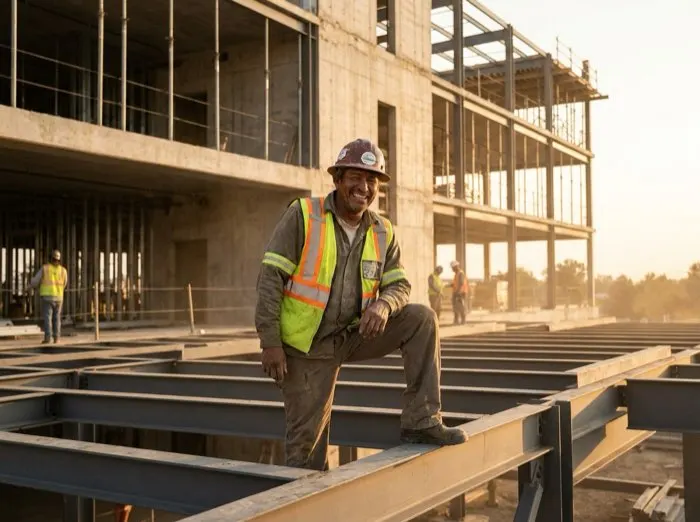
In 2026, Slovakia's construction demand is driven by major industrial developments and national infrastructure projects. The largest active site in the country is the Valaliky Industrial Park near Košice, where a massive Volvo electric vehicle factory is under construction. This single project requires hundreds of structural steel workers, concrete formwork specialists, and general site laborers. At the same time, ongoing highway construction along the D1 route near Žilina and Prešov, as well as the R2 expressway, creates a continuous need for heavy civil construction workers. If you have experience in these trades, Slovak companies are actively recruiting from abroad to fill gaps that local workers cannot meet.
Where the Jobs Are: Key Slovak Regions and Cities
Construction work in Slovakia is concentrated in specific industrial hubs and urban expansion zones. Knowing where projects are located helps you understand where you will live and work.
- Bratislava and surroundings: The capital city leads the market in commercial real estate, high-rise residential towers, and administrative centers. Demand here stays steady throughout the year because interior finishing work continues even during cold winter months.
- Košice and Valaliky: Eastern Slovakia is experiencing a heavy industrial building boom. The Valaliky Industrial Park project requires large teams for foundation pouring, steel framing, utility installation, and industrial road surfacing.
- Žilina and Prešov: These northern and eastern regions are central to Slovakia's civil infrastructure. Transport projects involve complex bridge building, tunneling, and highway retaining walls. Skilled concrete workers and heavy machinery operators are in constant demand here.
- Nitra and Trnava: These western cities host major automotive manufacturing clusters. Subcontractors frequently hire foreign workers for expansion projects, warehouse construction, and industrial maintenance.
Salaries and Work Hours: What You Actually Take Home
Pay in Slovakia is calculated in Euros (€). When comparing job offers, always ensure you are looking at net pay (the cash you receive after income tax and social security contributions are deducted). Many employers in Slovakia provide basic accommodation or cover a portion of housing costs for foreign site workers, which reduces your daily living expenses.
Typical net monthly pay ranges for construction workers in Slovakia include:
- General site laborer: €800 to €1,000 net per month. Tasks include site cleanup, material handling, basic demolition, and assisting skilled tradespeople.
- Skilled mason, bricklayer, or tile setter: €1,000 to €1,400 net per month, depending on speed and trade experience.
- Formwork carpenter or rebar worker (steel fixer): €1,100 to €1,500 net per month. Demand is particularly high on industrial sites like Valaliky.
- Certified welder or structural steel erector: €1,300 to €1,800 net per month for verified structural welding experience.
- Heavy machine or tower crane operator: €1,400 to €1,900 net per month, provided your operator licence is valid or converted locally.
Standard work weeks are 40 hours, but overtime is very common during the peak building season. Outdoor construction runs heavily from March through November. During the winter months of December, January, and February, outdoor earthworks slow down due to freezing temperatures, and work shifts toward indoor fitting, drywalling, and machinery maintenance.
Certificates, Licences, and Language Requirements
To work legally on a Slovak construction site, you must hold the correct certifications. Slovak construction safety laws are strict, and site managers perform regular inspections.
- Occupational Health and Safety (BOZP): Every worker must complete safety training called BOZP (Bezpečnosť a ochrana zdravia pri práci). Your employer usually arranges this short course upon your arrival before you enter the job site.
- Scaffolding licence (Lešenársky preukaz): If your work involves erecting or dismantling scaffolding, you need a recognized ticket inspected by the National Labour Inspectorate (Národný inšpektorát práce).
- Machinery tickets: Operators of excavators, loaders, or cranes must have their national licences reviewed. In many cases, you must pass a short practical check in Slovakia to receive an equivalent local ticket.
- Language expectations: You do not need fluent Slovak to work on a construction site. Basic English, Russian, or basic Slovak site vocabulary is usually enough for daily operations. Foremen often speak multiple languages or lead workers from the same home region. However, learning basic Slovak terms for tools and safety directions will help you progress faster.
The Work Permit Route and Paperwork Process
If you come from outside the EU, you cannot simply travel to Slovakia on a tourist visa and begin working. You need a legal work permit and a temporary residence permit for employment purposes (Prechodný pobyt na účel zamestnania).
The process follows these key steps:
- Job vacancy reporting: Your Slovak employer must report the job vacancy to the Central Office of Labour, Social Affairs and Family (ÚPSVaR). The position must usually remain open on the official registry for 15 to 30 days to check if any local or EU candidate is available.
- Labour office confirmation: If no local candidate is found, ÚPSVaR issues a written confirmation (Potvrdenie o možnosti obsadenia voľného pracovného miesta) allowing the employer to hire a foreign worker.
- Residence application: You apply for temporary residence at the Slovak Embassy in your home country or directly at the Foreigners Police (Cudzinecká polícia) in Slovakia if you enter legally. You will need a clean police clearance certificate, a valid employment contract, and proof of accommodation.
- Processing time: The entire visa and work permit process generally takes between two and four months. Plan ahead so your paperwork aligns with the start of the spring building season.
Reality Check: Misconceptions About Working in Slovakia
Avoid these common mistakes when planning your move:
- Expecting Western European wages immediately: Pay in Slovakia is lower than in Germany, Austria, or the Netherlands, but local living costs and accommodation prices are also lower.
- Assuming a Slovak permit lets you work anywhere in the EU: A Slovak work permit allows you to work legally only for your specified employer inside Slovakia. It does not allow you to work in France, Germany, or other Schengen states.
- Working without an official contract: Never accept cash-in-hand site work without a signed contract. Working illegally can lead to deportation, fines, and an entry ban for the entire Schengen zone.
- Ignoring the winter lull: If you are a specialized outdoor earthworks worker, clarify with your employer whether winter hours are reduced or if indoor tasks will be assigned.
Build Your Workuro Profile for Slovak Employers
Slovak construction companies and staffing agencies regularly search the Workuro database to find candidates with exact site skills. To make your profile stand out to recruiters hiring for projects in Bratislava, Košice, or Žilina, make sure you include specific details.
List your exact trade skills, such as formwork system experience (like Doka or Peri), welding classifications, or concrete finishing. Add any machinery licences you hold in your home country, and list the foreign languages you speak, even at a basic level. Mention your availability to relocate to specific Slovak regions like Košice or Bratislava. A complete, detailed profile makes it easier for real employers to locate you and offer you a legal job contract.
Handa ka na bang mahanap?
Gawin ang profile mo sa loob ng 2 minuto. Libre, walang credit card.
Magbasa pa