Chef and Kitchen Worker Jobs in Poland for Foreign Workers (2026)
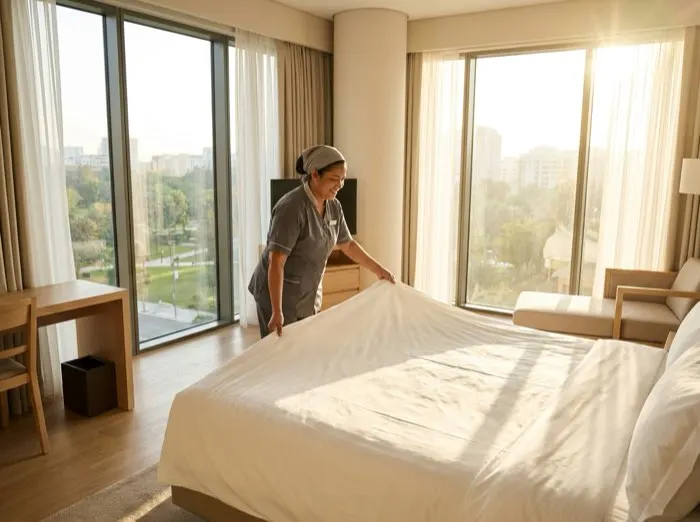
Hospitality and Kitchen Demand in Poland for 2026
Poland's restaurant, hotel, and catering sector has expanded rapidly over recent years. As major cities grow and domestic tourism increases, the demand for qualified chefs, line cooks, and general kitchen assistants remains consistently high across the country. Local labor shortages mean Polish hospitality employers frequently turn to international recruitment to keep their kitchens running efficiently.
If you are coming from outside the European Union, such as South Asia, Central Asia, Southeast Asia, Africa, or Latin America, Poland presents a steady pathway into the European food service industry. Unlike some Western European nations that only recruit foreign talent for high executive positions, Polish employers regularly sponsor work permits for mid-level cooks, prep staff, and kitchen hands.
The culinary landscape in Poland is diverse. You will find opportunities in traditional Polish restaurants, high-end international dining establishments, large hotel chains, and rapid-service franchise kitchens. Understanding how the Polish hiring system works will give you a clear advantage when applying from abroad.
Top Polish Cities and Seasonal Hiring Hotspots
Job availability for kitchen workers in Poland depends heavily on geography and season. While big metropolitan areas offer year-round employment, coastal and mountain towns experience distinct seasonal spikes that require large numbers of temporary staff.
- Warsaw (Województwo Mazowieckie) - The capital city has the largest concentration of international restaurants, corporate canteens, luxury hotels, and fine dining venues. Kitchen positions here are available year-round, offering steady contracts and competitive pay rates.
- Kraków (Województwo Małopolskie) - As Poland's main tourist destination, Kraków boasts hundreds of busy restaurants in its historic center and Kazimierz district. Demand for line cooks and kitchen assistants remains high throughout the year, peaking during the summer and winter holiday seasons.
- Wrocław and Poznań - These vibrant university and business hubs in western Poland have growing food scenes. Employers here frequently hire foreign kitchen staff to manage high daily foot traffic in fast-casual and casual dining establishments.
- The Tri-City Area (Gdańsk, Sopot, Gdynia) - Located on the Baltic coast, this region experiences a massive hiring boom between May and September. Coastal resorts, beachside bars, and seasonal seafood restaurants recruit heavily starting in early spring.
- Mountain Resorts (Zakopane, Szklarska Poręba) - The southern mountainous regions experience two major peak seasons: winter (December to March) for ski tourism and summer (July to August) for hiking season. Mountain taverns and resort hotels constantly seek reliable kitchen staff during these windows.
Work Permits and the Sanepid Health Certificate
To work legally in a Polish kitchen as a non-EU citizen, you must clear two main administrative steps: securing a valid work permit and obtaining a mandatory health clearance for food handling.
Your employer must apply for your work permit on your behalf before you enter Poland. The standard legal route for long-term kitchen employees is the Type A Work Permit (Zezwolenie na pracę typ A), issued by the regional governor, known as the Wojewoda. Processing times for a Type A permit generally range from two to four months depending on the workload of the regional office. In busy voivodeships like Mazowieckie (Warsaw), waiting times can sometimes extend longer.
Before issuing the work permit, the employer usually must conduct a local labor market test (test rynku pracy) to prove that no suitable Polish or EU candidate was available for the role. However, certain specialized chef roles or regions with severe labor shortages may qualify for streamlined processing under updated regional shortage lists.
Once you arrive in Poland, you cannot touch food or enter a commercial kitchen until you complete the national sanitary requirement. You must obtain an epidemiological clearance statement (orzeczenie do celów sanitarno-epidemiologicznych), commonly referred to as the Sanepid certificate or former książeczka sanepidowska.
- Issuing Authority - The certificate is authorized by a certified occupational medicine physician based on laboratory tests processed by the State Sanitary Inspection (Stacja Sanitarno-Epidemiologiczna or Sanepid).
- Testing Process - You must provide health samples over three consecutive days to a local Sanepid laboratory to test for pathogens like Salmonella and Shigella.
- Time and Cost - The lab testing and doctor sign-off usually take between 5 to 10 working days. The employer often pays for or reimburses this testing, but it remains a legal prerequisite for every single person working in a Polish food prep environment.
Pay Rates, Hours, and Kitchen Roles in Poland
Wages in Poland are paid in Polish Złoty (PLN). Under Polish labor laws, non-EU workers must be paid at least the national legal minimum wage, though experienced cooks frequently earn above the minimum baseline. Pay is usually calculated as a monthly net salary after tax deductions and social security (ZUS) contributions.
- Kitchen Assistant / Dishwasher (Pomoc kuchenna) - Roles focused on dishwashing, food prep, and general cleaning typically pay between 3,400 PLN and 4,200 PLN net per month for standard full-time hours.
- Line Cook / Commis Chef (Kucharz) - Staff responsible for cooking specific station items, prepping ingredients, and managing orders earn between 4,200 PLN and 6,000 PLN net per month, depending on experience and location.
- Chef de Partie / Specialist Chef - Experienced cooks specializing in specific cuisines (such as Indian, Asian, Italian, or pastry) can earn between 5,500 PLN and 8,500 PLN net per month in premium or high-volume kitchens.
Standard working hours in Polish kitchens follow a 40-hour work week, though shift work (such as 12-hour shifts on a two-days-on, two-days-off schedule) is very common in the restaurant sector. Overtime work is permitted under the Polish Labor Code (Kodeks pracy) and must be compensated with additional pay or equivalent time off.
In seasonal locations like Zakopane or Sopot, employers sometimes provide shared staff accommodation or subsidized meals as part of the working package, which helps workers save a larger portion of their monthly net earnings.
Language Expectations and Kitchen Culture
Language barriers vary depending on the type of establishment you join. In international hotel chains, foreign cuisine specialty venues, and modern urban kitchens in Warsaw or Kraków, English is widely spoken as the primary working language. Head chefs in these venues frequently manage international teams in English.
However, in traditional Polish restaurants, smaller regional eateries, or corporate catering canteens, Polish is the main operational language. You do not need fluent Polish to start, but learning basic culinary Polish will help you fit in faster. Employers value workers who learn essential kitchen terms quickly:
- Basics - Gorące (Hot), Ostre (Sharp), Czyste (Clean), Uwaga (Watch out/Attention).
- Equipment & Actions - Deska do krojenia (Cutting board), Nóż (Knife), Zmywak (Dishwashing area), Smażyć (To fry), Gotować (To boil).
Polish kitchen teams value punctuality, clean station maintenance, hygiene standards, and speed during peak service times. Showing respect for food safety standards and working well with your team will quickly earn you trust in the kitchen.
Reality Check: Common Misconceptions About Polish Kitchen Work
Before applying for kitchen roles in Poland, keep these realistic expectations in mind:
- Work permits are not instant - Employer sponsorship requires patience. The legal process through the Wojewoda office takes anywhere from 2 to 5 months. Anyone offering a guaranteed visa in two weeks is not giving accurate information.
- Sanepid is non-negotiable - You cannot start working in a kitchen the day you arrive in Poland. Expect to spend your first week getting your Sanepid medical checks completed before entering the prep area.
- Salaries must be compared to local costs - While Polish salaries are lower than in Germany or Scandinavia, the cost of living, housing, and food in Poland is also considerably lower. Look at what you can save net, not just the gross number.
- Seasonal contracts end - Seasonal summer work along the Baltic coast or winter work in the mountains will end when the season closes. If you want year-round stability, focus your search on primary cities like Warsaw, Wrocław, or Kraków.
- Standard visas require proper documentation - Your work visa issued by the Polish embassy in your home country will match your specific employer and work permit. Changing employers means your new boss must apply for a new permit for you.
Build Your Workuro Profile to Target Polish Employers
Polish restaurant owners and hotel HR managers search Workuro to find reliable, skilled kitchen personnel from abroad. To make sure your profile appears in their search results, you should fill out your information with exact details.
When completing your Workuro profile, make sure to specify:
- Your exact kitchen skills - Mention whether you specialize in line cooking, food prep, baking, high-volume banquet production, or specific international cuisines.
- Your language abilities - Clearly state your English level and mention if you have started learning basic Polish.
- Your location preferences - List specific Polish regions or cities you want to work in, such as Warsaw, Małopolskie (Kraków), Dolnośląskie (Wrocław), or coastal seasonal zones like Pomorskie.
- Sanepid readiness - Note whether you understand the medical clearance steps and are ready to undergo health testing upon arrival in Poland.
- Document status - Indicate if you hold a valid international passport and are ready to begin the Type A work permit process immediately.
Employers look for complete, honest profiles with accurate experience details. Keep your profile updated so Polish hospitality recruiters can evaluate your background and contact you directly for upcoming kitchen openings.
کیا آپ تلاش کے لیے تیار ہیں؟
2 منٹ میں اپنا پروفائل بنائیں۔ مفت، کوئی کریڈٹ کارڈ نہیں۔
مزید پڑھیں